
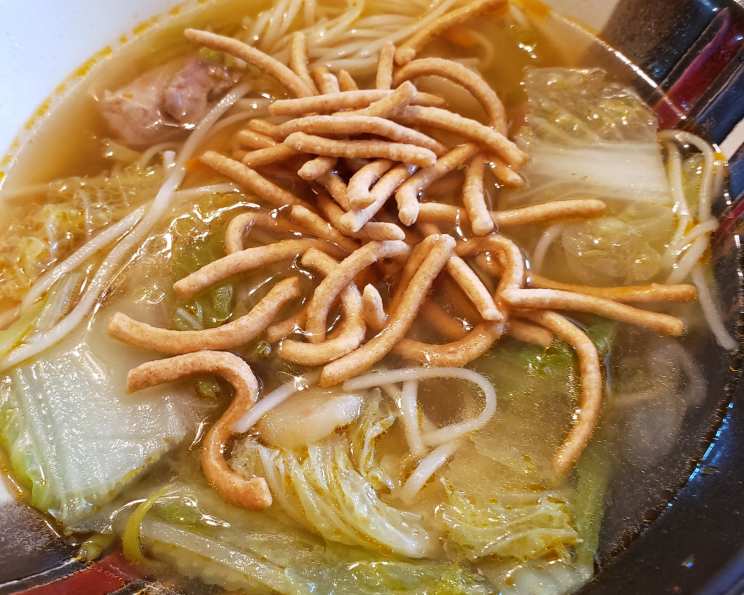
Chinese-Style Noodle and Pork Soup: A Bowl of Comfort
The aroma of ginger and warm broth instantly transports me back to my grandmother’s tiny kitchen. Steam would swirl around her face as she ladled out bowls of this comforting noodle soup. It wasn’t just a meal; it was a cure for every childhood ailment, a warm hug on a cold day, and a symbol of her unwavering love – all simmered into a single, delicious pot. This recipe, while not exactly hers (she never wrote anything down!), captures the essence of that beloved flavor.
Recipe Overview
- Prep Time: 15 minutes
- Cook Time: 10 minutes
- Total Time: 25 minutes
- Servings: 4
- Dietary Type: Adaptable (see variations)
Ingredients
- 2 ounces uncooked noodles (fine egg noodles, vermicelli, or spaghettini works best)
- 2 cups cabbage, thinly sliced (Chinese cabbage, Savoy, or plain cabbage)
- 1 1/2 cups cooked pork, cubed
- 1/4 cup chopped green onion
- 2 (429 ml) cans low sodium chicken broth (approximately 1 liter or 4 cups)
- 1 cup white mushrooms, thinly sliced
- 1 teaspoon fresh gingerroot, finely chopped
- 1/4 teaspoon crushed red pepper flakes (optional)
- 1/2 cup chopped green onion (for garnish, just the green part) (optional)
Equipment Needed
- Large pot
- Colander or strainer
Instructions
-
Begin by cooking the noodles according to the package directions. Different types of noodles will have varying cooking times, so be sure to check them frequently to achieve your desired consistency. Nobody enjoys mushy noodles! Once cooked, thoroughly drain the noodles in a colander or strainer and set them aside.
-
While the noodles are cooking, prepare the soup base. In a large pot, combine the sliced cabbage, cubed cooked pork, chopped green onion (reserving the garnish), low sodium chicken broth, sliced white mushrooms, and finely chopped fresh gingerroot. If you like a little heat, now is the time to add the optional crushed red pepper flakes.
-
Stir all the ingredients together in the pot to ensure even distribution of flavors.
-
Bring the mixture to a full boil over high heat, stirring occasionally to prevent sticking. Once boiling, reduce the heat slightly to maintain a gentle boil.
-
Boil for about 10 minutes, continuing to stir occasionally. This allows the flavors to meld and the cabbage to soften slightly.
-
Stir in the cooked noodles into the pot, ensuring they are well incorporated into the soup.
-
Simmer for another minute or two to heat the noodles through.
-
Serve hot and sprinkle each serving with chopped green onions (the reserved green part) as a garnish, if desired.
Expert Tips & Tricks
- Broth is King: The quality of your chicken broth significantly impacts the overall flavor. If possible, use homemade broth or a high-quality store-bought brand.
- Ginger Power: Fresh ginger is essential for that authentic Chinese flavor. Don’t substitute with ground ginger; the taste is simply not the same.
- Spice Level: Adjust the amount of crushed red pepper flakes to your preference. A little goes a long way!
- Pork Perfection: Leftover roast pork works wonderfully in this soup. Alternatively, you can use thinly sliced pork tenderloin or even shredded pulled pork.
- Veggie Boost: Feel free to add other vegetables like sliced carrots, bok choy, or spinach for extra nutrients and flavor. Add them during the last 5 minutes of cooking.
- Noodle Know-How: Overcooked noodles are a soup-killer. Undercook them slightly, as they will continue to cook in the hot broth.
- Make-Ahead Magic: The soup base (without the noodles) can be made a day or two in advance and stored in the refrigerator. Simply add the noodles when you’re ready to serve.
Serving & Storage Suggestions
Serve this Chinese-style noodle and pork soup hot, garnished with fresh green onions for a pop of color and flavor. A drizzle of sesame oil can also add a nutty aroma.
Leftovers can be stored in an airtight container in the refrigerator for up to 3 days. To reheat, gently warm the soup on the stovetop or in the microwave. Be aware that the noodles may absorb more liquid as they sit, so you might need to add a splash of extra broth when reheating. Freezing is not recommended as the noodles can become mushy upon thawing.
Nutritional Information
Note: Nutritional information is an estimate and may vary based on specific ingredients used.
| Nutrient | Amount per Serving | % Daily Value |
|---|---|---|
| Calories | 300 kcal | 15% |
| Total Fat | 10g | 13% |
| Saturated Fat | 3g | 15% |
| Cholesterol | 30mg | 10% |
| Sodium | 500mg | 22% |
| Total Carbohydrate | 30g | 11% |
| Dietary Fiber | 3g | 11% |
| Sugars | 5g | – |
| Protein | 20g | 40% |
Variations & Substitutions
- Vegetarian Option: Omit the pork and use vegetable broth instead of chicken broth. Add tofu or tempeh for protein.
- Gluten-Free: Use gluten-free noodles such as rice noodles or glass noodles. Ensure your broth is also gluten-free.
- Spicy Kick: Add a tablespoon of chili garlic sauce or a dash of sriracha for extra heat.
- Seafood Twist: Substitute the pork with shrimp or scallops for a seafood version.
- Richness and Creaminess: Add a tablespoon of sesame oil when serving, or even a teaspoon of peanut butter during cooking for a richer, creamier flavor.
FAQs (Frequently Asked Questions)
Q: Can I use dried mushrooms instead of fresh?
A: Yes, you can use dried shiitake or wood ear mushrooms. Rehydrate them in hot water for 20-30 minutes before adding them to the soup.
Q: Can I add soy sauce to the soup?
A: Yes, a splash of low-sodium soy sauce can add depth of flavor. Add it towards the end of the cooking process, tasting as you go.
Q: Can I use a different type of noodle?
A: Absolutely! Lo mein noodles, ramen noodles, or even udon noodles would work well in this soup. Just adjust the cooking time accordingly.
Q: Is this soup freezer-friendly?
A: While you can freeze it, the noodles may become mushy upon thawing. It’s best to eat it fresh or store it in the refrigerator. If you do freeze it, consider cooking the noodles separately and adding them after thawing and reheating the soup base.
Q: Can I use ground pork instead of cubed pork?
A: Yes, ground pork is a perfectly acceptable substitute. Brown it in the pot before adding the other ingredients.
Final Thoughts
This Chinese-style noodle and pork soup is more than just a recipe; it’s a hug in a bowl, a taste of home, and a celebration of simple, flavorful ingredients. I encourage you to try this recipe and make it your own, experimenting with different vegetables, spices, and noodles to create your perfect bowl of comfort. Don’t be afraid to share your creations and variations with others – and most importantly, enjoy! Perhaps you could pair this lovely dish with a side of spring rolls or some freshly steamed dumplings.