
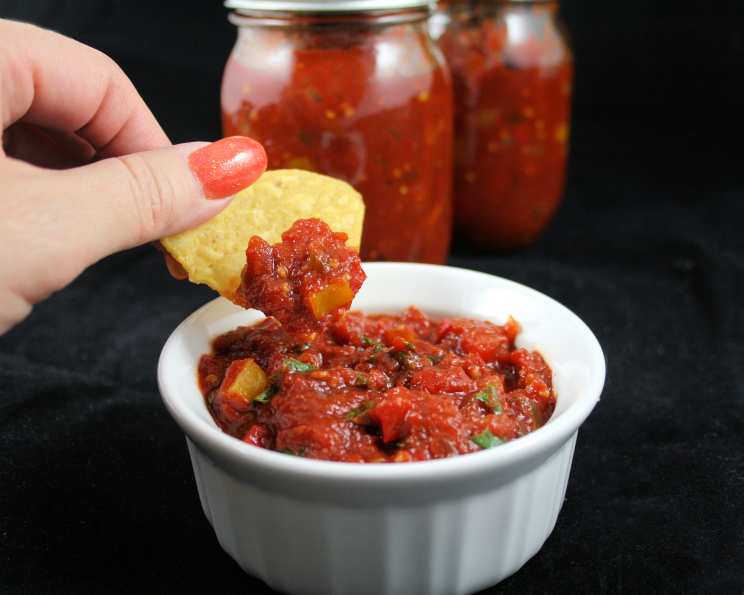
Smoky Chipotle Salsa: A Canning Recipe for Year-Round Flavor
For years, the end of summer has meant one thing in my kitchen: salsa-making time. I vividly remember the first time I tasted a chipotle salsa that truly sang. It was at a neighborhood potluck, a simple gathering transformed by a jar of homemade goodness. The smoky, slightly sweet flavor, with just a hint of heat, was unlike anything I’d ever tasted. That day, I knew I had to learn how to make this magical condiment myself, and now, I’m excited to share my version with you. It all started with a friendship and a handed-down recipe, and is now my go-to salsa every year.
Recipe Overview
- Prep Time: 30 minutes
- Cook Time: 1 hour 30 minutes
- Total Time: 2 hours
- Yields: 6 pints
- Serves: 6
- Dietary Type: Vegan, Gluten-Free
Ingredients
- 8 cups Roma tomatoes, peeled, seeded and chopped
- 4 cups Sweet peppers, chopped
- 2 cups Onions, minced
- 4 Garlic cloves, minced
- 1 Hot pepper, such as jalapeno, minced (remove seeds for less heat)
- 1-2 tablespoons Chipotle pepper puree (or adobo sauce from canned chipotles)
- ¾ cup Cider vinegar
- 1 tablespoon Salt
- 1 tablespoon Sugar
- 2 teaspoons Paprika
- 16 ounces Tomato paste
- ¼ cup Cilantro, chopped
Equipment Needed
- Large pot or Dutch oven
- Sharp knife
- Cutting board
- Measuring cups and spoons
- Canning jars (pint-sized)
- Canning lids and rings
- Jar lifter (optional, but recommended)
- Ladle
Instructions
-
Begin by preparing the tomatoes. The best way to remove the skins is to blanch them briefly. Bring a large pot of water to a boil. Score the bottom of each tomato with an “X.” Carefully drop the tomatoes into the boiling water for 30-60 seconds, or until the skins begin to peel back.
-
Remove the tomatoes from the boiling water and immediately plunge them into a bowl of ice water to stop the cooking process. The skins should now easily slip off. Peel the tomatoes, remove the seeds (if desired, this reduces the amount of liquid in the salsa), and chop them coarsely. Measure out 8 cups of chopped tomatoes.
-
In a large pot or Dutch oven, combine the chopped tomatoes, chopped sweet peppers, minced onions, minced garlic, minced hot pepper, chipotle pepper puree, cider vinegar, salt, sugar, paprika, and tomato paste.
-
Bring the mixture to a simmer over medium heat, stirring occasionally to prevent sticking.
-
Reduce the heat to low and continue to simmer, uncovered, for approximately 1 to 1 1/2 hours, or until the salsa has reached your desired thickness. Stir frequently, especially towards the end of the cooking time, as the salsa will thicken and may be more prone to scorching.
-
While the salsa is simmering, prepare your canning jars. Wash the pint jars, lids, and rings in hot, soapy water. Rinse well.
-
Sterilize the jars by boiling them in a large pot of water for 10 minutes. Keep the jars hot until you are ready to fill them. The lids should be simmered in hot water (not boiling) to soften the sealing compound. Keep the rings clean and set aside.
-
About 5 minutes before you are ready to remove the salsa from the heat, stir in the chopped cilantro.
-
Ladle the hot salsa into the hot, sterilized pint jars, leaving ½ inch of headspace at the top of each jar.
-
Wipe the rims of the jars with a clean, damp cloth to remove any spills. Place a hot, sterilized lid on each jar and screw on a ring fingertip-tight.
-
At this point, you have a choice: You can skip the hot water bath canning process, or you may process in a hot-water-bath canner for 20 minutes for added food safety.
-
Option 1: No Hot Water Bath (not recommended by the USDA): Some cooks have had success skipping this process, relying on proper sterilization and sealing. However, be aware that this method is not recommended by the USDA and carries a risk of spoilage. If you choose to skip this, listen for the “pop” of the lids sealing as the jars cool. Check the seals by pressing down on the center of the lid – it should not flex. Store unsealed jars in the refrigerator.
-
Option 2: Hot Water Bath Canning (Recommended): If you are concerned about food safety (and you should be!), process the filled jars in a hot-water-bath canner for 20 minutes. Make sure the water covers the jars by at least 1 inch. After processing, turn off the heat, remove the canner lid, and let the jars sit in the hot water for 5 minutes before removing them to a towel-lined surface to cool completely.
-
-
As the jars cool, you should hear a “pop” as the lids seal. After the jars have cooled completely (about 12-24 hours), check the seals by pressing down on the center of each lid. If the lid doesn’t flex, the jar is properly sealed. If a lid flexes, the jar did not seal properly and should be refrigerated and used within a week or two, or reprocessed with a new lid.
Expert Tips & Tricks
- Roasting the Tomatoes and Peppers: For an even deeper, smokier flavor, consider roasting the tomatoes and peppers before chopping them. Toss them with a little olive oil, salt, and pepper, and roast in a 400°F (200°C) oven until softened and slightly charred.
- Adjusting the Heat: The amount of hot pepper and chipotle pepper puree will determine the heat level of your salsa. Start with a small amount and taste as you go, adding more until you reach your desired spiciness. Remember that the heat will mellow slightly as the salsa sits.
- Thickening the Salsa: If your salsa is too thin after simmering, you can continue to cook it for a longer period of time to reduce the liquid. Alternatively, you can add a tablespoon or two of tomato paste to help thicken it.
- Using Fresh Herbs: While this recipe calls for cilantro, feel free to experiment with other fresh herbs, such as oregano, parsley, or even a little mint.
Serving & Storage Suggestions
This Smoky Chipotle Salsa is incredibly versatile. Of course, it’s delicious served with tortilla chips. Beyond that, it makes a fantastic topping for tacos, burritos, quesadillas, and nachos. It also works well as a condiment for grilled meats, fish, and vegetables. You can even add it to soups and stews for a smoky kick.
Properly canned jars of salsa can be stored in a cool, dark place for up to 12 months. Once opened, the salsa should be refrigerated and used within 1-2 weeks. If you did not process your salsa in a hot water bath canner, it must be refrigerated and consumed within 1-2 weeks.
Nutritional Information
(Note: Nutritional information is an estimate and may vary based on specific ingredients used.)
| Nutrient | Amount per Serving | % Daily Value |
|---|---|---|
| Calories | 120 kcal | 6% |
| Total Fat | 2g | 3% |
| Saturated Fat | 0g | 0% |
| Cholesterol | 0mg | 0% |
| Sodium | 550mg | 24% |
| Total Carbohydrate | 25g | 8% |
| Dietary Fiber | 5g | 20% |
| Sugars | 15g | N/A |
| Protein | 3g | 6% |
Variations & Substitutions
- Different Peppers: Experiment with different types of peppers to adjust the heat and flavor profile of the salsa. Consider using poblano peppers for a milder flavor, or serrano peppers for a hotter kick.
- Sweetness: If you prefer a sweeter salsa, you can add a touch more sugar or a drizzle of honey or maple syrup.
- Smoked Paprika: For an extra smoky flavor, use smoked paprika instead of regular paprika.
- No Cilantro: If you’re not a fan of cilantro, simply omit it or substitute it with another fresh herb, such as parsley.
- Vinegar: While cider vinegar is recommended for its flavor, you can substitute it with white vinegar or lime juice.
FAQs (Frequently Asked Questions)
Q: Can I use canned tomatoes instead of fresh tomatoes?
A: While fresh tomatoes are ideal for the best flavor and texture, you can substitute with canned diced tomatoes in a pinch. Be sure to drain them well and adjust the cooking time accordingly, as canned tomatoes may contain more liquid.
Q: How do I know if my canning jars have sealed properly?
A: After the jars have cooled completely, press down on the center of each lid. If the lid doesn’t flex or “give,” it’s properly sealed. You may also hear a “pop” sound as the jars cool, which indicates a successful seal.
Q: Can I use a different size jar?
A: Yes, but you’ll need to adjust the processing time accordingly. Consult a reputable canning guide for processing times for different jar sizes.
Q: Can I freeze this salsa instead of canning it?
A: Yes, you can freeze the salsa. Allow it to cool completely before transferring it to freezer-safe containers or bags. Leave some headspace to allow for expansion during freezing. Frozen salsa may have a slightly softer texture when thawed.
Q: Why is vinegar necessary in canned salsa?
A: Vinegar is crucial for canning salsa because it increases the acidity, which helps to prevent the growth of harmful bacteria, such as Clostridium botulinum, which can cause botulism. Always use the amount of vinegar specified in the recipe and do not reduce it.
Final Thoughts
This Smoky Chipotle Salsa is a celebration of fresh, vibrant flavors. It’s more than just a condiment; it’s a taste of summer that you can enjoy all year long. Don’t be afraid to experiment with the recipe and make it your own. Whether you’re a seasoned canner or a beginner, I hope you’ll give this recipe a try. I’m confident that you’ll love the smoky, slightly sweet, and wonderfully flavorful salsa that you create. Enjoy!