
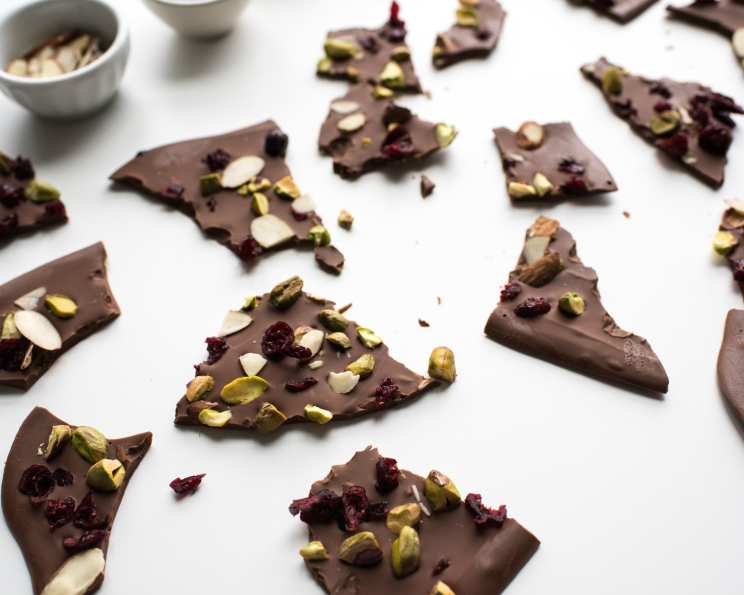
Chocolate Bark With Mixed Nuts and Dried Berries
The first time I tasted chocolate bark was at my Grandma Betty’s house. She always had a stash of it hidden away in a tin, tucked high up on a shelf in the pantry – a treasure trove accessible only to her and, if I was lucky, her favorite grandchild. The bittersweet chocolate, studded with crunchy nuts and tart, chewy dried fruit, was a symphony of textures and flavors that instantly transported me to a world of cozy afternoons and endless stories. It wasn’t just the taste, but the feeling of being utterly spoiled, that made it so special. Now, whenever I make chocolate bark, I think of Grandma Betty and those cherished moments.
Recipe Overview
- Prep Time: 10 minutes
- Cook Time: N/A (mostly melting and cooling)
- Total Time: 50 minutes
- Servings: 4-6
- Yield: About 1 pound
- Dietary Type: Gluten-Free
Ingredients
- 4 cups semisweet chocolate
- ½ cup chopped pistachios
- ½ cup chopped almonds
- ½ cup dried cherries
Equipment Needed
- Double boiler (or heatproof bowl and saucepan)
- Half sheet pan
- Parchment paper
- Spatula or offset spatula
- Knife or sharp cleaver
Instructions
-
Begin by preparing your double boiler. If you don’t have a double boiler, you can create one by placing a heatproof bowl over a saucepan filled with about an inch or two of water. Make sure the bottom of the bowl doesn’t touch the water.
-
Bring the water in the saucepan to a simmer over medium heat.
-
Place the semisweet chocolate in the top of the double boiler (or the heatproof bowl).
-
Melt the chocolate over the simmering water, stirring frequently with a spatula, until it is smooth and velvety. Be patient and avoid overheating the chocolate, as this can cause it to seize.
-
While the chocolate is melting, line a half sheet pan with parchment paper. This will prevent the chocolate from sticking and make it easy to remove once it’s set.
-
Once the chocolate is completely melted and smooth, remove it from the heat.
-
Pour the melted chocolate onto the prepared half sheet pan.
-
Using a spatula or offset spatula, spread the chocolate evenly into a thin layer. Aim for a thickness of about ¼ inch.
-
While the chocolate is still wet, sprinkle the chopped pistachios, chopped almonds, and dried cherries evenly over the surface. Gently press the nuts and cherries into the chocolate to help them adhere.
-
Allow the chocolate bark to cool for about 40 minutes, or until it is completely set and firm. You can speed up the cooling process by placing the sheet pan in the refrigerator for about 20 minutes.
-
Once the chocolate bark is firm, break it into pieces using your hands or a knife. For a more rustic look, simply break it into irregular shapes. If you prefer neater pieces, use a sharp knife or cleaver to cut it into squares or rectangles.
-
Serve immediately or store for later.
Expert Tips & Tricks
- Use high-quality chocolate: The quality of the chocolate will significantly impact the flavor of your bark. Opt for a good-quality semisweet chocolate with a high cocoa content.
- Toast the nuts: Toasting the nuts before adding them to the chocolate bark will enhance their flavor and add a delightful crunch. Spread the chopped nuts on a baking sheet and toast them in a preheated oven at 350°F (175°C) for 5-7 minutes, or until lightly golden and fragrant.
- Add a pinch of salt: A pinch of sea salt sprinkled over the chocolate bark will enhance the sweetness and create a more complex flavor profile.
- Get creative with toppings: Feel free to experiment with different toppings to create your own signature chocolate bark. Consider adding other nuts, dried fruits, spices, or even pretzels.
- Tempering the chocolate: For a professional-looking bark with a glossy finish and a satisfying snap, consider tempering the chocolate. Tempering involves heating and cooling the chocolate to specific temperatures to stabilize the cocoa butter crystals. This will prevent the chocolate from blooming (developing a white coating) and give it a smooth, shiny appearance. There are many resources online that explain how to temper chocolate at home.
Serving & Storage Suggestions
Serve the chocolate bark as a sweet treat after a meal, or package it in cellophane bags and give it as a homemade gift.
Store the chocolate bark in an airtight container at room temperature for up to 2 weeks. For longer storage, you can freeze it for up to 2 months. Thaw in the refrigerator before serving. Be sure to keep the bark away from heat and direct sunlight, as this can cause it to melt or bloom.
Nutritional Information
| Nutrient | Amount per Serving | % Daily Value |
|---|---|---|
| Calories | 850.4 kcal | N/A |
| Calories from Fat | 765 g | 90% |
| Total Fat | 85 g | 130% |
| Saturated Fat | 44.2 g | 221% |
| Cholesterol | 0 mg | 0% |
| Sodium | 90.3 mg | 3% |
| Total Carbohydrate | 47.3 g | 15% |
| Dietary Fiber | 25.4 g | 101% |
| Sugars | 3.2 g | 12% |
| Protein | 23.8 g | 47% |
Note: Nutritional information is an estimate and may vary based on specific ingredients and portion sizes.
Variations & Substitutions
- Dairy-Free Chocolate Bark: Use dairy-free chocolate chips or a dairy-free chocolate bar. You can also substitute the nuts with seeds like pumpkin seeds or sunflower seeds for those with nut allergies.
- White Chocolate Bark: Substitute the semisweet chocolate with white chocolate for a sweeter, creamier treat. Consider adding freeze-dried raspberries and pistachios for a festive look.
- Peppermint Bark: Add a teaspoon of peppermint extract to the melted chocolate and sprinkle crushed peppermint candies on top for a holiday-inspired treat.
- Spicy Chocolate Bark: Add a pinch of cayenne pepper or chili flakes to the melted chocolate for a spicy kick. Complement this with dried cranberries and pecans.
- Tropical Chocolate Bark: Use macadamia nuts and dried mango or pineapple for a tropical twist. You can also add a sprinkle of shredded coconut.
FAQs (Frequently Asked Questions)
Q: Can I use different types of chocolate?
A: Absolutely! Feel free to experiment with milk chocolate, dark chocolate, or even white chocolate. Just be aware that the sweetness level will vary depending on the type of chocolate you choose.
Q: Can I use frozen berries instead of dried cherries?
A: It’s best to use dried berries, as frozen berries will release moisture and can cause the chocolate to seize. If you want to use frozen berries, thaw them completely and pat them dry with paper towels before adding them to the chocolate.
Q: How do I prevent the chocolate from blooming?
A: Blooming occurs when the cocoa butter in the chocolate separates and rises to the surface, creating a white coating. To prevent blooming, make sure you don’t overheat the chocolate and store the bark in a cool, dry place. Tempering the chocolate will also help prevent blooming.
Q: Can I add other spices to the chocolate bark?
A: Yes! Spices like cinnamon, nutmeg, ginger, or cardamom can add warmth and depth to the chocolate bark. Add a pinch or two of your favorite spice to the melted chocolate before spreading it onto the sheet pan.
Q: What is the best way to break the chocolate bark into pieces?
A: Once the chocolate is set, you can break it into pieces using your hands for a rustic look. For neater pieces, use a sharp knife or cleaver to cut it into squares or rectangles.
Final Thoughts
Chocolate bark is one of those endlessly customizable treats that allows you to unleash your creativity in the kitchen. It’s simple enough for a weeknight indulgence, yet elegant enough to give as a thoughtful, homemade gift. Don’t be afraid to experiment with different flavor combinations and toppings to create your own signature bark. And most importantly, have fun with it! I encourage you to try this recipe and let me know what delightful variations you come up with. Perhaps you’ll discover a flavor combination that becomes a new family favorite, just like my Grandma Betty’s chocolate bark did for us. Enjoy!