
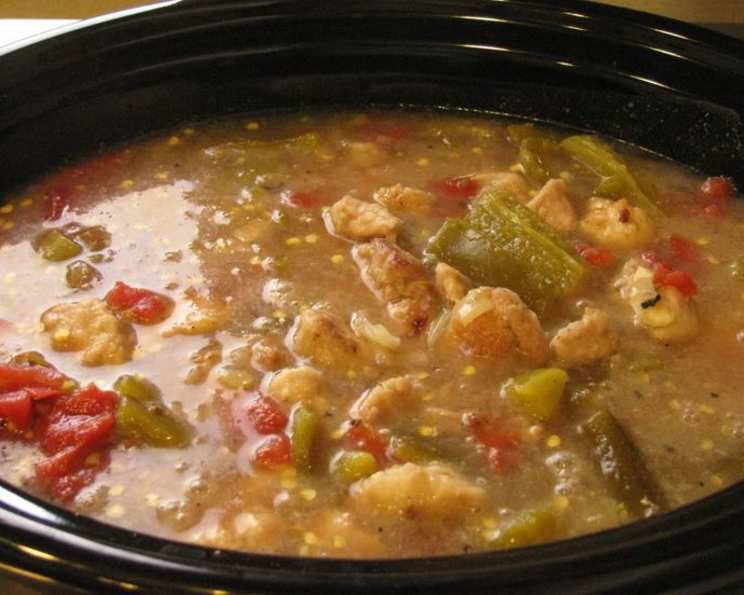
Chris’s Pueblo Green Chili Sauce: A Taste of Southern Colorado
The first time I had true green chili, I wasn’t in a fancy restaurant or a trendy food truck. I was at a family reunion in Pueblo, Colorado, the air thick with the scent of roasting peppers and the sound of laughter. My aunt, a woman whose hands seemed to carry the wisdom of generations, ladled a steaming spoonful onto my plate, warning me it had a kick. One bite, and I was hooked. The complex flavors, the gentle heat that bloomed on my tongue, the sheer comforting warmth – it was more than just a sauce; it was a story, a memory, a taste of home. Now, decades later, I’m thrilled to share a version of that magic, adapted from a recipe that’s been a family favorite for over 20 years.
Recipe Overview
- Prep Time: 30 minutes
- Cook Time: 2-3 hours
- Total Time: 2 hours 30 minutes – 3 hours 30 minutes
- Servings: 12
- Yield: 1 Kettle of Chili
- Dietary Type: Adaptable (see variations)
Ingredients
- 3-4 serrano chilies, diced (omit for a milder chili)
- 1/4 cup vegetable oil or bacon fat
- 8-10 large roasted green chilies, skins removed, torn into strips (Hatch or Poblano are best)
- 24 ounces chicken broth (approximately)
- 1 (12 ounce) can Rotel tomatoes & chilies
- 1 cup water
- 1 teaspoon cumin
- 1/2 teaspoon white pepper
- 1/2 teaspoon curry powder
- 1 teaspoon Season-All salt
- 1 teaspoon fresh cilantro or 1 teaspoon dried cilantro
- 1 teaspoon cayenne pepper
- 1/2 teaspoon crushed red pepper flakes
- 2 garlic cloves, crushed
- 1/2 teaspoon salt and pepper
- 1/4 cup flour (approximately)
- 1 small yellow onion, diced
- 1-2 lb pork (diced or ground)
Equipment Needed
- Large stainless steel kettle
- Cutting board
- Knife
- Measuring cups and spoons
- Blender (optional)
Instructions
- In a large stainless steel kettle, brown the pork in bacon fat or vegetable oil. Bacon fat imparts a richer, more complex flavor, but vegetable oil works perfectly well if you prefer a lighter profile. Cook the pork over medium heat until it is slightly pink on the outside. Don’t overcrowd the pot; brown the pork in batches if necessary to ensure even browning.
- Add the diced onion and crushed garlic to the kettle with the pork. Cook until the onion becomes soft and translucent, usually about 5-7 minutes. Stir frequently to prevent the garlic from burning.
- Add the flour to the kettle and stir continuously, browning the flour as you would when making a roux. A roux is the foundation of many sauces, and browning the flour adds depth of flavor. Continue stirring until the flour is lightly browned and fragrant, being careful not to burn it.
- If the flour mixture becomes too thick, add a splash of water to loosen it up. Continue stirring until the mixture bubbles slightly, indicating that the flour is properly cooked.
- Gradually add the chicken broth to the kettle, stirring constantly to prevent lumps from forming. The broth will deglaze the bottom of the kettle, lifting up any browned bits of flavor.
- Add the remaining ingredients to the kettle: the Rotel tomatoes & chilies, water, cumin, white pepper, curry powder, Season-All salt, cilantro, cayenne pepper, crushed red pepper flakes, and salt and pepper.
- Bring the mixture to a bubble over medium-high heat, then reduce the heat to low.
- Simmer the chili uncovered for 2-3 hours, stirring occasionally to prevent sticking. The longer the chili simmers, the more the flavors will meld together.
- Check the consistency of the chili. If it is too thin, add a small amount of flour mixed with water to the kettle, stirring well to incorporate it. If it is too thick, add more chicken broth until you reach your desired consistency.
- Taste the chili frequently and adjust the seasonings to your liking. Add more spices or peppers if you want it spicier.
- If you prefer a smoother sauce without chunks of tomato or peppers, place the Rotel tomatoes & chilies and roasted green chilies into a blender and puree them before adding them to the kettle.
- If you want a rustic chili, then do not puree.
- Simmer for another 30 minutes after any final adjustments.
Expert Tips & Tricks
- Roasting Your Own Peppers: For the absolute best flavor, roast your own green chilies. Place them directly on the burner of a gas stove or under a broiler, turning frequently until the skins are blackened and blistered. Then, place the peppers in a plastic bag or covered container to steam for 10-15 minutes, which will make the skins easier to peel off.
- Spice Level Control: The amount of serrano chilies used directly impacts the heat level. Start with fewer and add more to taste. Remember, you can always add more heat, but it’s difficult to take it away.
- Flavor Depth: Don’t rush the simmering process. The longer the chili simmers, the richer and more complex the flavors will become.
- Thickening: If you want a thicker chili, consider using a cornstarch slurry (equal parts cornstarch and water) instead of flour. This will give you a glossy finish.
Serving & Storage Suggestions
Chris’s Pueblo Green Chili Sauce is incredibly versatile. It’s fantastic served over burritos, enchiladas, or even a simple plate of scrambled eggs. As my aunt in Pueblo would do, I love making “sloppers”: a hamburger bun in a bowl, topped with a plain hamburger (with or without cheese), smothered in green chili sauce, and finished with diced onion and oyster crackers. Serve it with a cold beer for a truly authentic experience.
Leftover green chili sauce can be stored in an airtight container in the refrigerator for up to 3-4 days. For longer storage, freeze it in freezer-safe containers for up to 3 months. Thaw overnight in the refrigerator before reheating. You can reheat the chili in a saucepan over medium heat, stirring occasionally, or in the microwave.
Nutritional Information
Note: Nutritional information is an estimate and may vary based on specific ingredients and portion sizes.
| Nutrient | Amount per Serving | % Daily Value |
|---|---|---|
| Calories | 200 kcal | 10% |
| Total Fat | 12g | 18% |
| Saturated Fat | 4g | 20% |
| Cholesterol | 40mg | 13% |
| Sodium | 500mg | 22% |
| Total Carbohydrate | 8g | 3% |
| Dietary Fiber | 2g | 8% |
| Sugars | 3g | – |
| Protein | 15g | 30% |
Variations & Substitutions
- Vegetarian/Vegan: Replace the pork with black beans, pinto beans, or a combination of both. Use vegetable broth instead of chicken broth.
- Gluten-Free: This recipe is naturally gluten-free, as long as you ensure your chicken broth and Season-All salt are gluten-free.
- Milder Chili: Omit the serrano chilies and cayenne pepper. You can also use a milder variety of green chilies, such as Anaheim peppers, instead of Hatch or Poblano.
- Spicier Chili: Add more serrano chilies, cayenne pepper, or crushed red pepper flakes to taste. You can also use hotter varieties of green chilies, such as ghost peppers or habaneros (use with caution!).
- Pork Alternatives: Use beef, chicken, or turkey instead of pork.
FAQs (Frequently Asked Questions)
Q: Can I make this chili in a slow cooker?
A: Yes, you can! Brown the pork, onion, and garlic as directed, then transfer everything to a slow cooker. Cook on low for 6-8 hours or on high for 3-4 hours.
Q: Can I use canned green chilies instead of roasted green chilies?
A: Yes, but the flavor will not be as complex or intense. Roasted fresh chilies are highly recommended.
Q: How can I tell if the chili is done?
A: The chili is done when the pork is tender and easily pulls apart with a fork, and the flavors have melded together.
Q: Can I freeze this chili?
A: Absolutely! Allow the chili to cool completely before transferring it to freezer-safe containers. It can be frozen for up to 3 months.
Q: What are “sloppers”?
A: Sloppers are a Pueblo, Colorado, specialty: a hamburger bun topped with a hamburger patty, smothered in green chili sauce, and usually finished with diced onion and oyster crackers. They are a delicious and comforting meal!
Final Thoughts
Chris’s Pueblo Green Chili Sauce is more than just a recipe; it’s an invitation to experience the vibrant flavors and warm hospitality of Southern Colorado. Don’t be afraid to experiment with the spice levels and ingredients to make it your own. Whether you’re serving it over burritos, smothering it on a burger, or simply enjoying it with a spoon, I hope this recipe brings a little bit of that Pueblo magic to your kitchen. So, gather your ingredients, put on some good music, and get ready to create a culinary masterpiece that will warm your soul. And please, let me know how it turns out! I love hearing about your culinary adventures.