
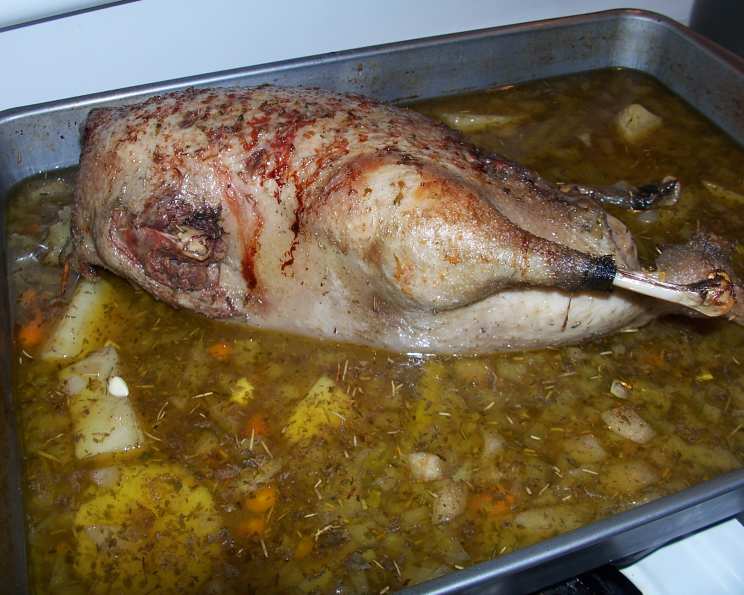
A Christmas Goose to Remember: A Culinary Adventure
The aroma of roasting goose takes me back to my childhood Christmases. I remember my grandmother, a formidable woman with a heart of gold, presiding over the feast. The entire house would fill with the savory scent, a symphony of herbs, roasted vegetables, and that distinct, rich goose fragrance. It wasn’t just a meal; it was a tradition, a symbol of family gathered together, warm and content against the winter chill. This recipe aims to capture that same magic, bringing a touch of rustic elegance to your holiday table.
Recipe Overview
- Prep Time: 30 minutes
- Cook Time: 1 hour 39 minutes
- Total Time: 2 hours 9 minutes
- Servings: 4-6
- Yield: 1 goose
- Dietary Type: Gluten-Free (naturally)
Ingredients
- 1/2 cup butter
- 1 cup carrot (shredded)
- 1 cup celery (diced)
- 1 cup onion (finely chopped)
- 1 medium apple (peeled, cored, and chopped)
- 4 garlic cloves (finely chopped)
- 1 cup veal stock (or 1 cup low sodium chicken broth)
- 1/2 cup dry white wine
- 1/4 cup fresh parsley (chopped)
- 2 tablespoons dried rosemary
- 2 tablespoons dried thyme
- 4 bay leaves
- 1 teaspoon salt (I use sea salt)
- 1 teaspoon cracked pepper
- 1 (7-10 lb) whole wild goose
Equipment Needed
- Large saucepan
- Large roasting pan with a lid
- Meat thermometer
Instructions
-
Begin by preheating your oven to 375 degrees F (190 degrees C).
-
In a large saucepan, melt the butter over medium-low heat. This will form the base for our flavorful poaching liquid.
-
Add the shredded carrots, diced celery, finely chopped onions, chopped apple, and finely chopped garlic to the melted butter. These aromatic vegetables will infuse the goose with incredible flavor during the roasting process.
-
Sauté the vegetables for 8-10 minutes, stirring occasionally, until they begin to soften and release their fragrance. Avoid browning them excessively; we want them to gently soften and sweeten.
-
Add the veal stock (or chicken broth), dry white wine, chopped fresh parsley, dried rosemary, dried thyme, bay leaves, salt, and cracked pepper to the saucepan. The combination of herbs and wine will create a rich and complex flavor profile for the goose.
-
Turn up the heat to high and bring the mixture to a boil for about 1 minute. This helps to meld the flavors together before we begin the simmering process.
-
Reduce the heat to medium-low and simmer the mixture for 6-8 minutes. Simmering allows the flavors to fully develop and intensify.
-
Pour the vegetable and liquid mixture into a large roasting pan fitted with a lid. This will create a moist environment for the goose to cook in.
-
Place the wild goose, breast-side down, into the roasting pan, nestling it into the vegetables and liquid. Spoon some of the liquid and vegetables over the goose. Add more water (or wine, if you prefer) to submerge the bird halfway. This ensures that the goose remains moist throughout the cooking process.
-
Cover the roasting pan with the lid and roast for approximately 1 hour and 15 minutes. The covered roasting process will help to steam the goose and keep it incredibly tender.
-
Carefully remove the lid and turn the goose over, so it’s now breast-side up. Cook for an additional 15 minutes, uncovered, or until a meat thermometer registers 160 degrees F (71 degrees C) when inserted next to the leg bone. This is a crucial step to ensure the goose is cooked through and safe to eat. Note that wild goose, being lean, cooks quicker than a farmed goose.
-
Remove the roasting pan from the oven and let the goose rest for about 10 minutes before carving. Allowing the goose to rest allows the juices to redistribute throughout the meat, resulting in a more tender and flavorful bird.
-
To serve, spoon some of the pan juices and vegetables over each portion of sliced goose.
-
Wine Recommendation: The dark and heavy nature of wild goose meat pairs beautifully with a solid, bold red wine. A Syrah, such as the Qupé vineyard from the central California coast, is an excellent choice.
Expert Tips & Tricks
- Basting is Key: While this recipe is designed to keep the goose moist, basting the bird with the pan juices every 20-30 minutes during the uncovered cooking time will further enhance its flavor and prevent it from drying out.
- Don’t Overcook: Wild goose is lean and can easily become dry if overcooked. Use a meat thermometer to ensure accurate doneness.
- Crispy Skin: For extra crispy skin, you can broil the goose for the last few minutes of cooking, keeping a close eye to prevent burning.
- Deglaze the Pan: After removing the goose, deglaze the roasting pan with a little extra wine or stock and scrape up any browned bits from the bottom. This will create a delicious sauce to serve with the goose.
Serving & Storage Suggestions
Serve the Christmas goose hot, accompanied by roasted potatoes, your favorite holiday sides, and the pan juices spooned over each serving. Leftover goose can be stored in an airtight container in the refrigerator for up to 3 days. To reheat, gently warm the goose in a low oven or microwave. You can also use leftover goose in sandwiches, salads, or soups. Freezing is not generally recommended, as it can dry out the meat.
Nutritional Information
| Nutrient | Amount per Serving | % Daily Value |
|---|---|---|
| Calories | 650 kcal | 33% |
| Total Fat | 48g | 74% |
| Saturated Fat | 19g | 95% |
| Cholesterol | 180mg | 60% |
| Sodium | 511mg | 21% |
| Total Carbohydrate | 8.5g | 3% |
| Dietary Fiber | 2.2g | 9% |
| Sugars | 3.7g | N/A |
| Protein | 42g | 84% |
Note: Nutritional information is an estimate and may vary based on specific ingredients and portion sizes.
Variations & Substitutions
- Duck or Turkey: If goose isn’t available, you can substitute with duck or wild turkey, adjusting the cooking time accordingly.
- Different Herbs: Feel free to experiment with different herbs to create your own unique flavor profile. Sage, marjoram, or savory would all be delicious additions.
- Fruit Variations: Try using pears or cranberries instead of apples for a festive twist.
- Gluten-Free Gravy: Thicken the pan juices with cornstarch or arrowroot flour for a gluten-free gravy option.
FAQs (Frequently Asked Questions):
Q: Can I use a farmed goose instead of a wild goose?
A: Yes, you can, but farmed geese are fattier. You’ll need to render the fat off during cooking and adjust cooking times accordingly.
Q: How do I know when the goose is cooked properly?
A: The best way is to use a meat thermometer. It should register 160°F (71°C) when inserted into the thickest part of the thigh.
Q: What if I don’t have veal stock?
A: You can substitute with low-sodium chicken broth or even vegetable broth.
Q: Can I prepare the vegetables ahead of time?
A: Absolutely! Chop and sauté the vegetables a day in advance to save time on Christmas Day.
Q: What side dishes go well with Christmas goose?
A: Roasted potatoes, Brussels sprouts, cranberry sauce, and stuffing are all classic choices.
Final Thoughts
I hope this recipe inspires you to try your hand at cooking a Christmas goose. It’s a truly special dish that will impress your guests and create lasting memories. Don’t be intimidated – with a little patience and attention to detail, you can create a culinary masterpiece. Embrace the process, savor the aroma, and enjoy the warmth of a homemade Christmas feast. And please, let me know how it turns out! I’m always eager to hear about your culinary adventures.