
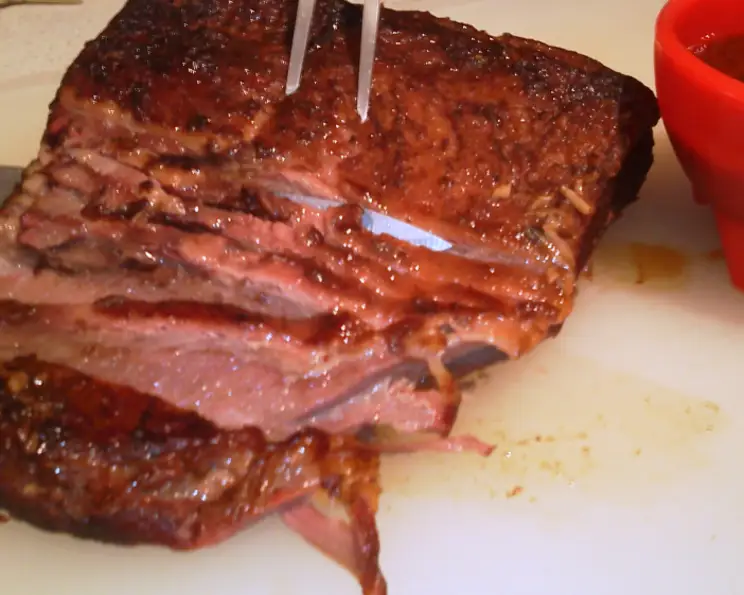
ChuckwagonCookie’s Easy Beef Brisket
The scent of smoked brisket always takes me back to my childhood summers. My grandfather, a Texan through and through, would spend all day tending to his smoker, the air thick with hickory and the promise of tender, smoky beef. It was a labor of love, a ritual that always culminated in a family feast filled with laughter, stories, and the kind of deliciousness that etches itself into your memory. This recipe, while simpler than Grandpa’s all-day affair, captures that same spirit of slow-cooked goodness and rich, smoky flavor.
Recipe Overview
- Prep Time: 20 minutes
- Cook Time: 7 hours
- Total Time: 7 hours 20 minutes
- Servings: 6-8
- Yield: One large brisket
- Dietary Type: Generally gluten-free (check labels on Worcestershire sauce and beer)
Ingredients
Dry Rub
- 8 tablespoons light brown sugar, tightly packed
- 3 tablespoons kosher salt
- 1 tablespoon chili powder
- 1/2 teaspoon ground black pepper
- 1/2 teaspoon cayenne pepper
- 1/2 teaspoon ground cumin
- 1/2 teaspoon Old Bay Seasoning
- 1/2 teaspoon rubbed thyme
- 1/2 teaspoon onion powder
Braising Liquid
- 1 (12 ounce) dark beer or ale (Guinness or Newcastle Brown Ale work well)
- 2 tablespoons cider vinegar
- 2 tablespoons Worcestershire sauce (check label for gluten-free option if needed)
- 1 tablespoon honey
- 1 teaspoon liquid smoke
- 4 garlic cloves, chopped
Equipment Needed
- Large bowl for mixing rub
- Plastic wrap
- Large plastic bag
- Grill
- Smoker box (optional)
- Hickory chips (optional)
- Large aluminum foil
- Baking dish or pan
- Meat thermometer
- Saucepan
Instructions
- Prepare the Brisket: The day before you plan to cook the brisket, combine all the dry rub ingredients in a large bowl. Mix thoroughly to ensure all spices are evenly distributed.
- Apply the Rub: Generously cover the entire brisket with the prepared dry rub. Massage the rub into the meat, making sure every surface is well-coated.
- Refrigerate Overnight: Wrap the rubbed brisket tightly in plastic wrap, then place it in a large plastic bag. Refrigerate overnight to allow the flavors to penetrate the meat.
- Preheat Oven: The next morning, remove the brisket from the refrigerator. Preheat your oven to 275 degrees Fahrenheit (135 degrees Celsius).
- Prepare the Grill: Prepare your grill for indirect heat cooking. This means arranging the coals or turning on the burners so that the brisket will not be directly over the heat source.
- Grill the Brisket: Place the brisket, fat side up, on the unheated side of your grill. Aim for a temperature of around 250 degrees Fahrenheit (121 degrees Celsius) inside the grill.
- Add Smoke (Optional): If you have a smoker box, use it with hickory chips to add a smoky flavor to the brisket. Replenish the hickory chips for three cycles of smoke. If you don’t have a smoker box, don’t worry; the brisket will still be delicious.
- Initial Grill Time: Let the brisket cook on indirect heat for three hours, maintaining a consistent temperature.
- Prepare the Foil Packet: After three hours on the grill, make a large foil packet that is big enough to completely enclose the brisket.
- Add Braising Liquid: Carefully place the brisket inside the foil packet, then pour in the prepared braising liquid. Ensure the liquid is distributed around the brisket.
- Seal the Packet: Seal the foil packet tightly, crimping the edges to prevent any liquid from escaping during the braising process.
- Transfer to Oven: Place the sealed foil packet containing the brisket onto a baking dish or pan to catch any potential leaks.
- Oven Braise: Transfer the baking dish with the brisket to the preheated oven. Let the brisket braise in the oven, undisturbed, for five hours.
- Check Internal Temperature: After five hours of oven braising, begin checking the internal temperature of the brisket every half hour. Insert a meat thermometer into the thickest part of the brisket, avoiding any large pockets of fat.
- Target Temperature: You want the center of the brisket to reach an internal temperature of around 190 degrees Fahrenheit (88 degrees Celsius). This indicates that the brisket is tender and fully cooked.
- Remove and Rest: Once the brisket reaches the desired temperature, remove it from the oven. Carefully pour the braising liquid from the foil packet into a saucepan.
- Rest the Brisket: Cover the brisket loosely with foil and let it rest for at least 15 minutes. You can turn off the oven and place the brisket back inside to keep it warm during the resting period.
- Reduce the Sauce: While the brisket is resting, bring the braising liquid in the saucepan to a boil over medium-high heat. Continue boiling the liquid until it reduces to a thick, sauce-like consistency. You should have less than half of the original amount remaining.
- Slice and Serve: Slice the brisket against the grain (this is crucial for tenderness) into thin slices.
- Serve with Sauce: Arrange the sliced brisket on a platter and drizzle the reduced sauce on top. Serve immediately.
Expert Tips & Tricks
- Don’t skip the overnight rub: This allows the salt to penetrate the meat and helps to create a flavorful bark.
- Indirect heat is key: Direct heat will dry out the brisket before it has a chance to become tender.
- Low and slow is the way to go: Resist the urge to increase the oven temperature. Slow cooking breaks down the tough connective tissues in the brisket, resulting in a more tender and juicy final product.
- Check the temperature, not the time: Every brisket is different, so rely on a meat thermometer rather than just cooking for a set amount of time.
- Let it rest! This allows the juices to redistribute throughout the meat, resulting in a more moist and flavorful brisket.
- If your brisket is getting too dark on the grill, you can wrap it in foil sooner, even before adding the braising liquid.
Serving & Storage Suggestions
Serve the sliced brisket hot, drizzled with the reduced braising liquid sauce. It pairs perfectly with classic barbecue sides like coleslaw, potato salad, baked beans, and cornbread.
Leftover brisket can be stored in an airtight container in the refrigerator for up to 3-4 days. For longer storage, freeze the brisket in freezer-safe bags or containers for up to 2-3 months. To reheat, thaw the brisket in the refrigerator overnight, then gently reheat in a low oven (around 250°F/121°C) with a little bit of the braising liquid to keep it moist. You can also reheat individual portions in the microwave.
Nutritional Information
| Nutrient | Amount per Serving | % Daily Value |
|---|---|---|
| Calories | 119.5 kcal | N/A |
| Calories from Fat | 2 g | 2% |
| Total Fat | 0.3 g | 0% |
| Saturated Fat | 0.1 g | 0% |
| Cholesterol | 0 mg | 0% |
| Sodium | 3574.3 mg | 148% |
| Total Carbohydrate | 25.9 g | 8% |
| Dietary Fiber | 0.7 g | 2% |
| Sugars | 21.5 g | 85% |
| Protein | 0.7 g | 1% |
Note: Nutritional information is an estimate and may vary based on specific ingredients and portion sizes.
Variations & Substitutions
- Spicier Brisket: Increase the amount of cayenne pepper in the dry rub for a spicier kick. You could also add a pinch of smoked paprika.
- Sweeter Brisket: For a sweeter flavor profile, increase the amount of brown sugar in the dry rub or add a touch more honey to the braising liquid.
- Different Wood Chips: Experiment with different types of wood chips for smoking. Applewood or mesquite chips can add unique flavor notes to the brisket.
- Beer Substitution: If you don’t have dark beer or ale on hand, you can substitute it with beef broth or a combination of beef broth and a tablespoon of balsamic vinegar for depth of flavor.
- Vinegar Variation: Try using apple cider vinegar instead of cider vinegar for a slightly different tang.
FAQs (Frequently Asked Questions)
Q: Can I use a smaller brisket for this recipe?
A: Yes, you can. Reduce the cooking time accordingly, monitoring the internal temperature closely. A smaller brisket will cook faster.
Q: What if I don’t have a grill?
A: You can skip the grilling step and go straight to braising the brisket in the oven. The smoky flavor won’t be as pronounced, but the brisket will still be tender and delicious. Add an extra 1/2 teaspoon of liquid smoke to the braising liquid to compensate.
Q: How do I know when the brisket is done?
A: The most reliable way to determine doneness is to use a meat thermometer. The brisket should reach an internal temperature of around 190 degrees Fahrenheit (88 degrees Celsius). It should also be very tender when pierced with a fork.
Q: Can I make this brisket ahead of time?
A: Yes, brisket is often even better the next day. Cook the brisket as directed, then let it cool completely before storing it in the refrigerator. Reheat gently in a low oven with some of the braising liquid to keep it moist.
Q: Why is it important to slice the brisket against the grain?
A: Slicing against the grain shortens the muscle fibers, making the brisket more tender and easier to chew.
Final Thoughts
This Easy Beef Brisket recipe is a testament to the fact that delicious, restaurant-quality barbecue doesn’t have to be complicated or intimidating. The combination of the flavorful dry rub, the slow grilling process, and the braising liquid creates a brisket that is both incredibly tender and bursting with savory flavor. So, gather your ingredients, fire up your grill (or preheat your oven), and get ready to experience the joy of homemade brisket. Don’t hesitate to experiment with different spice combinations and wood chips to create your own signature flavor profile. And most importantly, enjoy the process! Share your culinary creation with friends and family and savor the compliments that are sure to follow. Bon appétit!