
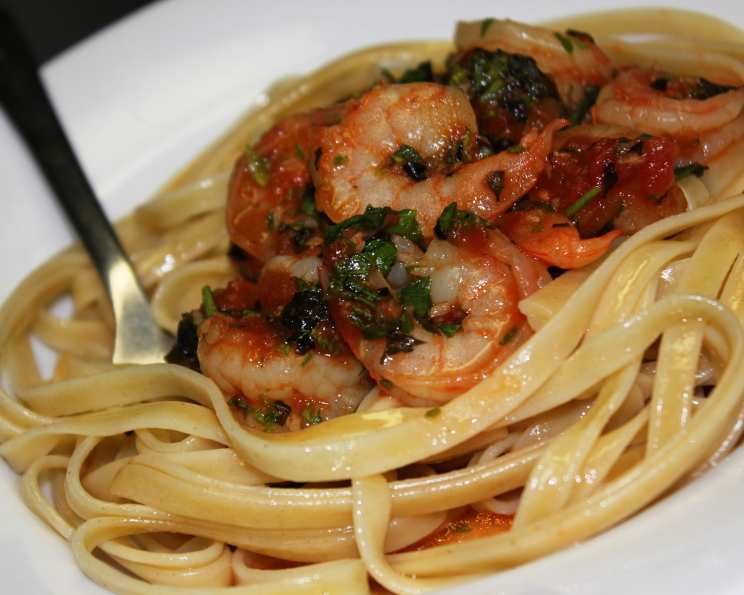
Shrimp Fra Diavolo: A Fiery Italian-American Classic
My first encounter with Shrimp Fra Diavolo was in a small, red-sauce joint in Little Italy. The air hung thick with the aroma of garlic, oregano, and the promise of something delightfully spicy. I remember the sizzle as the server placed the steaming plate before me, the vibrant red sauce practically daring me to take a bite. That first taste – the sweet shrimp, the tangy tomatoes, and the building heat – ignited a lifelong love affair with this dish. Now, years later, I’m excited to share a particularly exceptional version of this classic that I’ve perfected over time.
Recipe Overview
- Prep Time: 25 minutes
- Cook Time: 23 minutes
- Total Time: 48 minutes
- Servings: 6
- Dietary Type: Pescatarian
Ingredients
- 1 1⁄2 lbs large shrimp (26-30 count per pound, peeled and deveined, shells reserved)
- 1⁄2 teaspoon salt (if shrimp have not been treated with salt already)
- 1 (28 ounce) can whole canned tomatoes
- 1 tablespoon vegetable oil, for browning shrimp shells
- 1 cup dry white wine
- 2 tablespoons vegetable oil, for browning garlic and anchovies
- 4 garlic cloves, minced
- 1⁄2 – 1 teaspoon red pepper flakes
- 1⁄2 teaspoon dried oregano
- 1⁄4 teaspoon salt (if shrimp had been treated with salt when packaged)
- 2 anchovy fillets, rinsed, patted dry, and minced
- 1⁄4 cup fresh basil, chopped
- 1⁄4 cup fresh Italian parsley, chopped
- 1 1⁄2 teaspoons pepperoncini peppers, minced
- 1 teaspoon pepperoncini juice (from pepperoncini peppers)
- Salt, to taste
- 2 tablespoons extra virgin olive oil
Equipment Needed
- Large bowl
- Colander
- 12-inch skillet
- Small bowl
- Rubber spatula
- Paper towels
- Potato masher
Instructions
-
Begin by preparing the shrimp. Peel and devein the shrimp, but be sure to reserve the shells for later. Check the ingredients listing on the shrimp packaging to determine if they’ve been treated with salt. If they haven’t, toss the shrimp with 1/2 teaspoon of salt and set aside until Step 11. If they have been treated with salt, skip to step 2 and omit the initial salt.
-
Prepare the tomatoes. Pour the can of whole canned tomatoes into a colander set over a large bowl. Release the tomato juice by piercing the tomatoes with the edge of a rubber spatula. Stir briefly to help release the juice. Transfer the drained tomatoes to a small bowl; they will be used later in Step 9. Reserve the tomato juice for Step 5, and do not wash the colander.
-
Now it’s time to infuse the sauce with deep flavor. In a 12-inch skillet over high heat, heat 1 tablespoon of vegetable oil until it shimmers. Add the reserved shrimp shells and cook, stirring frequently, until they begin to turn spotty brown and the skillet starts to brown, approximately 2-4 minutes. This browning process is crucial for developing the rich, savory base of the sauce. Remove the skillet from the heat and carefully add the dry white wine.
-
When the bubbling subsides, return the skillet to the heat and simmer until the wine is reduced to about 2 tablespoons, about 2-4 minutes. This step concentrates the wine’s flavor, adding another layer of complexity to the sauce.
-
Add the reserved tomato juice from Step 2 to the skillet and simmer to meld the flavors, approximately 5 minutes. This allows the sweetness of the tomatoes to balance the richness from the shrimp shells and wine.
-
Pour the contents of the skillet into the colander, set over the bowl. Discard the shells, but reserve the flavorful liquid for Step 10. Wipe out the skillet with paper towels to remove any browned bits that might burn in the next step.
-
Over medium heat in the now-empty skillet, heat the remaining 2 tablespoons of vegetable oil. Add the minced garlic, red pepper flakes, and dried oregano. If the shrimp had been treated with salt when packaged, add 1/4 teaspoon of salt at this point. If you already tossed the shrimp with 1/2 teaspoon of salt in Step 1, omit the additional salt. Stir occasionally until the garlic is straw-colored and fragrant, 1-2 minutes. Watch carefully to prevent the garlic from burning, as burnt garlic can make the sauce bitter.
-
Add the minced anchovy fillets to the skillet and stir until fragrant, about 30 seconds. Don’t be afraid of the anchovies! They dissolve into the sauce, adding a subtle umami richness that enhances all the other flavors without making the sauce taste overtly fishy.
-
Remove the skillet from the heat. Add the drained tomatoes from Step 2 and mash them with a potato masher until coarsely pureed. This rustic texture adds to the charm of the dish.
-
Return the skillet to the heat and stir in the reserved tomato juice from Step 6. Increase the heat to medium-high and simmer until the mixture has thickened, approximately 5 minutes. This process further concentrates the flavors and creates a sauce with a lovely, clinging consistency.
-
Add the shrimp to the skillet and simmer gently, stirring and turning the shrimp frequently, until they are just cooked through, about 4-5 minutes. Be careful not to overcook the shrimp, as they will become rubbery. They are done when they turn pink and opaque.
-
Remove the pan from the heat. Stir in the chopped basil, chopped parsley, and minced pepperoncini peppers along with the pepperoncini juice. Season with salt to taste. The fresh herbs and pepperoncini add brightness and a final layer of flavor to the dish.
-
Drizzle with extra-virgin olive oil and serve immediately.
Expert Tips & Tricks
- Spice Level: Adjust the amount of red pepper flakes to your liking. Start with 1/2 teaspoon for a mild heat and increase to 1 teaspoon or more for a spicier dish.
- Shrimp Doneness: A perfectly cooked shrimp curls into a gentle “C” shape. If it forms a tight “O,” it’s likely overcooked.
- Make-Ahead Option: The sauce (without the shrimp) can be made a day ahead and stored in the refrigerator. Simply reheat and add the shrimp just before serving.
- Wine Substitution: If you don’t have dry white wine, you can substitute chicken broth or vegetable broth, but the flavor will be slightly different.
Serving & Storage Suggestions
Serve Shrimp Fra Diavolo hot, directly from the skillet or arranged on a platter. It’s traditionally served over spaghetti, linguine, or other long pasta, but it’s also delicious with crusty bread for soaking up the flavorful sauce. A simple green salad makes a refreshing accompaniment.
Leftovers can be stored in an airtight container in the refrigerator for up to 2 days. Reheat gently in a skillet over medium heat, adding a splash of water or broth if needed to loosen the sauce. While freezing is possible, the texture of the shrimp may change slightly upon thawing.
Nutritional Information
| Nutrient | Amount per Serving | % Daily Value |
|---|---|---|
| Calories | 243.4 kcal | N/A |
| Calories from Fat | N/A | 47% |
| Total Fat | 12.8 g | 19% |
| Saturated Fat | 1.7 g | 8% |
| Cholesterol | 144.4 mg | 48% |
| Sodium | 1186 mg | 49% |
| Total Carbohydrate | 8.4 g | 2% |
| Dietary Fiber | 1.6 g | 6% |
| Sugars | 3.6 g | N/A |
| Protein | 17.2 g | 34% |
Variations & Substitutions
- Spicy Vodka Fra Diavolo: Add a splash of vodka to the sauce along with the tomato juice for an extra kick and creamy texture.
- Seafood Medley: Incorporate other seafood such as mussels, clams, or scallops for a more elaborate dish.
- Vegetarian Fra Diavolo: Use firm tofu or chickpeas instead of shrimp for a vegetarian option. You can even add roasted vegetables like zucchini and bell peppers.
- Low-Carb Option: Serve over zucchini noodles or cauliflower rice for a lower-carb meal.
FAQs (Frequently Asked Questions)
Q: Can I use frozen shrimp for this recipe?
A: Yes, you can use frozen shrimp. Make sure to thaw them completely before cooking and pat them dry to remove excess moisture.
Q: What if I don’t have anchovy fillets?
A: While anchovies add a unique depth of flavor, you can omit them if you don’t have them on hand. Consider adding a pinch of red pepper flakes to compensate for the missing umami.
Q: How can I make this dish less spicy?
A: Reduce the amount of red pepper flakes or remove them altogether. You can also add a touch of sugar to the sauce to balance the heat.
Q: Can I use crushed tomatoes instead of whole canned tomatoes?
A: Yes, you can use crushed tomatoes, but the texture of the sauce will be different. Whole tomatoes provide a more rustic, chunky sauce.
Q: What’s the best way to reheat leftover Shrimp Fra Diavolo?
A: Gently reheat it in a skillet over medium heat, adding a splash of water or broth if the sauce has thickened too much. Avoid microwaving, as it can make the shrimp rubbery.
Final Thoughts
Shrimp Fra Diavolo is more than just a recipe; it’s an experience. It’s the aroma that fills your kitchen, the satisfying sizzle in the pan, and the explosion of flavor on your palate. Don’t be intimidated by the ingredient list – each component plays a vital role in creating this symphony of tastes. I urge you to try this recipe, experiment with the spice level, and make it your own. Share your creations with friends and family and bask in the joy of a truly unforgettable Italian-American classic. Buon appetito!