
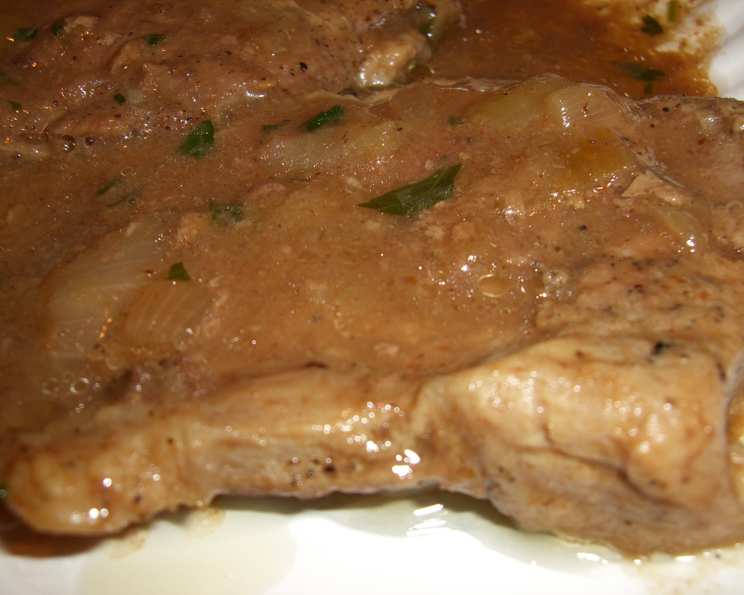
Cider-Braised Pork Chops: A Taste of Autumn
The scent of apples always takes me back to crisp autumn days spent at my grandmother’s orchard. The air, thick with the sweet perfume of ripening fruit, was a prelude to the hearty meals she’d conjure in her farmhouse kitchen. One dish in particular, her cider-braised pork chops, remains a cherished memory. The tender pork, infused with the warmth of apple cider and thyme, was the epitome of comfort food, a perfect embodiment of the season’s bounty.
Recipe Overview
- Prep Time: 15 minutes
- Cook Time: 1 hour 45 minutes
- Total Time: 2 hours
- Servings: 6
- Dietary Type: Gluten-Free (check cider label to ensure gluten-free)
Ingredients
- 6 bone-in blade-cut pork chops, about 1 inch thick
- Salt and pepper
- 2 tablespoons vegetable oil
- 1 onion, chopped
- 3 garlic cloves, minced
- 2 tablespoons all-purpose flour
- 1⁄4 cup apple butter
- 1 cup apple cider
- 1 sprig fresh thyme
- 1 teaspoon cider vinegar
- 1 tablespoon finely chopped fresh parsley
Equipment Needed
- Large Dutch oven
- Plate
- Wooden spoon
- Shallow spoon or fat separator
Instructions
-
Adjust oven rack to lower-middle position and preheat oven to 300 degrees Fahrenheit (150 degrees Celsius). Pat the pork chops dry with paper towels and season generously with salt and pepper. Drying the chops is crucial for achieving a good sear.
-
Heat the vegetable oil in a large Dutch oven over medium-high heat until it just begins to smoke. This indicates the oil is hot enough for browning.
-
Working in two batches to avoid overcrowding the pan, brown the pork chops for about 4 minutes per side, creating a flavorful crust. Overcrowding the pan will lower the oil temperature and result in steamed, rather than browned, chops. Transfer the browned chops to a plate.
-
Pour off all but 1 tablespoon of fat from the Dutch oven. Reduce the heat to medium and add the chopped onion. Cook until the onion is softened and translucent, about 5 minutes, stirring occasionally.
-
Stir in the minced garlic, flour, and 2 tablespoons of apple butter. Cook, stirring constantly, until the onions are coated and the mixture is fragrant, about 1 minute. This step creates a roux that will thicken the sauce. Be careful not to burn the garlic or flour.
-
Gradually stir in the apple cider and thyme sprig, scraping up any browned bits from the bottom of the pot with a wooden spoon. Bring the mixture to a boil. Deglazing the pan like this adds depth of flavor to the sauce.
-
Add the browned pork chops and any accumulated juices from the plate to the pot. Ensure the chops are mostly submerged in the cider mixture. Cover the Dutch oven and transfer it to the preheated oven.
-
Braise in the oven until the pork chops are completely tender, about 1 1/2 hours. The internal temperature of the pork should reach 145 degrees Fahrenheit (63 degrees Celsius). Check for tenderness by piercing the chops with a fork; they should offer little resistance.
-
Transfer the pork chops to a serving platter.
-
Strain the sauce through a fine-mesh sieve into a saucepan, discarding the solids (the thyme sprig and softened onions/garlic). Use a shallow spoon to skim off any excess fat from the surface of the sauce. Alternatively, use a fat separator for a more efficient method of removing excess fat.
-
Whisk in the cider vinegar, remaining apple butter, and finely chopped fresh parsley into the strained sauce. Season to taste with salt and pepper. The cider vinegar adds a touch of acidity that balances the sweetness of the apple cider and butter.
-
Serve the cider-braised pork chops hot, passing the sauce at the table.
Expert Tips & Tricks
- Browning is key: Don’t skip the browning step. It adds a significant layer of flavor to both the pork and the sauce.
- Don’t overcrowd the pan: Brown the pork chops in batches to ensure proper browning. Overcrowding will steam the meat instead of searing it.
- Use good quality apple cider: The flavor of the cider will directly impact the flavor of the sauce. Opt for a fresh, unfiltered cider if possible.
- Adjust sweetness: Taste the sauce and adjust the amount of apple butter to your liking. Some ciders are sweeter than others.
- Rest the pork: After braising, let the pork chops rest for a few minutes before serving. This allows the juices to redistribute, resulting in a more tender and flavorful chop.
Serving & Storage Suggestions
Serve the cider-braised pork chops alongside mashed potatoes, roasted vegetables (such as Brussels sprouts or carrots), or creamy polenta. A simple green salad also makes a refreshing accompaniment.
Leftover pork chops and sauce can be stored separately in airtight containers in the refrigerator for up to 2 days. To reheat, gently warm the sauce in a saucepan over medium heat. Add the pork chops to the sauce and heat until warmed through, turning occasionally. Avoid overheating, as this can dry out the pork.
Freezing is not recommended as the texture of the pork may change after thawing.
Nutritional Information
| Nutrient | Amount per Serving | % Daily Value |
|---|---|---|
| Calories | 418.2 kcal | N/A |
| Calories from Fat | 203 g | 49% |
| Total Fat | 22.6 g | 34% |
| Saturated Fat | 6.6 g | 32% |
| Cholesterol | 137.3 mg | 45% |
| Sodium | 118.2 mg | 4% |
| Total Carbohydrate | 9.3 g | 3% |
| Dietary Fiber | 0.6 g | 2% |
| Sugars | 5 g | 19% |
| Protein | 41.8 g | 83% |
Note: Nutritional information is an estimate and may vary based on specific ingredients and cooking methods.
Variations & Substitutions
- Gluten-free: Ensure your apple cider is gluten-free. You can also substitute the all-purpose flour with a gluten-free all-purpose flour blend or cornstarch to thicken the sauce.
- Spiced Cider: Add a pinch of cinnamon, nutmeg, or cloves to the cider for a warmer, spicier flavor.
- Maple Syrup: Substitute the apple butter with maple syrup for a different kind of sweetness.
- Pork Tenderloin: For a leaner option, use pork tenderloin instead of pork chops. Adjust the braising time accordingly, as tenderloin will cook faster.
- Root Vegetables: Add diced root vegetables like carrots, parsnips, or sweet potatoes to the Dutch oven during the braising process for a heartier, one-pot meal.
FAQs (Frequently Asked Questions)
Q: Can I use bone-in pork loin chops instead of blade-cut pork chops?
A: Yes, you can use bone-in pork loin chops. However, blade-cut chops tend to be more flavorful due to the higher fat content. Adjust cooking time as needed to ensure the pork is tender.
Q: Can I make this recipe in a slow cooker?
A: Yes, you can adapt this recipe for a slow cooker. Brown the pork chops as directed, then transfer them to the slow cooker along with the other ingredients. Cook on low for 6-8 hours or on high for 3-4 hours, or until the pork is tender.
Q: Can I use apple juice instead of apple cider?
A: While you can use apple juice, the flavor will be less intense. Apple cider has a richer, more complex flavor than apple juice. If using apple juice, consider adding a tablespoon of apple cider vinegar or a squeeze of lemon juice to brighten the flavor.
Q: How can I thicken the sauce if it’s too thin?
A: If the sauce is too thin after straining, you can thicken it by simmering it over medium heat until it reduces to your desired consistency. Alternatively, you can whisk together a tablespoon of cornstarch with two tablespoons of cold water to make a slurry, then whisk the slurry into the simmering sauce and cook until thickened.
Q: Can I add dried apples to the braise?
A: Absolutely! Adding a handful of dried apples (about 1/2 cup) to the braise about halfway through the cooking time can add a lovely concentrated apple flavor and a bit of chewy texture to the dish.
Final Thoughts
Cider-braised pork chops offer a delightful blend of savory and sweet, perfect for a cozy autumn evening or any time you crave a comforting and flavorful meal. Don’t be afraid to experiment with different variations and ingredient substitutions to create your own signature version of this classic dish. I encourage you to try this recipe and share your feedback – and perhaps a picture of your culinary creation! Consider pairing it with a crisp Riesling or a dry hard cider to complement the apple flavors. Happy cooking!