
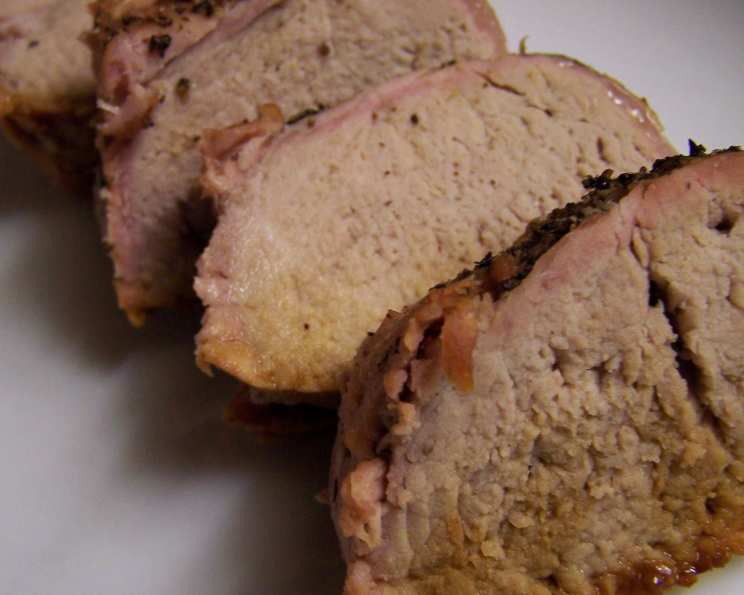
Cider-Roasted Pork Loin: A Taste of Autumn
The first time I tasted pork prepared this way was at a fall harvest festival in upstate New York. The air was crisp, filled with the scent of woodsmoke and fallen leaves, and a local farmer was serving slices of cider-roasted pork from a makeshift smoker. The pork, infused with the sweet and tangy essence of apple cider, was unbelievably tender and flavorful, a perfect counterpoint to the smoky char. Each bite felt like a celebration of the season, and I’ve been chasing that flavor ever since, tweaking and perfecting my own version of this autumnal masterpiece.
Recipe Overview
- Prep Time: 24 hours 15 minutes
- Cook Time: 1 hour 20 minutes
- Total Time: 25 hours 35 minutes
- Servings: 6
- Yield: 6 servings
- Dietary Type: Gluten-Free, Dairy-Free
Ingredients
- 3 cups water
- 3 cups apple cider
- 1/4 cup kosher salt
- 1 tablespoon black peppercorns
- 1 tablespoon coriander seed
- 1 bay leaf
- 1 (2 lb) boneless pork loin, trimmed
- 2 cups apple cider
- Cooking spray
- 1 1/2 teaspoons chopped fresh rosemary
- 1 1/2 teaspoons chopped fresh sage
- 1/8 teaspoon fresh ground black pepper
Equipment Needed
- Saucepan
- 2-gallon zip-loc plastic bag
- Oven
- Small saucepan
- Broiler pan with rack
Instructions
- In a large saucepan, combine the water, apple cider (3 cups), kosher salt, black peppercorns, coriander seed, and bay leaf. Bring the mixture to a boil over high heat, stirring until the salt is completely dissolved.
- Remove the saucepan from the heat and allow the brine to cool completely to room temperature. This is crucial for food safety.
- Pour the cooled brine into a 2-gallon zip-loc plastic bag.
- Add the trimmed 2 lb pork loin to the bag. Ensure the pork is fully submerged in the brine. Seal the bag tightly, removing as much air as possible.
- Refrigerate the pork in the brine for at least 8 hours, or ideally overnight (approximately 24 hours). Turn the bag occasionally to ensure even brining. This step is essential for creating a juicy and flavorful final product.
- Preheat your oven to 350 degrees Fahrenheit (175 degrees Celsius).
- While the oven preheats, pour the remaining 2 cups of apple cider into a small saucepan. Bring the cider to a boil over medium-high heat.
- Continue to cook the cider, uncovered, until it has thickened slightly and reduced to approximately 1/4 cup. This process should take about 15-20 minutes. The reduced cider will act as a flavorful glaze. Monitor the cider closely to prevent it from burning. Set aside the reduced cider.
- Remove the pork loin from the zip-loc bag and discard the brine. Pat the pork dry with paper towels. This helps with even browning in the oven.
- Place the pork loin on the rack of a broiler pan that has been lightly coated with cooking spray. The broiler pan will catch any drippings and prevent smoking in the oven.
- Lightly coat the pork loin with cooking spray. This will help the herbs adhere and promote browning.
- In a small bowl, combine the chopped fresh rosemary, chopped fresh sage, and ground black pepper.
- Sprinkle the herb mixture evenly over the entire surface of the pork loin, pressing gently to ensure it sticks.
- Bake the pork loin in the preheated oven at 350 degrees Fahrenheit (175 degrees Celsius) for 1 hour, or until a meat thermometer inserted into the thickest part of the pork registers 155 degrees Fahrenheit (68 degrees Celsius). During the final 20 minutes of cooking, baste the pork twice with the reduced apple cider. This will create a beautiful glaze.
- Once the pork reaches 155 degrees Fahrenheit, remove it from the oven. Baste the pork one last time with the remaining reduced apple cider.
- Tent the pork loin loosely with aluminum foil and let it stand for 10 minutes before slicing and serving. This allows the juices to redistribute, resulting in a more tender and flavorful final product. The internal temperature will continue to rise slightly during this resting period.
Expert Tips & Tricks
- For an even deeper apple flavor, consider adding a splash of apple cider vinegar to the cider reduction.
- If you don’t have fresh herbs, you can use dried, but reduce the amount by half. Dried herbs are more concentrated in flavor.
- Don’t skip the brining step! It’s crucial for adding moisture and flavor to the pork.
- If your pork loin is browning too quickly, tent it loosely with foil during the last part of the cooking time.
- Use a reliable meat thermometer to ensure your pork is cooked to a safe internal temperature.
Serving & Storage Suggestions
Serve the Cider-Roasted Pork Loin sliced thinly. It pairs beautifully with roasted root vegetables like carrots, parsnips, and sweet potatoes. Applesauce or a simple pan sauce made with the pork drippings would also be delicious accompaniments.
Leftover pork can be stored in an airtight container in the refrigerator for up to 3-4 days. To reheat, gently warm the slices in a skillet with a little broth or apple cider to prevent them from drying out. You can also freeze the cooked pork for longer storage; wrap it tightly in plastic wrap and then foil before freezing. Thaw overnight in the refrigerator before reheating. Reheated pork is best used in sandwiches, salads, or stir-fries.
Nutritional Information
| Nutrient | Amount per Serving | % Daily Value |
|---|---|---|
| Calories | 302.8 kcal | N/A |
| Calories from Fat | 172 g | 57% |
| Total Fat | 19.2 g | 29% |
| Saturated Fat | 6.6 g | 33% |
| Cholesterol | 95.2 mg | 31% |
| Sodium | 4793.9 mg | 199% |
| Total Carbohydrate | 0.6 g | 0% |
| Dietary Fiber | 0.5 g | 1% |
| Sugars | 0 g | 0% |
| Protein | 30 g | 59% |
Variations & Substitutions
- For a spicier kick, add a pinch of red pepper flakes to the herb mixture.
- Instead of rosemary and sage, try using thyme and oregano for a more Mediterranean flavor profile.
- If you don’t have apple cider, you can substitute apple juice, but the flavor will be less intense.
- To make a pan sauce, deglaze the broiler pan with a little apple cider vinegar or white wine after the pork is cooked, scraping up any browned bits from the bottom of the pan. Whisk in a pat of butter for richness.
FAQs (Frequently Asked Questions)
Q: Can I use a bone-in pork loin for this recipe?
A: Yes, you can use a bone-in pork loin, but you may need to adjust the cooking time. Use a meat thermometer to ensure the pork reaches an internal temperature of 155 degrees Fahrenheit.
Q: Can I brine the pork for longer than 24 hours?
A: While brining enhances flavor and moisture, brining for significantly longer than 24 hours can result in overly salty pork. It’s best to stick to the recommended time frame.
Q: What if I don’t have a broiler pan?
A: If you don’t have a broiler pan, you can use a roasting pan with a rack. The rack allows the air to circulate around the pork, promoting even cooking.
Q: Can I make this recipe ahead of time?
A: You can brine the pork a day ahead of time. The cider reduction can also be made in advance and stored in the refrigerator.
Q: How do I know when the pork is fully cooked?
A: The best way to determine if the pork is fully cooked is to use a meat thermometer. Insert the thermometer into the thickest part of the pork, avoiding any bone. The pork should reach an internal temperature of 155 degrees Fahrenheit.
Final Thoughts
This Cider-Roasted Pork Loin is more than just a recipe; it’s an invitation to savor the flavors of autumn. With its juicy tenderness and delicate apple-infused aroma, it’s a dish that’s sure to impress your family and friends. Don’t be afraid to experiment with different herbs and spices to create your own unique twist. I encourage you to give this recipe a try and share your culinary creations with loved ones. And if you happen to have any feedback or creative variations, please share them with me – I’m always eager to learn from fellow home chefs!