
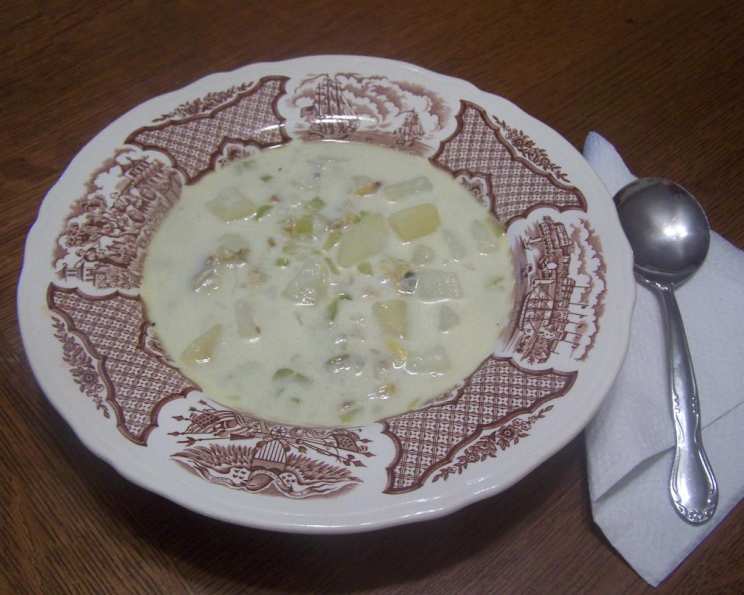
The Ultimate New England Clam Chowder: A Taste of the Coast
The first time I tasted truly exceptional New England Clam Chowder was at a tiny, weathered shack right on the docks in Boston. The salty air, the cries of the gulls, and the creamy, comforting warmth of that chowder all mingled into an unforgettable experience. It was more than just a soup; it was a taste of history, a connection to the sea, and a reminder of simple, honest flavors. Ever since then, I’ve been on a quest to recreate that perfect bowl, and I believe this recipe comes incredibly close.
Recipe Overview
- Prep Time: 20 minutes
- Cook Time: 1 hour
- Total Time: 1 hour 20 minutes
- Servings: 4-6
- Dietary Type: Dairy-containing
Ingredients
- 8 lbs small quahogs or 8 lbs cherrystone clams
- 4 slices bacon, cut into 1/2 inch pieces
- 3 tablespoons unsalted butter
- 2 cups finely chopped yellow onions
- 1 cup finely chopped celery
- 1 1/2 teaspoons minced garlic
- 6 sprigs fresh thyme leaves
- 2 bay leaves
- 3 cups cubed potatoes, 1/2 inch cubes, peeled (about 1 1/4 lbs.)
- 2 cups heavy whipping cream
- 1/4 teaspoon fresh ground black pepper
- Salt (to taste)
- 6 tablespoons cold unsalted butter, cut into tsp size pieces
- 1/4 cup fresh minced flat leaf parsley
- 1/4 cup finely chopped scallion
Equipment Needed
- Large stockpot
- Large bowl
- Fine mesh sieve or cheese cloth
- Large heavy pot
- Wooden spoon
Instructions
- Begin by preparing the clams. In a large stockpot, bring 2 cups of water to a boil.
- Add the clams, cover the pot, and cook for 5 minutes.
- Uncover the pot, quickly stir the clams with a wooden spoon, and cover again.
- Continue to cook for another 5 to 10 minutes, or until most of the clams have opened. Any clams that do not open should be discarded.
- Transfer the cooked clams to a large bowl.
- Strain the broth twice through a fine mesh sieve or cheese cloth into another bowl. This step is crucial for removing any sand and grit. You should aim for about 6 cups of clam broth. If necessary, add enough water to reach this amount.
- Allow the clams to cool enough to handle. Then, remove them from their shells and cut them into 1/2 inch pieces.
- Set the clams and the strained broth aside.
- Now, move on to the base of the chowder. In a large heavy pot, cook the bacon until it’s crisp and the fat is rendered.
- Pour off all but 2 tablespoons of the bacon fat.
- Add the unsalted butter, finely chopped yellow onions, and finely chopped celery to the pot. Cook until the vegetables have softened, approximately 5 minutes.
- Add the minced garlic, fresh thyme leaves, and bay leaves to the pot. Cook until the vegetables are completely wilted, about 3 minutes, being careful not to brown the garlic.
- Add the cubed potatoes and the reserved clam broth to the pot. Bring the mixture to a boil.
- Reduce the heat, cover the pot, and simmer for 20 to 30 minutes, or until the broth has slightly thickened and the potatoes are very tender.
- If you prefer a thicker broth, use a wooden spoon to mash some of the potatoes against the side of the pot.
- Remove the pot from the heat. Stir in the chopped clams and heavy whipping cream. Season with salt and fresh ground black pepper to taste.
- Set the chowder aside for 1 hour to allow all of the flavors to meld together thoroughly.
- Before serving, place the pot over low heat and slowly reheat the chowder. Be careful not to bring it to a boil, as this can cause the cream to curdle.
- Serve the chowder hot, garnished with 1 or 2 pats of cold unsalted butter and some fresh minced flat leaf parsley and finely chopped scallions.
Expert Tips & Tricks
- Clam Preparation is Key: Thoroughly cleaning the clams before cooking is essential to avoid a gritty chowder. Soak the clams in cold, salted water for about 20 minutes to encourage them to purge any sand.
- Don’t Overcook the Clams: Overcooked clams become rubbery. Add them towards the end of the cooking process to keep them tender.
- Thicken to Perfection: If your chowder isn’t thick enough, mix a tablespoon of cornstarch with a tablespoon of cold water and whisk it into the simmering chowder.
- Enhance the Flavor: A splash of dry sherry or white wine added along with the broth can add a depth of flavor.
- Bacon Matters: Use good quality bacon with a high meat-to-fat ratio. This will yield more flavor and less grease.
Serving & Storage Suggestions
Serve this New England Clam Chowder hot in warmed bowls. A crusty loaf of sourdough bread or oyster crackers are classic accompaniments. For a more elegant presentation, drizzle a swirl of olive oil on top and garnish with extra parsley.
Leftover chowder can be stored in an airtight container in the refrigerator for up to 3 days. Reheat gently over low heat, stirring frequently to prevent scorching. The texture may change slightly upon reheating, but the flavor will remain delicious. Freezing is not recommended, as the cream can separate upon thawing.
Nutritional Information
| Nutrient | Amount per Serving | % Daily Value |
|---|---|---|
| Calories | 650 kcal | 33% |
| Total Fat | 50g | 77% |
| Saturated Fat | 30g | 150% |
| Cholesterol | 150mg | 50% |
| Sodium | 800mg | 35% |
| Total Carbohydrate | 30g | 10% |
| Dietary Fiber | 3g | 12% |
| Sugars | 5g | N/A |
| Protein | 20g | 40% |
Nutritional information is an estimate and can vary based on specific ingredients and portion sizes.
Variations & Substitutions
- Smoked Clam Chowder: Use smoked clams in addition to the fresh clams for a smoky twist.
- Spicy Clam Chowder: Add a pinch of red pepper flakes or a dash of hot sauce for a kick.
- Gluten-Free Clam Chowder: This recipe is naturally gluten-free. Just be sure to serve it with gluten-free bread or crackers.
- Lower-Fat Clam Chowder: Use half-and-half or whole milk instead of heavy cream for a lighter version.
- Vegetarian Option: Although not truly Clam Chowder, you could substitute the clams with chopped oyster mushrooms for a similar texture and umami flavor, and use vegetable broth instead of clam broth. You would need to adjust other seasonings to get a satisfying flavor.
FAQs (Frequently Asked Questions)
Q: Can I use canned clams instead of fresh clams?
A: While fresh clams are ideal for the best flavor, canned clams can be used in a pinch. Be sure to drain them well and reduce the amount of salt you add to the chowder, as canned clams are often quite salty.
Q: How do I prevent the cream from curdling when reheating the chowder?
A: Reheat the chowder slowly over low heat, stirring frequently. Avoid bringing it to a boil, as this is what causes the cream to curdle.
Q: Can I make this chowder ahead of time?
A: Yes, the chowder can be made a day ahead of time. In fact, the flavors often improve overnight as they meld together. Store it in an airtight container in the refrigerator and reheat gently before serving.
Q: What is the best type of potato to use in clam chowder?
A: Yukon Gold potatoes are a great choice for clam chowder because they hold their shape well and have a creamy texture. Russet potatoes can also be used, but they may break down more during cooking, resulting in a thicker chowder.
Q: How can I tell if the clams are cooked through?
A: Clams are cooked through when their shells open. Discard any clams that do not open after cooking. The clam meat should be firm and slightly translucent.
Final Thoughts
Making New England Clam Chowder from scratch might seem a little daunting, but trust me, it’s absolutely worth the effort. The taste of fresh clams, creamy broth, and perfectly cooked potatoes is simply divine. I encourage you to give this recipe a try and experience the comforting flavors of the coast in your own kitchen. Don’t be afraid to adjust the seasonings to your liking and experiment with different variations. And please, let me know how it turns out! I’d love to hear about your own clam chowder adventures. This chowder pairs wonderfully with a crisp Sauvignon Blanc or a local craft beer. Enjoy!