
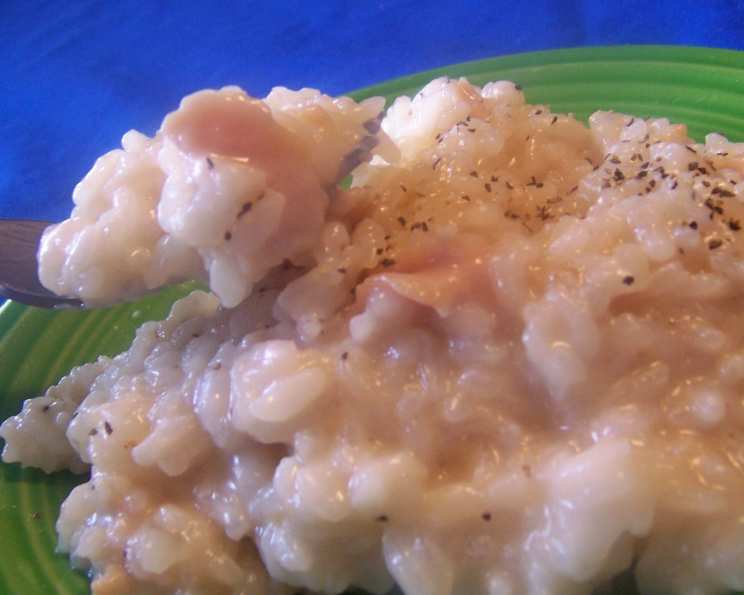
Clam Risotto: A Taste of the Italian Coast
The first time I tasted clam risotto was on a small, family-run trattoria overlooking the Ligurian Sea. The air was thick with the scent of salt and lemons, and the sound of waves crashing against the shore provided the perfect backdrop to the creamy, briny perfection that unfolded on my palate. Each grain of rice seemed to hold the essence of the ocean, and I knew from that moment on, I had to recreate that magic in my own kitchen. This recipe is my humble attempt to capture that coastal Italian dream.
Recipe Overview
- Prep Time: 15 minutes
- Cook Time: 45 minutes
- Total Time: 1 hour
- Servings: 4
- Yield: 4 servings
- Dietary Type: Pescatarian
Ingredients
- 1 1⁄2 cups Arborio rice
- 2 large Shallots
- 4 cups Clam juice
- 1⁄2 tablespoon Butter
- 1⁄2 cup Dry white wine
- 2 ounces Heavy cream
- Salt and Pepper to taste
- 1 (6 ounce) can Ocean clams, drained
Equipment Needed
- 2 quart saucepan
- Wooden spoon or spatula
- Measuring cups and spoons
Instructions
- Begin by placing the butter in a 2-quart saucepan over medium heat. Allow the butter to melt completely.
- Add the minced shallots to the melted butter. Sauté the shallots until they become soft and translucent, being careful not to brown them. This should take approximately 5-7 minutes.
- Introduce the Arborio rice to the pan with the softened shallots. Cook the rice, stirring constantly, until it becomes translucent around the edges. This step is crucial for developing the creamy texture of the risotto, as it toasts the rice grains. About 3-5 minutes.
- Pour in the dry white wine. Continue to cook, stirring frequently, until the wine is almost completely absorbed by the rice. This step deglazes the pan and adds a layer of complexity to the flavor profile.
- Now, it’s time to add the clam juice. Ensure the clam juice is hot, but not boiling. Add one cup of the hot clam juice to the rice.
- Stir the rice continually as it cooks and absorbs the clam juice. Patience is key here.
- Once the rice has absorbed all of the first cup of clam juice, add another cup. Continue to stir the rice as it cooks, preventing it from sticking to the bottom of the pan.
- Repeat this process of adding a cup of hot clam juice at a time, stirring constantly, until you have added all four cups of clam juice.
- At this point, the rice should be nearly fully cooked. Taste the rice to check for doneness. It should be al dente – tender but with a slight bite. If the rice is not quite cooked through and all the clam juice has been absorbed, add a little water, about ¼ cup at a time, and continue to stir and cook until the rice is just cooked through.
- Gently fold in the drained clam meat and cook for approximately one minute, allowing the clams to heat through. Be careful not to overcook the clams, as they can become rubbery.
- Stir in the heavy cream to enrich the risotto and create a luxurious, creamy texture.
- Season the risotto to taste with salt and pepper. Remember that clam juice can be quite salty, so taste before adding any additional salt.
- Cook for one additional minute, stirring constantly, to ensure the cream is well incorporated.
- Serve immediately, while the risotto is hot and creamy.
Expert Tips & Tricks
- Warm the Clam Juice: Heating the clam juice before adding it to the rice helps to maintain a consistent cooking temperature and prevents the rice from cooling down, which can affect the texture.
- Don’t Rinse the Rice: Unlike other rice preparations, you should never rinse Arborio rice before cooking risotto. The starch on the surface of the rice is essential for creating the creamy texture that is characteristic of risotto.
- Stirring is Key: Constant stirring is crucial for developing the creamy texture of risotto. As the rice rubs against itself, it releases starch, which thickens the liquid and creates a smooth, luscious sauce.
- Wine Selection: Choose a dry, crisp white wine such as Pinot Grigio or Sauvignon Blanc to complement the flavors of the clams and enhance the overall dish.
- Make it Ahead (Partially): You can prepare the risotto up to the point of adding the clams and cream ahead of time. When ready to serve, simply reheat the risotto with a little extra clam juice or water, then stir in the clams and cream as directed.
Serving & Storage Suggestions
Clam risotto is best served immediately, while it is hot and creamy. Garnish with a sprinkle of fresh parsley and a lemon wedge for added brightness. For a more elegant presentation, serve in warmed bowls.
Leftover clam risotto can be stored in an airtight container in the refrigerator for up to 2 days. To reheat, add a splash of water or clam juice to the risotto and heat gently over low heat, stirring frequently, until heated through. Avoid reheating in the microwave, as this can cause the rice to become dry and rubbery. Freezing is not recommended, as the texture of the risotto will change significantly.
Nutritional Information
| Nutrient | Amount per Serving | % Daily Value |
|---|---|---|
| Calories | 380 kcal | 19% |
| Total Fat | 12g | 18% |
| Saturated Fat | 7g | 35% |
| Cholesterol | 45mg | 15% |
| Sodium | 850mg | 35% |
| Total Carbohydrate | 55g | 18% |
| Dietary Fiber | 2g | 8% |
| Sugars | 5g | – |
| Protein | 10g | 20% |
Note: Nutritional information is an estimate and may vary based on specific ingredients and preparation methods.
Variations & Substitutions
- Vegetarian Option: For a vegetarian version, substitute the clam juice with vegetable broth and omit the clams. Add sautéed mushrooms or other vegetables for added flavor and texture.
- Seafood Medley: Incorporate other seafood such as shrimp, scallops, or mussels for a richer, more complex flavor profile. Add the seafood along with the clams in the final stages of cooking.
- Lemon Zest: Add a teaspoon of lemon zest along with the clam meat for a bright, citrusy note.
- Parmesan Cheese: Stir in a tablespoon or two of grated Parmesan cheese along with the cream for a richer, more savory flavor. However, purists may argue that cheese doesn’t traditionally belong in seafood risotto.
- Herbs: Experiment with different herbs such as thyme, oregano, or chives to customize the flavor to your liking. Add the herbs towards the end of cooking to preserve their aroma.
FAQs (Frequently Asked Questions)
Q: Can I use a different type of rice?
A: While other types of rice can be used, Arborio rice is specifically recommended for risotto because of its high starch content, which contributes to the creamy texture. Using other rice varieties will result in a different consistency.
Q: How do I know when the risotto is done?
A: The rice should be al dente, meaning it is tender but still has a slight bite to it. The risotto should also be creamy and slightly loose, not dry or stiff.
Q: Can I make this recipe without white wine?
A: Yes, you can omit the white wine if desired. Simply substitute it with an equal amount of clam juice or chicken broth. However, the wine adds depth of flavor, so it is recommended if available.
Q: Is it important to use hot clam juice?
A: Yes, using hot clam juice helps to maintain a consistent cooking temperature and prevents the rice from cooling down, which can affect the texture of the risotto.
Q: Can I use fresh clams instead of canned?
A: Absolutely! If using fresh clams, steam them open and reserve the clam broth for the risotto. You’ll need about 1 pound of fresh clams for this recipe.
Final Thoughts
Clam risotto is more than just a dish; it’s an experience. It’s a journey to the Italian coast, a celebration of simple ingredients transformed into something extraordinary. Don’t be intimidated by the constant stirring – embrace the process, savor the aromas, and enjoy the reward of a perfectly creamy, briny risotto. I encourage you to try this recipe, experiment with variations, and make it your own. And please, share your feedback – I’m always eager to learn and improve! Pair this dish with a crisp glass of Pinot Grigio and a simple green salad for a truly unforgettable meal. Buon appetito!