
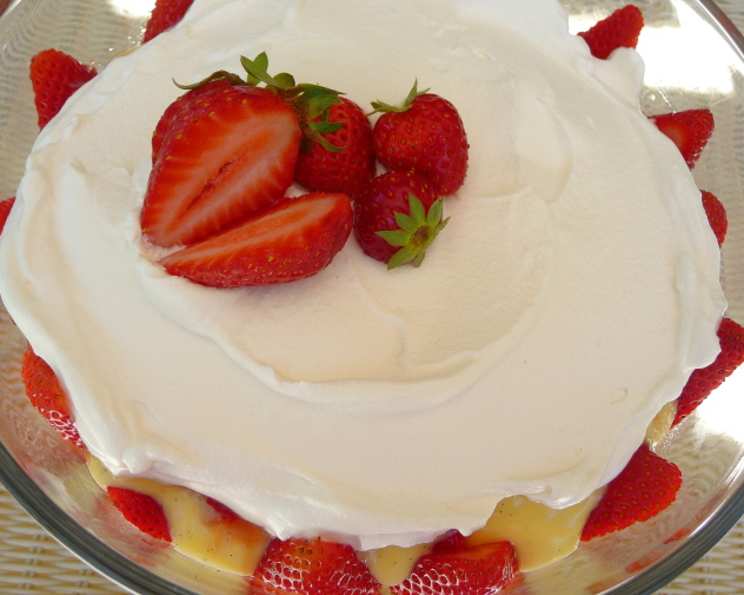
The Timeless Elegance of Classic Custard Sauce
My grandmother, Nana Rose, always had a pot of something simmering on the stove. More often than not, it was the beginnings of her legendary custard sauce. I remember standing on a stool, mesmerized by the swirling steam and the hypnotic rhythm of her whisk. The rich, vanilla-infused aroma would fill her cozy kitchen, a scent that to this day instantly transports me back to those cherished moments of childhood warmth and culinary wonder. To me, custard sauce isn’t just a dessert accompaniment; it’s a tangible connection to my heritage, a spoonful of pure nostalgia.
Recipe Overview
- Prep Time: 10 minutes
- Cook Time: 10 minutes
- Total Time: 20 minutes
- Servings: 8-10
- Yield: Approximately 2 1/2 cups
- Dietary Type: Not suitable for Vegan, Gluten-Free naturally
Ingredients
- 6 egg yolks, at room temperature and lightly beaten
- 2/3 cup sugar
- 1 pinch salt
- 2 cups half-and-half, at room temperature
- 2 tablespoons sherry wine (can substitute brandy or 1 teaspoon vanilla extract)
Equipment Needed
- Double boiler (or heatproof bowl and saucepan)
- Whisk
- Measuring cups and spoons
Instructions
- First, prepare your double boiler. Fill the bottom pot with about an inch of water. The water level should be below the bottom of the top pan to prevent direct heat. Place the bottom pot over medium heat and bring the water to a gentle simmer. It’s crucial that the water doesn’t touch the top pan, as this can cause the custard to overcook and curdle.
- In the top of the double boiler (or heatproof bowl), combine the egg yolks, sugar, and salt. Whisk these ingredients together vigorously until the mixture becomes thick, pale yellow, and light in color. This step is essential for creating a smooth and creamy custard. The whisking incorporates air, which helps to stabilize the egg yolks and prevent them from scrambling.
- Gradually add the half-and-half to the egg yolk mixture, whisking constantly. It’s important to add the half-and-half slowly to temper the eggs and prevent them from cooking too quickly. Tempering involves gradually raising the temperature of the eggs, which helps to prevent curdling.
- Place the top of the double boiler over the simmering water. Heat the mixture, stirring constantly with a whisk or a spatula, until it thickens enough to coat the back of a spoon. This usually takes about 5-10 minutes. To test for doneness, dip a spoon into the custard and run your finger across the back of the spoon. If the line remains clear and doesn’t run, the custard is ready. Be patient and maintain a gentle, constant stirring motion to ensure even cooking and prevent scorching.
- Important: Do not allow the mixture to come to a boil. If it boils, the eggs will curdle, and the custard will become grainy. Keep a close eye on the mixture and reduce the heat if necessary.
- Remove the top of the double boiler from the heat. Stir in the sherry wine (or brandy or vanilla extract) to add flavor. Mix well to ensure the alcohol or extract is evenly distributed.
- Pour the custard sauce into a bowl or container. Cover the surface of the custard directly with plastic wrap to prevent a skin from forming. This is a crucial step for maintaining a smooth and appealing texture.
- Chill the custard sauce in the refrigerator for at least 2 hours, or preferably overnight, to allow the flavors to meld and the custard to fully set.
Expert Tips & Tricks
- Vanilla Bean Infusion: For an even richer flavor, split a vanilla bean lengthwise and scrape the seeds into the half-and-half before heating. You can also add the pod to the half-and-half while it heats, removing it before adding the egg mixture.
- Preventing Curdling: If you see the custard starting to curdle, immediately remove it from the heat and whisk vigorously. Sometimes, this can save the custard. You can also try straining the custard through a fine-mesh sieve to remove any lumps.
- Make-Ahead Magic: Custard sauce is ideal for making ahead of time. Prepare it up to two days in advance and store it in the refrigerator.
- Flavor Variations: Experiment with different extracts or liqueurs to customize the flavor of your custard sauce. Almond extract, lemon zest, or a dash of cinnamon can add exciting twists.
- Silky Smoothness: If you want an ultra-smooth custard, pass it through a fine-mesh sieve after cooking to remove any tiny imperfections.
Serving & Storage Suggestions
Classic custard sauce is incredibly versatile. Serve it warm or chilled over fresh fruit, pound cake, bread pudding, or trifles. It’s also a delightful accompaniment to poached pears or baked apples. For a simple yet elegant dessert, spoon the custard into individual goblets and top with a sprinkle of nutmeg or a few fresh berries.
Store leftover custard sauce in an airtight container in the refrigerator for up to 3 days. It’s best not to freeze custard sauce, as the texture can become grainy upon thawing. To reheat, gently warm the custard in a saucepan over low heat, stirring constantly, or in the microwave in short bursts, stirring in between.
Nutritional Information
| Nutrient | Amount per Serving | % Daily Value |
|---|---|---|
| Calories | 195.5 kcal | N/A |
| Calories from Fat | 90 g | 46% |
| Total Fat | 10 g | 15% |
| Saturated Fat | 5.4 g | 27% |
| Cholesterol | 146.9 mg | 48% |
| Sodium | 50.8 mg | 2% |
| Total Carbohydrate | 20.2 g | 6% |
| Dietary Fiber | 0 g | 0% |
| Sugars | 16.9 g | 67% |
| Protein | 3.6 g | 7% |
Note: Nutritional information is an estimate and may vary depending on specific ingredients and portion sizes.
Variations & Substitutions
- Dairy-Free Custard: Substitute the half-and-half with a combination of coconut milk and almond milk for a dairy-free version.
- Lemon Custard: Add the zest of one lemon to the half-and-half while heating for a bright and citrusy custard.
- Chocolate Custard: Whisk in 2 tablespoons of unsweetened cocoa powder along with the sugar for a decadent chocolate custard.
- Spiced Custard: Add a pinch of ground cinnamon, nutmeg, or cardamom for a warm and aromatic custard, perfect for the holidays.
- Boozy Custard: Experiment with different liqueurs like Amaretto, Grand Marnier, or coffee liqueur for a sophisticated twist.
FAQs (Frequently Asked Questions)
Q: Why did my custard curdle?
A: Curdling usually occurs when the custard is heated too quickly or at too high a temperature. Make sure to use a double boiler and stir constantly to prevent overheating.
Q: Can I use whole milk instead of half-and-half?
A: Yes, you can use whole milk, but the custard will be less rich and creamy. For the best results, stick with half-and-half.
Q: How do I know when the custard is done?
A: The custard is done when it’s thick enough to coat the back of a spoon. When you run your finger across the coated spoon, the line should remain clear and not run.
Q: Can I add other flavors to the custard?
A: Absolutely! Extracts, spices, citrus zest, and liqueurs can all be added to customize the flavor of your custard sauce.
Q: What’s the best way to store leftover custard?
A: Store leftover custard in an airtight container in the refrigerator for up to 3 days. Place plastic wrap directly on the surface of the custard to prevent a skin from forming.
Final Thoughts
Classic custard sauce is more than just a recipe; it’s an experience, a journey back to comforting flavors and cherished memories. Don’t be intimidated by the seemingly delicate process – with a little patience and attention to detail, you’ll be rewarded with a luscious, velvety sauce that elevates any dessert. I encourage you to try this recipe and make it your own. Perhaps add a personal touch with your favorite flavorings or serve it alongside a family-favorite treat. Let me know how it turns out!