
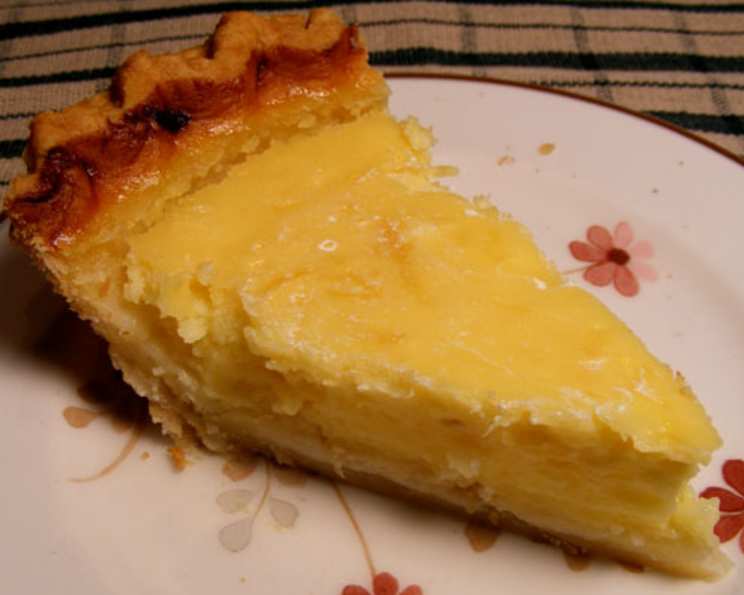
Classic French Tarte Au Citron – Fresh Lemon Tart
The scent of lemons always takes me back to my grandmother’s sun-drenched kitchen in Provence. I remember, as a child, watching her effortlessly transform simple ingredients into the most vibrant, comforting desserts. The Tarte au Citron, with its bright, tangy filling and buttery crust, was always a family favorite, its sharp, sweet notes a perfect match for the warm Mediterranean air. This recipe is my tribute to her, a little taste of sunshine in every bite.
Recipe Overview
- Prep Time: 20 minutes
- Cook Time: 47-50 minutes
- Total Time: 1 hour 10 minutes
- Servings: 6
- Yield: 1 tart
- Dietary Type: Vegetarian
Ingredients
- 300g ready-made shortcrust pastry
- 200ml fresh lemon juice
- 2 lemons, zest of, fresh finely grated
- 8 tablespoons creme fraiche
- 160g caster sugar
- 7 eggs, beaten
- Icing sugar, to sprinkle
Equipment Needed
- 24cm to 26cm tart or quiche dish
- Rolling pin
- Baking beans or weights
- Large bowl
- Whisk
- Oven
Instructions
-
First, preheat your oven to 180°C/350°F/gas mark 4. This is crucial for ensuring even baking and a perfectly set custard.
-
Roll out the shortcrust pastry on a lightly floured surface. Gently ease it into your 24cm to 26cm tart or quiche dish, pressing it firmly against the base and sides. Trim any excess pastry, leaving a neat edge.
-
Now, it’s time to blind bake the crust. Prick the base of the pastry all over with a fork to prevent it from puffing up during baking. Line the pastry with parchment paper and fill it with baking beans or weights.
-
Bake the pastry in the preheated oven for about 7-10 minutes, or until it is lightly golden brown and slightly crisp. This step is important for a flaky and sturdy base that won’t become soggy. Remove the parchment paper and baking beans after the initial baking time.
-
While the pastry is baking, prepare the lemon filling. In a large bowl, whisk together the fresh lemon juice, crème fraiche, caster sugar, and beaten eggs. Ensure all the ingredients are well combined and the sugar has dissolved.
-
Add the finely grated zest of 2 lemons to the mixture and mix well. The lemon zest adds an extra layer of flavor and aroma to the tart.
-
Carefully pour the lemon mixture into the pre-baked pastry case. Ensure the filling is evenly distributed.
-
Return the tart to the oven and bake for approximately 40 minutes, or until the custard has set but is still slightly wobbly. The wobble is key – it indicates the tart is perfectly cooked but still has a creamy, melt-in-your-mouth texture. To check for doneness, gently shake the tart; the center should have a slight jiggle, not be completely liquid.
-
Once the tart is baked, remove it from the oven and let it cool slightly on a wire rack. This will help the tart to set further and prevent the pastry from becoming soggy.
-
Before serving, sprinkle the tart liberally with icing sugar. This adds a touch of sweetness and creates a beautiful, elegant finish.
-
The Tarte au Citron is best served slightly warm or at room temperature.
Expert Tips & Tricks
- For an extra tangy flavor, use Meyer lemons if they are available. Their floral notes add a unique dimension to the tart.
- If you find that your pastry is browning too quickly during the blind baking process, tent it with foil.
- To avoid a soggy bottom, brush the pre-baked pastry case with a thin layer of melted white chocolate before adding the lemon filling. This creates a waterproof barrier.
- If your custard starts to brown too quickly in the oven, lower the temperature slightly and continue baking until set.
- Make sure to use fresh lemon juice for the best flavor. Bottled lemon juice can sometimes have a slightly bitter taste.
- Don’t overbake the tart. A slight wobble in the center is a sign that it’s perfectly cooked. It will continue to set as it cools.
- For a smoother filling, strain the lemon mixture through a fine-mesh sieve before pouring it into the pastry case.
Serving & Storage Suggestions
Serve the Tarte au Citron slightly warm or at room temperature. A drizzle of cassis and a sprig of mint add an elegant touch. Alternatively, serve it with a dollop of crème fraiche or whipped cream to complement the tartness of the lemon.
Leftovers can be stored in the refrigerator for up to 3 days. Cover the tart loosely with plastic wrap to prevent it from drying out. The tart is best enjoyed fresh, but it can be reheated gently in a low oven if desired. To reheat, preheat the oven to 150°C (300°F) and bake for about 10-15 minutes, or until warmed through.
While freezing is not recommended for the entire tart (as the texture of the custard may change), individual slices can be frozen. Wrap each slice tightly in plastic wrap and then place them in a freezer-safe container. Thaw the slices in the refrigerator overnight before serving.
Nutritional Information
| Nutrient | Amount per Serving | % Daily Value |
|---|---|---|
| Calories | 500 kcal | 25% |
| Total Fat | 28.6g | 44% |
| Saturated Fat | 10.2g | 51% |
| Cholesterol | 274.1mg | 91% |
| Sodium | 330.6mg | 13% |
| Total Carbohydrate | 51.7g | 17% |
| Dietary Fiber | 1.8g | 7% |
| Sugars | 28g | 111% |
| Protein | 10.7g | 21% |
Note: Nutritional information is an estimate and may vary based on specific ingredients and portion sizes.
Variations & Substitutions
- Gluten-Free: Use a gluten-free shortcrust pastry recipe or a commercially available gluten-free pastry.
- Dairy-Free: Substitute the crème fraiche with a plant-based alternative like coconut cream or cashew cream. Be sure to choose an unsweetened variety.
- Lime Tart: Replace the lemon juice and zest with lime juice and zest for a tangy lime tart.
- Orange Tart: Substitute orange juice and zest for a sweeter, less tart flavor.
- Seasonal Fruits: Add a layer of fresh berries or sliced stone fruits on top of the baked tart for a seasonal twist.
- Almond Crust: Use a shortcrust pastry made with almond flour for a nutty flavor and a slightly crumbly texture.
- Italian Meringue Topping: Top the baked and cooled tart with a fluffy Italian meringue for an extra layer of sweetness and visual appeal.
FAQs (Frequently Asked Questions)
Q: Can I use a different type of pastry?
A: While shortcrust pastry is traditional, you can experiment with other types of pastry such as pâte sucrée for a sweeter crust or puff pastry for a flakier base.
Q: Why is my tart filling runny?
A: The most common reason for a runny filling is underbaking. Make sure to bake the tart until the custard is set but still slightly wobbly. Also, ensure the oven temperature is accurate.
Q: Can I make the tart ahead of time?
A: Yes, you can make the tart a day ahead of time and store it in the refrigerator. This allows the flavors to meld and the custard to set completely.
Q: How do I prevent the pastry from shrinking during baking?
A: Blind baking with baking beans or weights helps prevent the pastry from shrinking. Also, ensure the pastry is properly chilled before baking.
Q: What if I don’t have crème fraiche?
A: You can substitute crème fraiche with sour cream or thick Greek yogurt.
Final Thoughts
The Tarte au Citron is more than just a dessert; it’s an experience. The bright, tangy flavor, the creamy texture, and the buttery crust combine to create a symphony of sensations that will delight your taste buds. I encourage you to try this recipe and experience the magic of French baking in your own kitchen. Share your creations and feedback – I’d love to hear how it turns out. Bon appétit!