
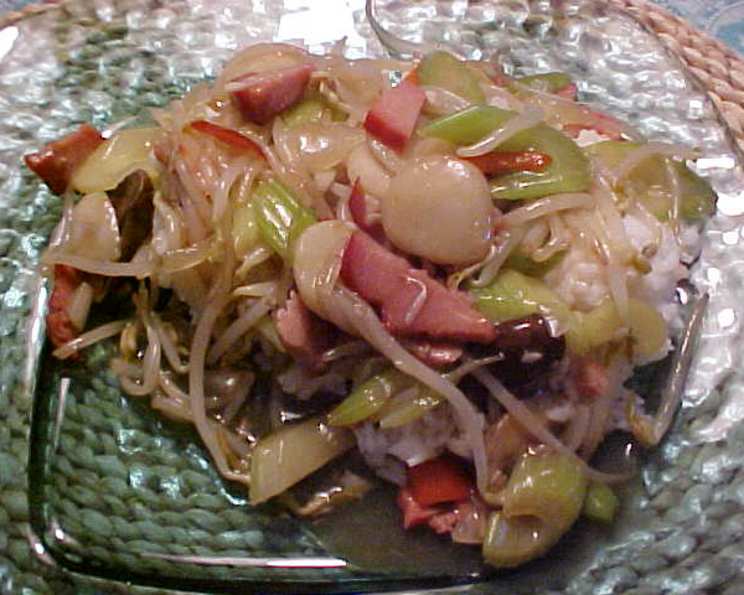
Classic Pork Chop Suey: A Taste of Nostalgia
My earliest memory of Chop Suey doesn’t involve a restaurant. It’s a faded snapshot in my mind of my grandmother’s kitchen. The aroma of soy sauce, ginger, and slightly caramelized vegetables would fill the air. She always served it over crispy noodles from a can—a simple, weeknight comfort food that somehow tasted like adventure and home all at once. While my culinary tastes have expanded over the years, this version holds a special place. It’s a taste of simpler times, a reminder of family, and a dish that never fails to bring a smile to my face.
Recipe Overview
- Prep Time: 15 minutes
- Cook Time: 10 minutes
- Total Time: 25 minutes
- Servings: 4
- Dietary Type: Adaptable
Ingredients
- 1 cup thinly sliced onion
- 1 cup sliced mushrooms
- ¾ cup bias-sliced celery
- ½ cup sliced water chestnuts
- ½ cup sliced red bell pepper
- ¾ cup bean sprouts
- 2 tablespoons oil (vegetable, canola, or peanut oil work well)
- 1 cup chicken broth
- 1 ½ tablespoons soy sauce
- 1 ½ tablespoons cornstarch
- 1 cup finely sliced Chinese barbecue pork (char siu)
- Salt and pepper to taste
- Steamed jasmine rice or crunchy Chinese noodles for serving
Equipment Needed
- Wok or large skillet
- Cutting board
- Knife
- Measuring cups and spoons
- Spatula or wooden spoon
Instructions
-
Begin by prepping all your vegetables. Thinly slice the onion, slice the mushrooms, bias-slice the celery (cut at a 45-degree angle for visual appeal), slice the water chestnuts, and slice the red bell pepper. Have the bean sprouts ready. Precise, uniform cuts ensure even cooking.
-
Preheat a wok or large skillet over medium-high heat. Add the oil. It should shimmer and be hot enough to quickly stir-fry the vegetables.
-
Add the onion, mushrooms, celery, water chestnuts, and red bell pepper to the wok. Stir-fry the vegetables until they are tender-crisp, approximately 5-10 minutes. Be sure to keep the vegetables moving to prevent burning. The goal is to cook them until they’re slightly softened but still retain a bit of crunch.
-
Add the bean sprouts to the wok and stir-fry for another minute or two, just until they begin to wilt slightly. Overcooked bean sprouts can become mushy, so add them later in the cooking process.
-
Pour in the chicken broth and bring the mixture to a simmer. Allow the broth to heat through completely. This step will help to integrate all of the flavors.
-
In a small bowl, whisk together the soy sauce and cornstarch until smooth. This mixture will act as a thickening agent for the sauce. Make sure there are no lumps in the cornstarch slurry to avoid a lumpy sauce.
-
Pour the soy sauce and cornstarch mixture into the wok with the vegetables. Stir constantly until the sauce thickens and becomes bubbly. This usually takes about 1-2 minutes. Continued stirring is crucial to prevent the cornstarch from clumping or sticking to the bottom of the wok.
-
Gently fold in the finely sliced Chinese barbecue pork (char siu). Heat the pork through, being careful not to overcook it. The pork is already cooked, so you’re just warming it up. Overcooking can make it dry.
-
Season the chop suey with salt and pepper to taste. Remember that soy sauce is already salty, so adjust accordingly. A dash of white pepper can also add a subtle warmth.
-
Serve the classic pork chop suey immediately over steamed jasmine rice or crunchy Chinese noodles. Garnish with extra sliced green onions or a sprinkle of sesame seeds for added visual appeal and flavor.
Expert Tips & Tricks
- Prep Ahead: Chop all your vegetables in advance to make the cooking process faster and more efficient. Store the cut vegetables in airtight containers in the refrigerator until ready to use.
- Vegetable Variations: Feel free to add or substitute other vegetables based on your preferences or what you have on hand. Snow peas, bamboo shoots, and bok choy are all great additions.
- Protein Power: If you don’t have Chinese barbecue pork, you can substitute cooked chicken, shrimp, beef, or tofu. Adjust cooking times accordingly.
- Sauce Consistency: If the sauce is too thick, add a little more chicken broth. If it’s too thin, mix a teaspoon of cornstarch with a tablespoon of cold water and stir it into the chop suey.
- Flavor Boost: Add a small amount of grated fresh ginger or minced garlic to the wok along with the vegetables for an extra layer of flavor. A drizzle of sesame oil at the end can also enhance the aroma and taste.
Serving & Storage Suggestions
Serve the pork chop suey hot over steamed jasmine rice or crispy Chinese noodles. Garnish with chopped green onions, sesame seeds, or a drizzle of sesame oil for an extra touch of flavor and presentation.
Leftovers can be stored in an airtight container in the refrigerator for up to 3-4 days. Reheat gently in a skillet or microwave until heated through. Freezing is not recommended as the vegetables may become mushy upon thawing.
Nutritional Information
(Estimated per serving, may vary based on specific ingredients and portion sizes)
| Nutrient | Amount per Serving | % Daily Value |
|---|---|---|
| Calories | 250 kcal | 13% |
| Total Fat | 10g | 15% |
| Saturated Fat | 2g | 10% |
| Cholesterol | 30mg | 10% |
| Sodium | 800mg | 35% |
| Total Carbohydrate | 25g | 9% |
| Dietary Fiber | 3g | 12% |
| Sugars | 8g | – |
| Protein | 15g | 30% |
Variations & Substitutions
- Vegetarian Chop Suey: Omit the pork and add extra vegetables like tofu, mushrooms, or broccoli. Use vegetable broth instead of chicken broth.
- Gluten-Free Chop Suey: Use tamari instead of soy sauce, as tamari is typically gluten-free. Double-check all other ingredients to ensure they are gluten-free as well.
- Spicy Chop Suey: Add a pinch of red pepper flakes or a drizzle of chili oil to the wok for a spicy kick.
- Regional Adaptations: In some regions, chop suey may include ingredients like pineapple, water chestnuts, or baby corn. Feel free to experiment with different combinations.
FAQs (Frequently Asked Questions)
Q: Can I use frozen vegetables in this recipe?
A: Yes, you can use frozen vegetables, but keep in mind that they may release more moisture during cooking. Reduce the amount of chicken broth accordingly.
Q: What if I don’t have Chinese barbecue pork?
A: You can substitute cooked chicken, shrimp, beef, or tofu. Adjust cooking times accordingly to ensure the protein is heated through.
Q: How do I prevent the sauce from becoming too thick?
A: If the sauce becomes too thick, add a little more chicken broth to thin it out.
Q: Can I make this dish ahead of time?
A: While it’s best served fresh, you can prepare the vegetables and sauce in advance and store them separately. Combine them just before serving.
Q: What are some good side dishes to serve with pork chop suey?
A: Steamed rice, spring rolls, or egg rolls are all great side dishes to serve with pork chop suey.
Final Thoughts
This classic Pork Chop Suey recipe is more than just a meal; it’s a culinary journey that connects us to the past while offering endless possibilities for customization. Don’t be afraid to experiment with different vegetables, proteins, and sauces to create your own unique version. I hope you’ll give it a try and share your feedback. Pair it with a crisp, dry Riesling or a refreshing iced tea for a complete and satisfying meal. Happy cooking!