
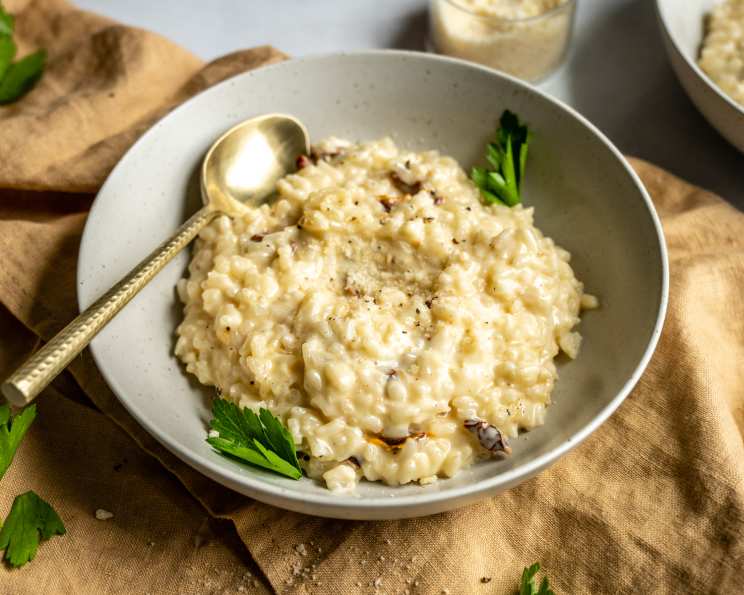
Classic Risotto: A Culinary Embrace
The first time I tasted truly exceptional risotto, I was a young cook, overwhelmed by the intensity of a professional kitchen. Chef Marco, a bear of a man with hands that moved like a conductor’s, placed a small bowl before me. It was pale ivory, glistening, and fragrant with parmesan. One bite – the creamy, yielding texture of the rice, the subtle nuttiness, the comforting warmth – and I was transported. It was more than just food; it was a culinary embrace, a lesson in simplicity and care, and a moment that ignited my lifelong passion for this exquisite Italian dish.
Recipe Overview
- Prep Time: 15 minutes
- Cook Time: 25-30 minutes
- Total Time: 40-45 minutes
- Servings: 6
- Dietary Type: Gluten-Free
Ingredients
- 3 cups water
- 2 cups chicken broth
- 1/4 cup butter, divided
- 1/2 cup chopped onion
- 1 cup uncooked U.S. Arborio rice (or 1 cup medium grain rice)
- 1/3 cup dry white wine
- 1/2 cup heavy cream
- 1/4 cup grated Parmesan cheese
- 1/4 cup diced sun-dried tomato (optional)
- Salt to taste
- White pepper to taste
- Parsley for garnish
Equipment Needed
- 2-quart saucepan
- Large saucepan (with a thick bottom is ideal)
- Wooden spoon or spatula
Instructions
-
In a 2-quart saucepan, combine the water and chicken broth. Bring the mixture to a gentle simmer over medium heat. Once simmering, reduce the heat to low to keep the broth warm throughout the risotto-making process.
-
While the broth is heating, melt 2 tablespoons of the butter in a large saucepan over medium heat. Add the chopped onion and cook, stirring occasionally, until the onion becomes soft and translucent. This usually takes about 5-7 minutes. Be careful not to brown the onion; you want it to soften and sweeten without coloring.
-
Add the Arborio rice (or medium grain rice) to the saucepan with the softened onions. Stir the rice continuously for 2 to 3 minutes. This toasting process helps to coat each grain of rice with the butter, which prevents it from sticking together during cooking and also enhances its nutty flavor.
-
Pour in the dry white wine and stir until the wine is completely absorbed by the rice. The wine adds acidity and complexity to the risotto.
-
Increase the heat to medium-high. Ladle in 1 cup of the warm water-broth mixture. Cook the risotto uncovered, stirring frequently, until all of the liquid is absorbed by the rice. It is crucial to stir frequently to prevent the rice from sticking to the bottom of the pan and to encourage the release of starch, which contributes to the creamy texture of the risotto.
-
Continue adding the remaining water-broth mixture, 1 cup at a time, allowing each cup of liquid to be fully absorbed before adding the next. This gradual addition of liquid is the key to achieving the perfect risotto texture. Remember to stir frequently throughout this process.
-
Continue cooking and stirring for approximately 25 to 30 minutes in total, or until the rice is tender but still slightly firm to the bite – what is known as “al dente.” The mixture should have a creamy consistency. Keep a close watch during the final minutes of cooking, as the risotto can quickly go from perfectly creamy to dry and overcooked.
-
Once the rice is cooked to al dente, stir in the heavy cream, grated Parmesan cheese, diced sun-dried tomatoes (if using), salt, white pepper, and the remaining 2 tablespoons of butter. Stir continuously until all of the ingredients are well combined and the mixture is creamy, about 2 minutes. The cream and Parmesan add richness and depth of flavor to the risotto.
-
Serve the risotto immediately, garnished with fresh parsley. Risotto is best enjoyed fresh, as it continues to thicken as it cools.
Expert Tips & Tricks
-
Warm Your Broth: Keeping the broth at a simmer ensures a constant temperature, preventing the rice from cooling down each time you add liquid.
-
Don’t Rinse the Rice: Resist the urge to rinse the rice before cooking! The starch on the rice is essential for creating that signature creamy texture.
-
Toast the Rice: Toasting the rice in butter and onion before adding liquid helps to develop its flavor and prevents it from becoming mushy.
-
Stir, Stir, Stir! Frequent stirring is key to even cooking and creamy texture.
-
Al Dente is Key: The rice should be tender but still have a slight bite in the center. Overcooked risotto is mushy and loses its appeal.
Serving & Storage Suggestions
Serve the risotto immediately in warm bowls. Garnish with freshly chopped parsley and an extra sprinkle of Parmesan cheese. A drizzle of olive oil can also enhance the presentation.
Leftover risotto can be stored in an airtight container in the refrigerator for up to 2 days. To reheat, add a splash of broth or water to the risotto and gently heat it in a saucepan over low heat, stirring frequently, until warmed through. You can also reheat it in the microwave, but be sure to stir it every 30 seconds to prevent it from drying out.
Risotto doesn’t freeze well, as the texture can become grainy upon thawing.
Nutritional Information
| Nutrient | Amount per Serving | % Daily Value |
|---|---|---|
| Calories | 302.6 kcal | N/A |
| Calories from Fat | 151 g | 50% |
| Total Fat | 16.9 g | 25% |
| Saturated Fat | 10.3 g | 51% |
| Cholesterol | 51.2 mg | 17% |
| Sodium | 392.7 mg | 16% |
| Total Carbohydrate | 29 g | 9% |
| Dietary Fiber | 1.2 g | 4% |
| Sugars | 1 g | 3% |
| Protein | 6 g | 12% |
Variations & Substitutions
-
Vegetarian Risotto: Use vegetable broth instead of chicken broth.
-
Mushroom Risotto: Sauté sliced mushrooms with the onions for an earthy flavor.
-
Seafood Risotto: Add cooked shrimp, scallops, or mussels during the last few minutes of cooking.
-
Asparagus Risotto: Stir in blanched asparagus tips during the last few minutes of cooking.
-
Lemon Risotto: Add lemon zest and juice for a bright, citrusy flavor.
-
Saffron Risotto (Risotto alla Milanese): Add a pinch of saffron threads to the broth for a vibrant yellow color and delicate flavor.
FAQs (Frequently Asked Questions)
Q: Can I use a different type of rice?
A: While Arborio rice is the traditional choice, medium-grain rice can also be used. Avoid long-grain rice, as it won’t produce the creamy texture you want.
Q: Why is it important to add the broth gradually?
A: Adding the broth gradually allows the rice to slowly absorb the liquid, releasing starch and creating the creamy texture characteristic of risotto.
Q: How do I know when the risotto is done?
A: The rice should be tender but still slightly firm to the bite (al dente), and the mixture should have a creamy consistency. There should be no excess liquid in the pan.
Q: Can I make risotto ahead of time?
A: Risotto is best served immediately, as it continues to thicken as it cools. However, you can partially cook the risotto ahead of time and finish it just before serving. Cook the rice until it is almost al dente, then spread it out on a baking sheet to cool quickly. Store in the refrigerator. When ready to serve, reheat the rice in a saucepan with a little broth, stirring until creamy and heated through.
Q: What wine pairs well with risotto?
A: A dry white wine, such as Sauvignon Blanc or Chardonnay, pairs well with classic risotto.
Final Thoughts
Risotto is more than just a dish; it’s an experience. The slow, deliberate process of stirring and adding broth is almost meditative, and the reward is a creamy, comforting dish that is sure to impress. Don’t be intimidated by the process – with a little patience and attention, anyone can make perfect risotto. I encourage you to give it a try, experiment with different flavor combinations, and share your creations with friends and family. Pair it with a crisp glass of white wine and a simple salad for a truly memorable meal. Buon appetito!