
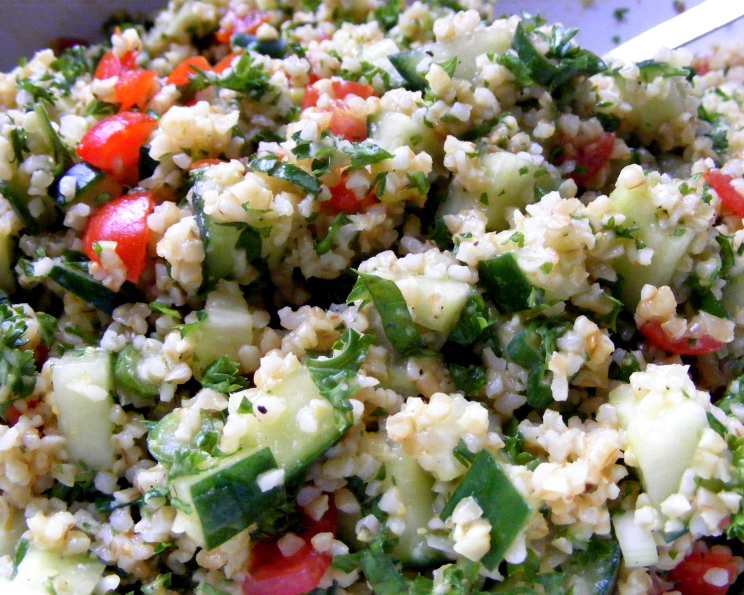
Classic Tabbouleh: A Burst of Freshness from the Eastern Mediterranean
The scent of fresh mint and parsley always transports me back to a sun-drenched afternoon in Beirut. I was a young culinary student, volunteering at a local community kitchen. An older woman, her hands gnarled with age but nimble as ever, was demonstrating the art of making tabbouleh. As she chopped the herbs with rhythmic precision, she told stories of her childhood, of family gatherings filled with laughter and this vibrant salad, a constant centerpiece of their celebrations. I remember the explosion of flavor, the bright acidity of the lemon, and the satisfying chew of the bulgur wheat – a taste of pure sunshine.
Recipe Overview
- Prep Time: 25 minutes
- Cook Time: 20 minutes
- Total Time: 45 minutes
- Servings: 10
- Dietary Type: Vegan
Ingredients
- 1 1/2 cups bulgur wheat
- 4 tablespoons extra virgin olive oil
- 3 cups vegetable stock, boiling
- 1/2 cup scallion, chopped
- 3 garlic cloves, minced
- 3 cups flat leaf parsley, chopped
- 3/4 cup mint leaf, chopped
- 4 tomatoes, diced
- 1 seedless European cucumber, diced
- 1/4 cup lemon juice
- Salt & pepper, to taste
Equipment Needed
- Large bowl
- Measuring cups and spoons
- Sharp knife
- Cutting board
- Strainer or fine-mesh sieve
- Whisk or fork
Instructions
- In a large bowl, combine the bulgur wheat with 1 tablespoon of the extra virgin olive oil. This helps prevent the grains from clumping together during hydration.
- Pour the 3 cups of boiling vegetable stock over the bulgur wheat. Make sure all the grains are submerged in the liquid.
- Cover the bowl tightly with a lid or plastic wrap. Let the bulgur wheat stand for 15-20 minutes, or until it has absorbed all the liquid and is tender. This process essentially cooks the grain without direct heat. Keep an eye on it – if it’s still too firm after 20 minutes, add a splash more boiling water and let it sit for another 5 minutes.
- Once the bulgur wheat is tender, drain it very well in a strainer or fine-mesh sieve. Press down on the grains with the back of a spoon to remove any excess water. This step is crucial to prevent a soggy tabbouleh. Let the drained bulgur cool slightly before proceeding.
- While the bulgur wheat is cooling, prepare the vegetables. Finely chop the 1/2 cup of scallions. Mince the 3 garlic cloves.
- Chop the 3 cups of flat leaf parsley and 3/4 cup mint leaves. The key to great tabbouleh is finely chopped herbs. Don’t use a food processor, as it will bruise the herbs and release their bitter compounds. Aim for a chiffonade cut, where you stack the leaves, roll them tightly, and then slice thinly.
- Dice the 4 tomatoes and 1 seedless European cucumber. For the tomatoes, consider removing the seeds and excess liquid to prevent the salad from becoming watery.
- In the same large bowl, gently toss the rehydrated bulgur wheat with the chopped scallions, minced garlic, chopped parsley, chopped mint, diced tomatoes, and diced cucumber.
- Drizzle the remaining 3 tablespoons of extra virgin olive oil and 1/4 cup lemon juice over the salad. Use fresh lemon juice for the best flavor.
- Season with salt and pepper to taste. Don’t be afraid to be generous with the seasoning – the herbs and vegetables can handle it.
- Gently mix all the ingredients together until well combined. Avoid overmixing, as this can make the tabbouleh mushy.
- Cover the bowl with plastic wrap and refrigerate the tabbouleh for at least 30 minutes, or up to several hours, to allow the flavors to meld together. This step is essential for a truly flavorful tabbouleh.
- Before serving, give the tabbouleh one last gentle toss and adjust the seasoning if necessary.
Expert Tips & Tricks
- Herb Ratio is Key: The most common mistake is not using enough herbs. Authentic tabbouleh is primarily an herb salad, not a grain salad.
- Bulgur Selection: Use fine or extra-fine bulgur wheat for the best texture. Coarse bulgur will require a longer soaking time.
- Lemon Zest: For an extra burst of citrus flavor, add the zest of one lemon to the salad along with the juice.
- Make-Ahead Tip: You can prepare all the components of the tabbouleh (rehydrated bulgur, chopped vegetables, and herbs) ahead of time and store them separately in the refrigerator. Combine them just before serving to prevent the salad from becoming soggy.
- Fixing a Watery Tabbouleh: If your tabbouleh is too watery, drain off any excess liquid and add more chopped herbs to absorb the moisture.
Serving & Storage Suggestions
Tabbouleh is best served chilled or at room temperature. It makes a refreshing side dish, a light lunch, or a flavorful addition to a mezze platter. Serve it with pita bread, hummus, falafel, or grilled meats.
Leftover tabbouleh can be stored in an airtight container in the refrigerator for up to 3 days. The flavors will actually improve overnight. However, the vegetables may release some liquid over time, so drain off any excess before serving. Tabbouleh does not freeze well.
Nutritional Information
| Nutrient | Amount per Serving | % Daily Value |
|---|---|---|
| Calories | 95.9 kcal | N/A |
| Calories from Fat | 52 kcal | 54% |
| Total Fat | 5.8 g | 8% |
| Saturated Fat | 0.8 g | 4% |
| Cholesterol | 0 mg | 0% |
| Sodium | 16.2 mg | 0% |
| Total Carbohydrate | 10.6 g | 3% |
| Dietary Fiber | 2.9 g | 11% |
| Sugars | 2.3 g | N/A |
| Protein | 2.2 g | 4% |
Variations & Substitutions
- Gluten-Free Tabbouleh: Substitute the bulgur wheat with quinoa or millet for a gluten-free version.
- Spice it Up: Add a pinch of red pepper flakes or a finely chopped jalapeño for a touch of heat.
- Fruit Tabbouleh: Add diced watermelon, pomegranate seeds, or dried cranberries for a touch of sweetness and added texture.
- Regional Variations: Experiment with adding other vegetables like bell peppers, radishes, or carrots. Some variations also include finely diced preserved lemons.
- Herb Variations: While parsley and mint are traditional, you can add small amounts of dill or cilantro for different flavour nuances.
FAQs (Frequently Asked Questions):
Q: Can I make tabbouleh ahead of time?
A: Yes, tabbouleh is even better when made ahead of time, as the flavors have time to meld. Just store it in an airtight container in the refrigerator for up to 3 days.
Q: Can I use a food processor to chop the herbs?
A: It’s not recommended, as a food processor can easily bruise the herbs and make them bitter. Finely chopping them by hand is the best way to preserve their fresh flavor.
Q: How do I prevent tabbouleh from becoming soggy?
A: Make sure to drain the bulgur wheat very well after soaking, and remove the seeds and excess liquid from the tomatoes. Also, don’t overmix the salad.
Q: What can I serve with tabbouleh?
A: Tabbouleh is a versatile dish that pairs well with a variety of foods, including pita bread, hummus, falafel, grilled meats, and salads.
Q: Is tabbouleh healthy?
A: Yes, tabbouleh is a very healthy dish, packed with vitamins, minerals, and fiber from the herbs, vegetables, and bulgur wheat. It’s also low in fat and calories.
Final Thoughts
Tabbouleh is more than just a salad; it’s a celebration of fresh, vibrant flavors and a testament to the simple beauty of Mediterranean cuisine. I encourage you to try this recipe and experience the magic for yourself. Don’t be afraid to experiment with different variations and find your own perfect combination. I’d love to know what you think, so please share your feedback and creative twists! Consider pairing it with a crisp glass of rosé for a truly delightful experience.