
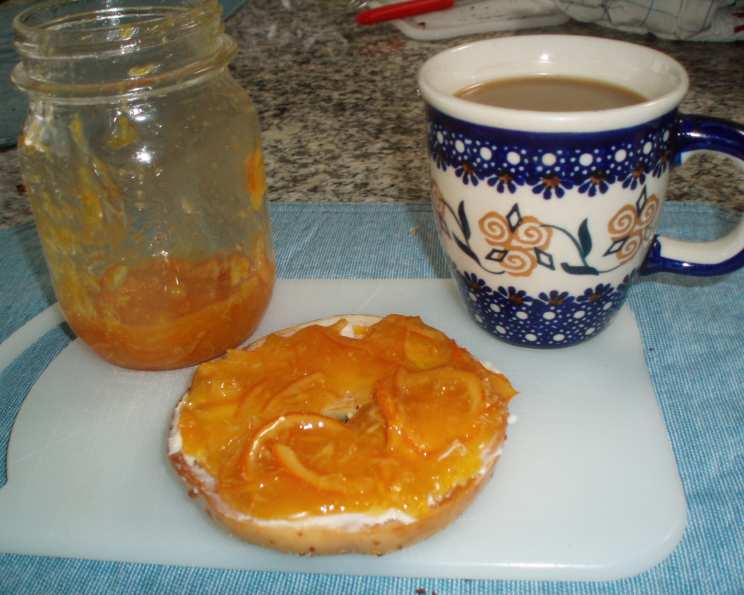
Clementine Marmalade: Sunshine in a Jar
I’ll never forget my first Christmas in Seville. The air was thick with the scent of orange blossoms, and the markets overflowed with mountains of bright, juicy clementines. The locals transformed this bounty into countless culinary delights, but it was the marmalade that truly captured my heart. Its sweet, tangy, slightly bitter flavor, intensified by the warm Spanish sun, was pure sunshine in a jar. Now, I try to recreate that magic every year with this Clementine Marmalade recipe.
Recipe Overview
- Prep Time: 45 minutes
- Cook Time: 2-3 hours + overnight cooling
- Total Time: 12 hours 45 minutes
- Yields: 5 one-pint jars
- Serves: 16
- Dietary Type: Vegan, Gluten-Free, Dairy-Free
Ingredients
- 16 clementines, whole
- 4 cups water
- 1 lemon, halved
- 7 cups sugar
Equipment Needed
- Large soup pot (non-aluminum)
- Cheesecloth
- String
- Large bowl
- Strainer
- Knife
- Cutting board
- Sterilized jars (5 one-pint jars)
- Two-part lids
- Jar lifter
- Boiling-water bath canner
Instructions
- Begin by thoroughly scrubbing and rinsing all 16 clementines. Place them in a large soup pot – it’s crucial the pot is not aluminum, as this can react with the citrus.
- Add 4 cups of water to the pot, ensuring the clementines are mostly submerged.
- Next, squeeze the juice from 1 lemon, reserving the juice separately. Don’t discard the lemon halves just yet.
- Now, prepare a small bundle with the lemon seeds using a piece of cheesecloth. Gather the seeds into the center of the cloth and tie it off securely with a piece of string. This prevents the seeds from spreading throughout the marmalade while still imparting their pectin, which is essential for setting.
- Add the bundle of lemon seeds along with the halved lemon to the pot with the clementines.
- Cover the pot and bring the mixture to a simmer over medium heat. Once simmering, reduce the heat to low and cook for 2-3 hours, or until the clementines are very soft and easily pierced with a fork. The cooking time can vary depending on the thickness of the clementine skins.
- Remove the pot from the heat and allow the clementine mixture to cool completely overnight. This extended cooling period allows the flavors to meld and the fruit to soften further.
- The following day, discard the bundle of lemon seeds and the cooked lemon halves. It’s important not to strain the liquid at this stage, as it contains valuable pectin.
- Using a slotted spoon, scoop the cooked clementines out of the liquid and transfer them to a large bowl.
- Halve each clementine and then scoop out the pulp and any seeds (if any remain) into a strainer. Position the strainer over the pot that was used to boil the fruit, ensuring you capture all the strained pulp.
- Gently rub the pulp through the strainer, using a spoon or spatula, to extract as much of the flavorful liquid as possible. Discard the remaining solids in the strainer.
- Return the pot containing the clementine cooking liquid and strained pulp to the stovetop. Add 7 cups of sugar and the reserved lemon juice.
- Heat the mixture gently over low heat, stirring constantly until the sugar is completely dissolved. This step is crucial to prevent crystallization later.
- Once the sugar is dissolved, increase the heat and bring the mixture to a rolling boil. Continue to boil for a few minutes, skimming off any foam that rises to the surface. This foam consists of impurities and can affect the clarity and shelf life of the marmalade.
- While the sugar syrup is boiling, prepare the clementine peel. Finely slice the clementine peels into thin strips. The thinner the slices, the more tender the marmalade will be.
- Stir the finely sliced clementine peel into the boiling sugar-lemon syrup. Ensure the peel is evenly distributed throughout the mixture.
- Continue boiling the marmalade, stirring occasionally to prevent sticking, until it reaches the setting point. This is typically around 220°F (104°C) at sea level. Use a candy thermometer to monitor the temperature accurately. You can also test for setting by placing a small spoonful of marmalade on a chilled plate and refrigerating it for a minute or two. If it wrinkles when pushed with your finger, it’s ready.
- Once the marmalade reaches setting point, remove the pot from the heat and skim off any remaining foam.
- Let the pot sit undisturbed for 10-15 minutes. This allows the peel to distribute evenly throughout the marmalade, preventing it from all floating to the top.
- While the marmalade is resting, ensure your jars are hot and sterilized. This can be done by boiling them in water for 10 minutes. Keep the jars hot until ready to fill.
- Carefully fill the hot, sterilized jars with the hot marmalade, leaving about ¼ inch of headspace at the top. Use a jar funnel to minimize spills.
- Wipe the rims of the jars with a clean, damp cloth to remove any drips. Seal the jars with two-part lids, ensuring the lids are properly tightened but not overly tight.
- Process the filled jars in a boiling-water bath for 15 minutes (at sea level). Adjust processing time according to your altitude. Use a jar lifter to carefully lower the jars into the boiling water and remove them after processing.
- Place the jars on a towel-lined surface and allow them to cool completely undisturbed for 12-24 hours. As the jars cool, you should hear a “pop” sound as the lids seal.
- After cooling, check the seals by pressing down on the center of each lid. If the lid doesn’t flex up and down, it’s properly sealed.
- Label the jars with the date and contents. Store in a cool, dark place for optimal shelf life.
Expert Tips & Tricks
- For a more intense citrus flavor, zest the clementines before peeling and add the zest to the pot along with the juice.
- If you prefer a less bitter marmalade, you can blanch the sliced clementine peel in boiling water for a few minutes before adding it to the syrup. This helps to remove some of the bitterness.
- Don’t overcook the marmalade, as it can become too thick and gummy.
- If your marmalade doesn’t set properly, you can re-boil it with a little extra lemon juice or pectin.
Serving & Storage Suggestions
Clementine Marmalade is delicious served on toast, scones, or muffins. It also makes a wonderful addition to cheese boards or can be used as a glaze for meats. Once opened, store in the refrigerator for up to several weeks. Properly sealed jars can be stored in a cool, dark place for up to a year.
Nutritional Information
| Nutrient | Amount per Serving | % Daily Value |
|---|---|---|
| Calories | 374.5 kcal | N/A |
| Calories from Fat | N/A | 0% |
| Total Fat | 0.1 g | 0% |
| Saturated Fat | 0 g | 0% |
| Cholesterol | 0 mg | 0% |
| Sodium | 3.5 mg | 0% |
| Total Carbohydrate | 96.7 g | 32% |
| Dietary Fiber | 1.4 g | 5% |
| Sugars | 94.2 g | N/A |
| Protein | 0.7 g | 1% |
Note: Nutritional information is an estimate and may vary based on specific ingredients used.
Variations & Substitutions
- For a spicier marmalade, add a pinch of red pepper flakes or a small piece of ginger to the pot during cooking.
- You can substitute other citrus fruits for the clementines, such as oranges, grapefruit, or lemons.
- For a richer flavor, add a splash of orange liqueur or brandy to the marmalade after it has reached setting point.
- Try using a combination of different citrus fruits for a more complex flavor profile.
FAQs (Frequently Asked Questions)
Q: Why is it important to use a non-aluminum pot?
A: Aluminum can react with the acidity of the citrus fruits, potentially altering the flavor and color of the marmalade.
Q: How do I know when the marmalade has reached setting point?
A: The best way is to use a candy thermometer and aim for 220°F (104°C). You can also use the chilled plate test.
Q: Can I use less sugar in this recipe?
A: Reducing the sugar significantly can affect the setting of the marmalade and its shelf life. Sugar acts as a preservative.
Q: Do I really need to process the jars in a boiling-water bath?
A: Processing ensures a proper seal and prevents spoilage, extending the shelf life of the marmalade. It’s highly recommended for long-term storage.
Q: What can I do if my marmalade is too bitter?
A: Blanching the clementine peel before adding it to the syrup can help reduce bitterness. You can also add a touch more sugar to balance the flavors.
Final Thoughts
Making Clementine Marmalade is a labor of love, but the reward is a jar of sunshine that will brighten any morning. Don’t be intimidated by the process; follow the steps carefully, and you’ll be amazed at the delicious result. This marmalade is a perfect gift for friends and family, or simply a treat to savor yourself. So, gather your clementines, get your pot ready, and let the sweet, tangy aroma fill your kitchen. And please, let me know how yours turns out!