
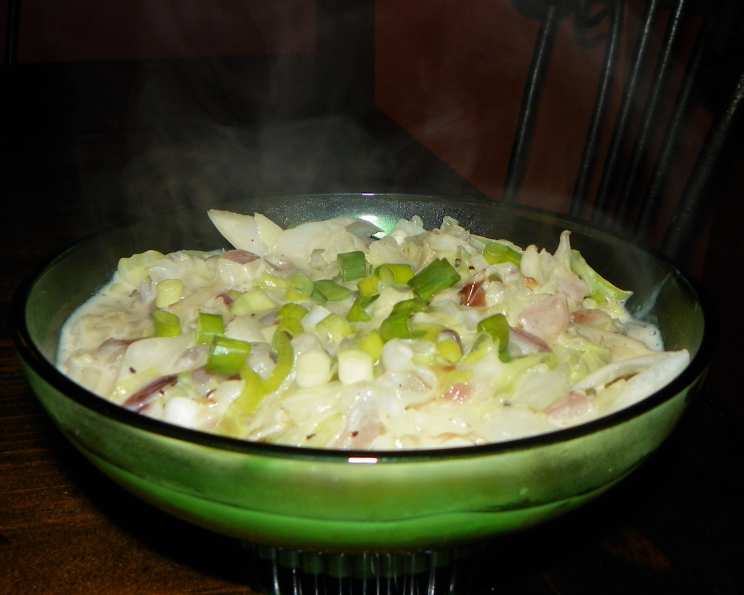
Coconut-Braised Cabbage: A Taste of the Tropics
My grandmother, a woman who believed every meal should be an adventure, once told me that even the humblest vegetables could sing with the right accompaniment. I remember one evening, wrinkling my nose at a mound of what I assumed was plain boiled cabbage. She winked, disappeared into the kitchen, and emerged moments later with the very same cabbage transformed. The secret? Coconut milk. That transformative experience sparked my lifelong love affair with unexpected flavor combinations, and this Coconut-Braised Cabbage recipe is a delightful echo of that long-ago culinary revelation.
Recipe Overview
- Prep Time: 10 minutes
- Cook Time: 15 minutes
- Total Time: 25 minutes
- Servings: 6
- Yields: 6 1/2 cup servings
- Dietary Type: Vegetarian, Gluten-Free (Check margarine ingredients to ensure gluten-free if required)
Ingredients
- 2 tablespoons margarine
- 1/2 cup onion, chopped
- 2 bay leaves
- 3 cups Chinese cabbage, sliced (any variety of cabbage will work well)
- 1 cup coconut milk
- 1 tablespoon cornstarch
- 1/4 cup green onion, chopped
- Salt and pepper to taste
Equipment Needed
- Medium saucepan
Instructions
-
In a medium saucepan, melt the margarine over medium-high heat. This helps to build a flavour base and prevent the onion from sticking.
-
Stir in the chopped onion and bay leaves. Cook until the onion is tender and translucent, about 3-5 minutes. The bay leaves will infuse a subtle, aromatic flavor into the dish. Don’t skip them!
-
Stir in the sliced Chinese cabbage. Cook, stirring occasionally, until the cabbage begins to wilt. This will take about 3-5 minutes. Remember, any cabbage will work, but Chinese cabbage has a delicate sweetness that pairs beautifully with coconut.
-
Add the coconut milk and continue cooking until the cabbage is crisp-tender and the milk has reduced slightly. This usually takes around 5-7 minutes. Keep an eye on the heat to prevent the coconut milk from scorching.
-
Remove the bay leaves before proceeding. Nobody wants to bite into those!
-
In a small bowl, mix the cornstarch with 1 tablespoon of cold water to create a slurry. This prevents lumps when you add it to the hot liquid.
-
Stir the cornstarch slurry into the cabbage mixture and cook until thickened, stirring constantly. This should only take a minute or two. The cornstarch helps to create a lovely, glossy sauce.
-
Remove the saucepan from the heat. Season with salt and pepper to taste. Don’t be afraid to be generous with the seasoning; it really brings out the flavors.
-
Stir in the chopped green onions just before serving. The green onions add a fresh, vibrant finish to the dish.
-
Serve immediately with your entree of choice.
Expert Tips & Tricks
- Cabbage Variety: While Chinese cabbage (Napa cabbage) is recommended, feel free to experiment with other varieties like green cabbage, red cabbage, or Savoy cabbage. Each will impart a slightly different flavor and texture to the dish. If using green or red cabbage, you may need to cook it slightly longer to achieve the desired tenderness.
- Coconut Milk Choice: Full-fat coconut milk will result in a richer, creamier sauce. However, you can use light coconut milk to reduce the fat content.
- Spice It Up: For a touch of heat, add a pinch of red pepper flakes or a finely chopped chili pepper to the onions when you begin cooking.
- Aromatic Infusion: Instead of bay leaves, you could also use a small piece of ginger or a lemongrass stalk to infuse the cabbage with flavor. Remember to remove them before serving.
- Make-Ahead Tip: You can prepare the cabbage up to the point of adding the cornstarch slurry. Then, when you’re ready to serve, simply reheat the cabbage and stir in the cornstarch mixture.
- Flavor Enhancement: A squeeze of lime juice at the end brightens up the flavors and adds a zesty touch.
Serving & Storage Suggestions
This Coconut-Braised Cabbage is a versatile side dish that pairs well with a variety of entrees. It’s particularly delicious with grilled fish, roasted chicken, or vegetarian curries. Garnish with extra chopped green onions or a sprinkle of toasted coconut flakes for a more elegant presentation.
To store leftovers, allow the cabbage to cool completely before transferring it to an airtight container. It can be stored in the refrigerator for up to 3 days. Reheat gently in a saucepan over medium heat, or in the microwave. If the sauce has thickened too much during storage, add a splash of coconut milk or water to loosen it up. Freezing is not recommended, as the texture of the cabbage may become mushy upon thawing.
Nutritional Information
| Nutrient | Amount per Serving | % Daily Value |
|---|---|---|
| Calories | 146.7 kcal | N/A |
| Calories from Fat | 113 g | 77% |
| Total Fat | 12.6 g | 19% |
| Saturated Fat | 8.4 g | 42% |
| Cholesterol | 0 mg | 0% |
| Sodium | 73.6 mg | 3% |
| Total Carbohydrate | 8.3 g | 2% |
| Dietary Fiber | 1.9 g | 7% |
| Sugars | 4.2 g | 16% |
| Protein | 2 g | 4% |
Note: Nutritional information is an estimate and may vary based on specific ingredients and cooking methods.
Variations & Substitutions
- Vegan Option: This recipe is already vegetarian, but ensure your margarine is vegan-friendly to make it a fully vegan dish.
- Different Cabbage: Experiment with different types of cabbage, such as red cabbage for a beautiful color contrast or Savoy cabbage for a more delicate flavor.
- Add Protein: For a heartier dish, add some tofu, tempeh, or edamame to the cabbage mixture.
- Spice Level: Adjust the amount of red pepper flakes (or use a pinch of cayenne pepper) to control the heat.
- Nut-Free Option: If you have a nut allergy, omit the toasted coconut flakes garnish.
- Enhanced Flavors: Add a dash of soy sauce or fish sauce (if not vegetarian) for a deeper umami flavor.
FAQs (Frequently Asked Questions)
Q: Can I use frozen cabbage for this recipe?
A: While fresh cabbage is preferred for optimal texture, frozen cabbage can be used in a pinch. Be sure to thaw it completely and squeeze out any excess water before adding it to the saucepan.
Q: How do I prevent the coconut milk from curdling?
A: Use medium-low heat and avoid boiling the coconut milk vigorously. Stir gently and constantly to ensure it stays smooth and creamy.
Q: Can I add other vegetables to this dish?
A: Absolutely! Carrots, bell peppers, and mushrooms would all be delicious additions. Add them along with the onions and cook until tender.
Q: Is this recipe suitable for meal prepping?
A: Yes, this dish is perfect for meal prepping. It can be stored in the refrigerator for up to 3 days and reheated easily.
Q: Can I use regular milk instead of coconut milk?
A: While you can, it will significantly change the flavor profile. The coconut milk is key to the dish’s unique taste. If you must substitute, try using another plant-based milk like almond or oat milk, but be aware the results will differ.
Final Thoughts
This Coconut-Braised Cabbage is more than just a simple side dish; it’s a celebration of flavor and a testament to the transformative power of simple ingredients. It’s a reminder that even the most unassuming vegetables can be elevated to something truly special with a touch of creativity and a dash of coconut milk. I encourage you to try this recipe and experience the magic for yourself. Don’t hesitate to adjust the seasonings to your liking and make it your own. And please, let me know what you think! What entree did you pair it with? What variations did you try? Your feedback is invaluable, and I can’t wait to hear about your culinary adventures!