
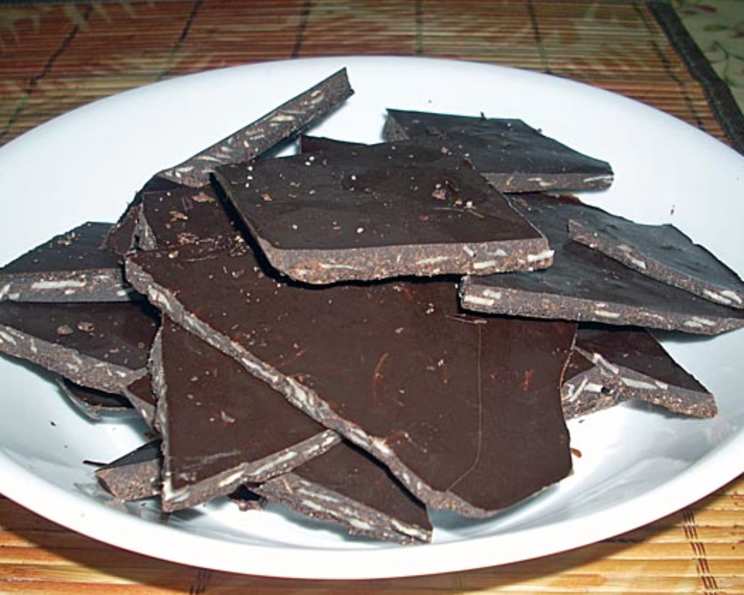
Coconut Cacao Bark: A Decadent Delight in Minutes
The scent of coconut oil always takes me back to my grandmother’s kitchen. She wasn’t much of a baker, but she had a knack for simple, satisfying treats. Her go-to was a no-bake coconut fudge that she always kept chilled in the fridge. This Coconut Cacao Bark is my riff on her classic, taking it in a slightly more sophisticated, chocolatey direction. It’s a recipe I turn to whenever I need a quick and delicious sweet fix, and it’s always a crowd-pleaser.
Recipe Overview
- Prep Time: 5 minutes
- Cook Time: 5 minutes
- Total Time: 25 minutes
- Servings: 8-10
- Yield: Approximately 1 pound
- Dietary Type: Keto, Vegan, Gluten-Free, Dairy-Free
Ingredients
- 1 cup coconut oil (liquified)
- ¾ cup raw cacao (or powdered carob or cocoa)
- 2 tablespoons vanilla extract (or whatever flavor you want)
- ½ cup artificial sweetener (I used Xylitol)
- ¾ cup slivered almonds (optional)
Equipment Needed
- Medium saucepan
- Baking sheet (approximately 8×11.5 inches)
- Parchment paper
Instructions
-
Melt the coconut oil in a medium saucepan over low heat. It’s important to use low heat to prevent scorching the oil.
-
Carefully add the raw cacao, vanilla extract, sweetener, and slivered almonds (if using) to the melted coconut oil. Be cautious, as the hot oil might spit a bit when you add the other ingredients, especially if there is any moisture present in them.
-
(Optional) If you prefer a smoother texture, grind the Xylitol in a coffee grinder until it becomes a fine powder. This helps it dissolve more easily into the mixture.
-
Mix the ingredients well to dissolve the sweetener completely. Continuously stir the mixture to ensure even distribution of the ingredients and to prevent any clumping.
-
Taste the mixture to ensure it is sweet enough for your preference. You can add more sweetener at this stage, a little at a time, until you reach your desired level of sweetness. Keep in mind that the flavors will mellow slightly once the bark is frozen.
-
Pour the mixture onto a baking sheet lined with parchment paper. The parchment paper is essential to prevent the bark from sticking to the pan and to make it easy to remove once it’s set. My baking sheet was 8×11 ½ inches, which made my bark about ¼ inch thick. If you prefer a thicker bark, you can use a smaller baking sheet.
-
Put the pan into the freezer for about 30 minutes, making sure the pan is placed on a flat surface so the bark will be even when it sets.
-
Check the bark before you take it out of the freezer to ensure it is solid all the way through. If it’s still soft in some areas, leave it in the freezer for a bit longer.
-
Once the bark is set, remove it from the pan and break it into pieces.
-
Store the Coconut Cacao Bark in the refrigerator to maintain its firmness.
Expert Tips & Tricks
- Temperature Control: Low and slow is key when melting the coconut oil and combining the ingredients. High heat can cause the cacao to burn and the sweetener to caramelize unevenly, resulting in a gritty texture.
- Sweetener Choice: Xylitol provides a granulated sugar-like texture but has a lower glycemic index. Erythritol, stevia, or monk fruit sweetener are also viable options, each offering slightly different sweetness levels and potential aftertastes. Adjust the quantity to your liking, always tasting as you go.
- Nut Customization: Experiment with different types of nuts! Walnuts, pecans, or even toasted coconut flakes would be delicious additions. For a nut-free version, substitute with seeds like pumpkin or sunflower seeds.
- Flavor Boosters: A pinch of sea salt can enhance the chocolate flavor. You can also add a dash of cinnamon, cayenne pepper for a spicy kick, or orange zest for a citrusy note.
- Texture Play: For a smoother bark, use a blender or food processor to finely grind the nuts before adding them to the mixture. Alternatively, leave them whole for a more rustic texture.
Serving & Storage Suggestions
Serve the Coconut Cacao Bark straight from the refrigerator for the best texture. The cold temperature enhances the snap of the bark and prevents the coconut oil from becoming too soft. It makes a wonderful after-dinner treat, a satisfying snack, or a thoughtful homemade gift.
Store the bark in an airtight container in the refrigerator for up to 2 weeks. You can also freeze it for longer storage (up to 2 months). Let it thaw slightly before serving if frozen, as it can become quite hard. It doesn’t typically need reheating; it’s best enjoyed cold. Avoid leaving the bark at room temperature for extended periods, especially in warm environments, as the coconut oil will soften and the bark will lose its shape.
Nutritional Information
| Nutrient | Amount per Serving (approx.) | % Daily Value (approx.) |
|---|---|---|
| Calories | 244 kcal | 12% |
| Total Fat | 27.2 g | 35% |
| Saturated Fat | 23.6 g | 118% |
| Cholesterol | 0 mg | 0% |
| Sodium | 0.3 mg | 0% |
| Total Carbohydrate | 0.4 g | 0% |
| Dietary Fiber | 0 g | 0% |
| Sugars | 0.4 g | 1% |
| Protein | 0 g | 0% |
Note: Nutritional information is an estimate and may vary based on specific ingredients and serving sizes.
Variations & Substitutions
- Carob Bark: Replace the raw cacao powder with carob powder for a naturally sweeter and less intense chocolate flavor.
- Different Extracts: Experiment with different extracts besides vanilla. Almond extract, peppermint extract, or even a coffee extract would all be delicious additions.
- Seed Bark: For a nut-free version, substitute the slivered almonds with an equal amount of pumpkin seeds, sunflower seeds, or a combination of both.
- Spice It Up: Add a pinch of cayenne pepper or chili powder for a spicy kick.
- Citrus Infusion: Add the zest of one orange or lemon to the mixture for a bright and refreshing flavor.
- Tropical Twist: Incorporate unsweetened shredded coconut for an extra coconutty flavor and texture.
FAQs (Frequently Asked Questions)
Q: Can I use regular sugar instead of artificial sweetener?
A: Yes, you can substitute regular sugar or any other granulated sweetener of your choice. However, keep in mind that this will change the nutritional profile of the bark and make it no longer keto-friendly.
Q: My bark is too soft even after freezing. What did I do wrong?
A: This could be due to a few reasons. Ensure you used fully liquified coconut oil. Also, make sure your freezer is cold enough. If the issue persists, try adding a little more cacao powder to help firm it up.
Q: Can I add dried fruit to this recipe?
A: Absolutely! Dried cranberries, cherries, or even chopped apricots would be delicious additions. Add them after you’ve mixed the other ingredients together.
Q: How do I prevent the coconut oil from separating in the bark?
A: Ensure that all ingredients are well combined and that the mixture is evenly distributed on the baking sheet before freezing. Proper mixing helps prevent separation.
Q: Can I use a microwave to melt the coconut oil?
A: Yes, you can melt the coconut oil in the microwave in 30-second intervals, stirring in between, until it is fully liquified. Be careful not to overheat it.
Final Thoughts
This Coconut Cacao Bark recipe is more than just a sweet treat; it’s an invitation to create something delicious and satisfying with minimal effort. I encourage you to experiment with different flavors, nuts, and spices to make it your own signature bark. Share your creations with friends and family, and don’t forget to let me know what variations you come up with! Pair this delightful treat with a cup of herbal tea or a glass of almond milk for the perfect guilt-free indulgence. Enjoy!