
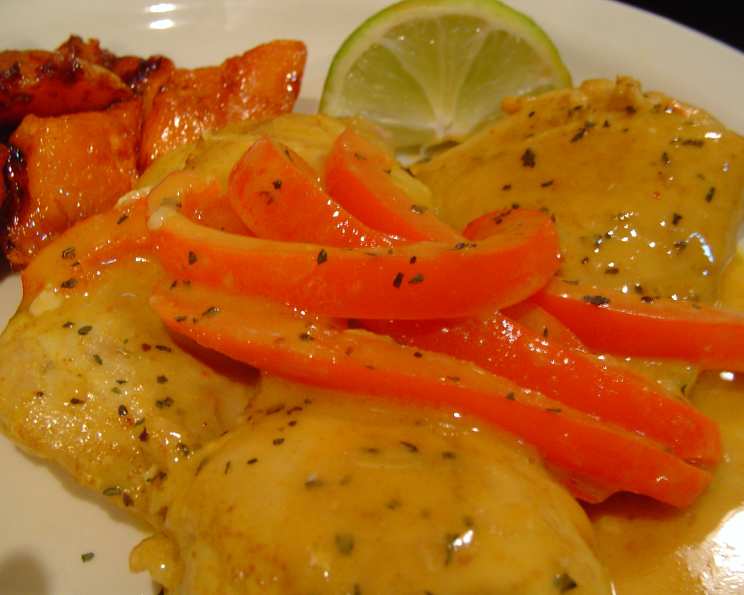
Coconut Curry Chicken: A Taste of the Tropics
There’s a certain magic in the aroma of coconut curry simmering on the stove. It instantly transports me back to a small beachside restaurant in Thailand, the gentle sea breeze carrying the scent of spices and the sound of crashing waves. That first bite of creamy, fragrant curry, laced with tender chicken and bright pops of chili, was a revelation – a flavor explosion that I knew I had to recreate at home. Over the years, I’ve tweaked and perfected my own version, and I’m excited to share this taste of paradise with you.
Recipe Overview
- Prep Time: 15 minutes
- Cook Time: 45 minutes
- Total Time: 1 hour
- Servings: 4
- Dietary Type: Dairy-Free
Ingredients
- 8 skinless chicken thighs
- 1 teaspoon turmeric
- 2 tablespoons vegetable oil
- 1 tablespoon Thai red curry paste or 1 tablespoon green curry paste
- 1 (400 ml) can coconut milk
- 2 tablespoons fish sauce
- 2 tablespoons freshly squeezed lime juice
- 2 teaspoons sugar
- 1 red bell pepper, cored, seeded & thinly sliced
- Kosher salt (to taste)
- Basil leaves (to garnish, preferably Thai)
- 1 lime, cut into wedges
Equipment Needed
- Frying pan
- Plate
- Lid for frying pan
- Knife
- Cutting board
Instructions
- Begin by preparing the chicken. Pat the chicken thighs dry with paper towels to ensure a good sear. Trim off any excess fat. Sprinkle evenly with turmeric.
- Heat vegetable oil in a frying pan over medium-high heat.
- Once the oil is shimmering, carefully place the chicken thighs in the pan, being careful not to overcrowd it.
- Brown the chicken on both sides, which should take about 3-4 minutes per side. This step is crucial for developing a rich flavor base. Transfer the browned chicken to a plate and keep warm.
- Carefully discard all but 1 tablespoon of oil from the pan. You can use a spoon to remove the excess oil.
- Lower the heat to medium. Add the Thai red curry paste (or green curry paste) to the pan and stir, mixing it with the oil until fragrant, about 30 seconds. Be careful not to burn the paste. The aroma should be intense and inviting.
- Pour in the coconut milk and bring to a boil, stirring and scraping any browned bits from the bottom of the pan. These browned bits, called fond, are packed with flavor and will add depth to the curry.
- Stir in the fish sauce, lime juice, and sugar. Bring the mixture to a boil again for 3 minutes, stirring occasionally. This allows the flavors to meld together beautifully.
- Reduce the heat to low. Return the chicken to the pan, along with any accumulated juices from the plate.
- Cover the pan with a lid and simmer for 15 minutes.
- Remove the lid, turn the chicken pieces over, and simmer for another 15 minutes. This ensures the chicken is cooked through and infused with the curry sauce.
- Tip the pan slightly and use a spoon to skim off any excess oil that has accumulated on the surface of the sauce. This will lighten the curry and improve its texture.
- Add the sliced red bell peppers to the pan and cook for another 5 to 10 minutes, or until the chicken is cooked through (internal temperature of 165°F), the peppers are tender-crisp, and the sauce has reduced to your preferred consistency. Stir occasionally.
- Taste the sauce and adjust the seasoning as needed. If necessary, add a pinch of kosher salt to enhance the flavors.
- Sprinkle the curry with fresh basil leaves (Thai basil is ideal, but regular basil works well too) and serve immediately with lime wedges.
Expert Tips & Tricks
- For a richer flavor, use full-fat coconut milk rather than light.
- If you prefer a spicier curry, add a pinch of red pepper flakes or a finely chopped chili pepper along with the curry paste.
- To thicken the sauce further, you can mix 1 tablespoon of cornstarch with 2 tablespoons of cold water to make a slurry. Add the slurry to the simmering curry and stir until thickened.
- If the curry becomes too thick, add a splash of chicken broth or water to thin it out.
- Marinating the chicken in a mixture of lime juice, turmeric, and curry paste for at least 30 minutes (or up to overnight) will result in more flavorful and tender chicken.
- For make-ahead prep, you can brown the chicken and prepare the curry sauce separately. Store them in the refrigerator until ready to cook. When ready to serve, combine the chicken and sauce and simmer until the chicken is cooked through.
Serving & Storage Suggestions
Serve this delicious Coconut Curry Chicken hot, garnished with fresh basil leaves and a squeeze of lime juice. It’s fantastic served over jasmine rice, brown rice, or even quinoa. You can also serve it with warm naan bread or roti for dipping into the flavorful sauce.
Leftovers can be stored in an airtight container in the refrigerator for up to 3 days. To reheat, gently warm the curry in a saucepan over medium heat, stirring occasionally, until heated through. You can also reheat it in the microwave, but be careful not to overheat it. The curry can also be frozen for up to 2 months. Thaw it overnight in the refrigerator before reheating.
Nutritional Information
| Nutrient | Amount per Serving | % Daily Value |
|---|---|---|
| Calories | 386.9 kcal | N/A |
| Calories from Fat | N/A | 74% |
| Total Fat | 31.8 g | 48% |
| Saturated Fat | 20.9 g | 104% |
| Cholesterol | 68.1 mg | 22% |
| Sodium | 792.2 mg | 33% |
| Total Carbohydrate | 9.8 g | 3% |
| Dietary Fiber | 1.2 g | 4% |
| Sugars | 4.1 g | 16% |
| Protein | 19.1 g | 38% |
Note: Nutritional information is an estimate and may vary based on specific ingredients and cooking methods.
Variations & Substitutions
- Vegetarian Curry: Substitute the chicken with firm tofu, chickpeas, or a mix of your favorite vegetables like broccoli, cauliflower, and carrots.
- Spicy Curry: Add a finely chopped Thai chili or a teaspoon of red pepper flakes to the curry paste for an extra kick.
- Sweet Curry: Increase the amount of sugar to 1 tablespoon for a sweeter curry.
- Potato Curry: Add diced potatoes along with the red bell peppers for a heartier curry.
- Green Bean Curry: Substitute the red bell peppers with sliced green beans.
- Tomato Curry: Add diced tomatoes along with the red bell peppers for a tangy twist.
FAQs (Frequently Asked Questions)
Q: Can I use chicken breast instead of chicken thighs?
A: Yes, you can use chicken breast, but chicken thighs are more flavorful and stay more moist during cooking. If using chicken breast, reduce the simmering time to prevent it from drying out.
Q: Can I make this curry ahead of time?
A: Absolutely! The flavors actually develop and meld together even more when made ahead of time. Store it in an airtight container in the refrigerator for up to 3 days.
Q: I don’t have fish sauce. What can I substitute?
A: You can substitute fish sauce with soy sauce or tamari, but it will slightly alter the flavor profile. Use about 1 tablespoon of soy sauce or tamari as a substitute.
Q: Is coconut milk healthy?
A: Coconut milk is high in saturated fat, but it also contains healthy fats and nutrients. Use it in moderation as part of a balanced diet.
Q: Can I freeze this curry?
A: Yes, this curry freezes well. Store it in an airtight container in the freezer for up to 2 months. Thaw it overnight in the refrigerator before reheating.
Final Thoughts
This Coconut Curry Chicken is more than just a recipe; it’s an invitation to experience the vibrant flavors of Thailand in your own kitchen. Don’t be afraid to experiment with different vegetables and spices to create your own unique version. I encourage you to give this recipe a try and share your feedback – I’d love to hear how it turned out! Pair it with a crisp, dry white wine like a Sauvignon Blanc or a chilled Thai beer for the perfect culinary experience. Enjoy!