
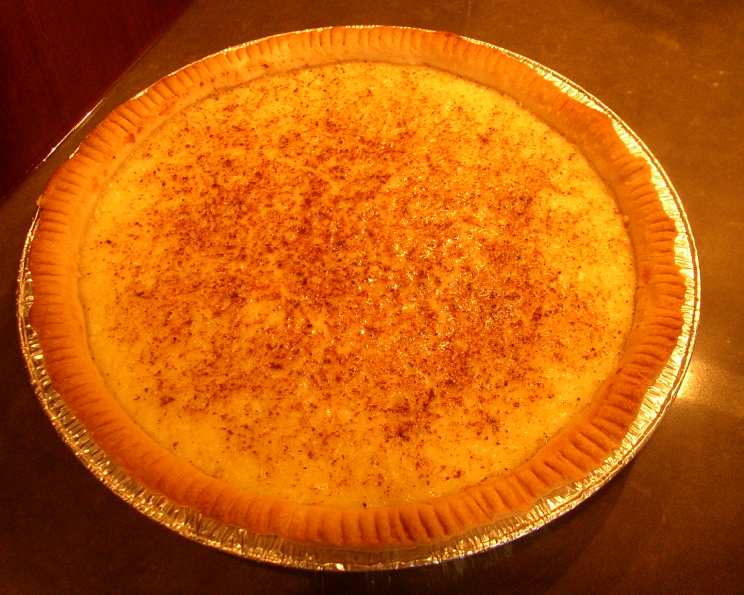
Coconut Custard Pie: A Slice of Island Comfort
The aroma of coconut always transports me back to my grandmother’s kitchen, a sun-drenched haven filled with the sweet, nutty scent of her famous coconut custard pie. I remember sitting at her worn wooden table, the pie cooling on a rack nearby, its delicate, nutmeg-dusted surface shimmering like a tropical lagoon. Each bite was a journey – a perfect balance of creamy custard and toasted coconut, a taste of pure, unadulterated love. This recipe, a slightly tweaked version of hers, carries that same magic.
Recipe Overview
- Prep Time: 15 minutes
- Cook Time: 30 minutes
- Total Time: 45 minutes
- Servings: 8
- Yield: 1 pie
- Dietary Type: Vegetarian
Ingredients
- 4 eggs
- ½ teaspoon salt
- 1 teaspoon vanilla extract
- Nutmeg, for sprinkling
- ½ cup sugar
- 2 ½ cups milk (whole milk recommended for richness)
- 1 cup shredded coconut (sweetened or unsweetened, your preference)
- 1 pie shell, uncooked (9-10 inches) – store-bought or homemade
Equipment Needed
- Mixing bowls
- Whisk
- Fine-mesh sieve or strainer
- Measuring cups and spoons
- 9- or 10-inch pie dish
- Oven
Instructions
-
Preheat your oven. The initial temperature will be 450°F (232°C).
-
In a mixing bowl, beat the eggs lightly with a whisk until just combined. Avoid over-beating, as this can incorporate too much air and affect the custard’s texture.
-
Add the sugar and salt to the beaten eggs. Whisk thoroughly until the sugar is mostly dissolved and the mixture is smooth.
-
Pour in the milk and vanilla extract. Whisk again until all ingredients are fully incorporated and the mixture is homogenous.
-
Strain the custard mixture through a fine-mesh sieve or strainer into another bowl. This crucial step removes any cooked egg particles or other solids, ensuring an exceptionally smooth and creamy final texture. Do not skip this! Discard any solids collected in the strainer.
-
Gently fold in the shredded coconut into the strained custard. Distribute the coconut evenly throughout the mixture.
-
Carefully pour the coconut custard into the unbaked pie shell. Make sure the filling is evenly distributed.
-
Sprinkle a light dusting of nutmeg evenly over the top of the custard. This adds a warm, aromatic note that complements the coconut beautifully.
-
Bake in the preheated oven at 450°F (232°C) for 10 minutes. This initial high heat helps to set the crust and creates a slightly golden surface on the custard.
-
After 10 minutes, reduce the oven temperature to 350°F (177°C) and continue baking for another 20 minutes, or until the custard is set but still slightly wobbly in the center. A slight jiggle is good; it will firm up as it cools.
-
Remove the pie from the oven and let it cool completely on a wire rack. The custard will continue to set as it cools.
-
Once cooled, you can refrigerate the pie for at least an hour before serving to enhance the flavor and texture.
Expert Tips & Tricks
- Prevent a soggy crust: Blind bake the pie crust for 10 minutes at 350°F before adding the filling. This creates a barrier that helps prevent the custard from soaking into the crust.
- Achieve the perfect texture: Straining the custard is non-negotiable! This guarantees a silky smooth custard.
- Toasting the coconut: For a deeper, nuttier flavor, lightly toast the shredded coconut in a dry skillet over medium heat until golden brown, before adding it to the custard. Be careful not to burn it!
- Even Baking: If your crust is browning too quickly, you can cover the edges with foil during the last 10 minutes of baking.
- Doneness Check: The pie is done when the edges are set and the center jiggles slightly when gently shaken. An instant-read thermometer inserted into the center should read around 175-180°F.
Serving & Storage Suggestions
Coconut custard pie is best served chilled or at room temperature. A dollop of whipped cream or a sprinkle of extra toasted coconut makes a delightful garnish.
- Storage: Store leftover pie in the refrigerator, covered, for up to 3-4 days.
- Room Temperature: While tempting, it’s best not to leave custard-based pies at room temperature for more than 2 hours due to the risk of bacterial growth.
- Freezing: While not ideal due to potential texture changes in the custard, you can freeze coconut custard pie. Wrap it tightly in plastic wrap and then in foil. Thaw overnight in the refrigerator. Be aware that the texture may be slightly altered after thawing.
Nutritional Information
(Estimated values per serving)
| Nutrient | Amount per Serving | % Daily Value |
|---|---|---|
| Calories | 319 kcal | N/A |
| Total Fat | 19.6g | 30% |
| Saturated Fat | 10.5g | 52% |
| Cholesterol | 116.4mg | 38% |
| Sodium | 338.6mg | 14% |
| Total Carbohydrate | 29.1g | 9% |
| Dietary Fiber | 2.6g | 10% |
| Sugars | 13.6g | N/A |
| Protein | 7.8g | 15% |
Variations & Substitutions
- Gluten-Free: Use a gluten-free pie crust or make a graham cracker crust.
- Dairy-Free: Substitute the milk with coconut milk or almond milk for a dairy-free option. Note that this will alter the flavor slightly.
- Spiced Coconut Pie: Add a pinch of ground ginger or cardamom to the custard for a warmer, spicier flavor profile.
- Chocolate Coconut Pie: Swirl in a tablespoon of melted dark chocolate into the custard before pouring it into the pie shell.
- Lime Zest: Add the zest of one lime to the custard for a bright citrus note.
FAQs (Frequently Asked Questions)
Q: Why is it important to strain the custard?
A: Straining the custard removes any cooked egg particles, resulting in a perfectly smooth and creamy texture. It prevents a grainy or lumpy pie.
Q: Can I use sweetened condensed milk instead of regular milk?
A: While possible, it will result in a much sweeter pie. Reduce the amount of sugar in the recipe accordingly to avoid it being overly sweet.
Q: My pie crust is browning too quickly. What can I do?
A: Cover the edges of the crust with foil or use a pie shield to prevent them from burning.
Q: How do I know when the pie is done?
A: The pie is done when the edges are set, and the center jiggles slightly when gently shaken. An instant-read thermometer inserted into the center should read around 175-180°F.
Q: Can I make this pie ahead of time?
A: Yes, coconut custard pie is a great make-ahead dessert. It can be made a day in advance and stored in the refrigerator.
Final Thoughts
This Coconut Custard Pie is more than just a recipe; it’s a slice of comfort, a memory waiting to be made. The simple act of whisking together eggs, milk, and coconut transforms humble ingredients into something truly special. Whether you’re a seasoned baker or just starting out, I encourage you to try this recipe and experience the joy of creating something delicious. Share it with loved ones, savor each bite, and let the sweet, nutty aroma fill your kitchen with warmth and happiness. And if you make any interesting adaptations, I’d love to hear about them!