
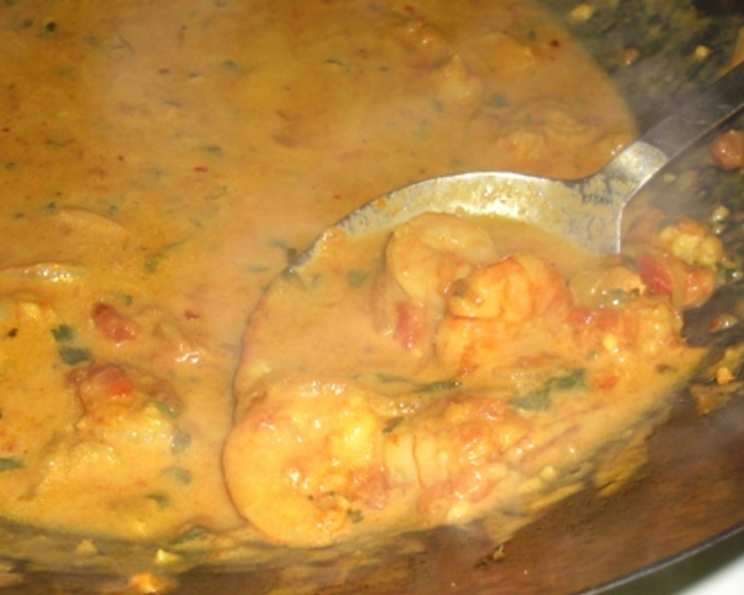
Coconut Prawn (Shrimp) Curry: A Taste of the Tropics
The first time I truly understood the magic of curry was on a small island off the coast of Thailand. The air was thick with humidity, the sun blazing, and I was hunched over a tiny table, a steaming bowl of coconut prawn curry in front of me. The flavors exploded in my mouth – the creamy sweetness of the coconut milk, the gentle heat of the chilies, the succulent prawns, all dancing together in perfect harmony. It was simple, yet profound, a dish that captured the essence of the place. Ever since, I’ve been chasing that flavor, refining and adapting, and I’m excited to share my version with you today.
Recipe Overview
- Prep Time: 15 minutes
- Cook Time: 17 minutes
- Total Time: 32 minutes
- Servings: 4
- Dietary Type: Dairy-Free
Ingredients
- 1 tablespoon vegetable oil
- ½ teaspoon black mustard seeds
- 6 fresh curry leaves
- 1 large onion, chopped
- 6 garlic cloves, minced
- 1 tablespoon grated fresh ginger
- 1 large tomatoes, chopped (tinned is OK)
- 1-2 red chilies
- 1 teaspoon turmeric
- 2 teaspoons garam masala
- 1 (400 ml) can coconut milk (unsweetened)
- 1 kg large raw shrimp (prawns)
- ¼ cup chopped fresh coriander
Equipment Needed
- Wok (or large frying pan/skillet)
Instructions
- Begin by heating the vegetable oil in a wok or large frying pan over medium-high heat. Once the oil is hot, add the black mustard seeds.
- As soon as the mustard seeds start to splutter and pop (this happens very quickly, so be ready!), add the fresh curry leaves. Stand back as they might also splutter.
- Immediately add the chopped onion. Cook for approximately 3 minutes, stirring frequently, until the onion begins to soften and brown slightly.
- Add the minced garlic, grated fresh ginger, and chopped red chilies to the pan. Cook for another few minutes, stirring occasionally, until the garlic becomes fragrant and the tomatoes soften.
- Stir in the turmeric and garam masala. Fry for about 30 seconds, stirring constantly, until the spices release their aroma. Be careful not to burn the spices.
- Gradually pour in the coconut milk, stirring continuously to incorporate it into the spice mixture. Bring the mixture to a gentle simmer.
- Reduce the heat to medium and add the raw shrimp (prawns). Cook for approximately 2 minutes, or until the shrimp are cooked through and have turned pink and opaque. Ensure the shrimp are fully submerged in the sauce.
- Season the curry to taste with salt. Be mindful of the salt content, as it can vary depending on the coconut milk and your personal preference.
- Serve the coconut prawn curry hot in bowls, garnished with freshly chopped coriander.
Expert Tips & Tricks
- Spice Level Adjustment: Adjust the amount of red chilies according to your spice preference. For a milder curry, use only one chili, or remove the seeds before chopping. For extra heat, use hotter varieties of chilies or add a pinch of chili flakes.
- Shrimp Perfection: Avoid overcooking the shrimp, as they can become tough and rubbery. Cook them just until they turn pink and opaque. If using frozen shrimp, thaw them completely before adding them to the curry. Pat them dry to ensure they brown nicely and the sauce doesn’t become watery.
- Coconut Milk Quality: The quality of the coconut milk significantly impacts the flavor and texture of the curry. Use full-fat coconut milk for a richer, creamier sauce. If using light coconut milk, you may need to add a thickening agent like cornstarch or tapioca starch.
- Make-Ahead Tip: The curry base (everything before adding the shrimp) can be made a day in advance and stored in the refrigerator. This allows the flavors to meld together and deepens the taste of the curry. Simply reheat the base before adding the shrimp.
- Deepen the Flavor: For a richer, more complex flavor, toast the mustard seeds and garam masala in a dry pan for a few minutes before adding them to the curry. Be careful not to burn them.
Serving & Storage Suggestions
Serve the coconut prawn curry hot, ideally with steamed rice (basmati or jasmine rice are excellent choices) to soak up the delicious sauce. Naan bread or roti can also be served alongside for dipping. A squeeze of fresh lime juice just before serving adds a bright, zesty touch.
Leftovers can be stored in an airtight container in the refrigerator for up to 2-3 days. Ensure the curry has cooled completely before refrigerating. To reheat, gently warm the curry in a saucepan over low heat, stirring occasionally, until heated through. You may need to add a splash of water or coconut milk if the sauce has thickened too much. Reheating in the microwave is also possible, but be careful not to overcook the shrimp.
Freezing is not recommended, as the texture of the shrimp can become rubbery upon thawing.
Nutritional Information
| Nutrient | Amount per Serving | % Daily Value |
|---|---|---|
| Calories | 446.4 kcal | N/A |
| Calories from Fat | 251 g | 56% |
| Total Fat | 27.9 g | 42% |
| Saturated Fat | 20 g | 99% |
| Cholesterol | 315 mg | 105% |
| Sodium | 1434.6 mg | 59% |
| Total Carbohydrate | 13.6 g | 4% |
| Dietary Fiber | 1.6 g | 6% |
| Sugars | 3.5 g | N/A |
| Protein | 37.5 g | 75% |
Note: Nutritional information is an estimate and may vary based on specific ingredients and preparation methods.
Variations & Substitutions
- Vegetarian Option: Replace the shrimp with firm tofu or chickpeas for a vegetarian version. Add the tofu or chickpeas at the same time as you would the shrimp, and cook until heated through.
- Chicken Curry: Substitute the shrimp with chicken breast or thigh pieces. Increase the cooking time to ensure the chicken is fully cooked.
- Vegetable Boost: Add other vegetables to the curry, such as bell peppers, zucchini, or spinach. Add them along with the tomatoes for best results.
- Creamier Curry: For an even creamier curry, stir in a tablespoon of coconut cream at the end of cooking.
- Gluten-Free: This recipe is naturally gluten-free.
- Spice it up: Add other spices like cumin, coriander powder, or a pinch of cayenne pepper for extra depth and heat.
FAQs (Frequently Asked Questions)
Q: Can I use frozen shrimp for this recipe?
A: Yes, frozen shrimp works perfectly well. Just make sure to thaw them completely before adding them to the curry, and pat them dry to remove any excess moisture.
Q: How do I know when the shrimp is cooked through?
A: The shrimp is cooked when it turns pink and opaque. Avoid overcooking, as the shrimp can become tough.
Q: Can I make this curry ahead of time?
A: Yes, you can make the curry base (everything before adding the shrimp) a day in advance. Store it in the refrigerator and reheat before adding the shrimp.
Q: What’s the best way to serve this curry?
A: This curry is delicious served with steamed rice, naan bread, or roti. Garnish with fresh coriander and a squeeze of lime juice for a vibrant flavor.
Q: Can I use a different type of milk instead of coconut milk?
A: While coconut milk provides the signature flavor, you can experiment with other types of milk, such as cashew milk or almond milk. However, the flavor and texture will be slightly different.
Final Thoughts
This Coconut Prawn Curry is more than just a recipe; it’s an invitation to explore the vibrant flavors of Southeast Asia. It’s a dish that’s easy enough for a weeknight meal, yet impressive enough to serve to guests. So, gather your ingredients, embrace the aromas, and prepare to transport yourself to a tropical paradise. Don’t hesitate to experiment with variations and make it your own. And most importantly, enjoy the process! I encourage you to share your creations and feedback – I’d love to hear about your culinary adventures! Pair it with a crisp Sauvignon Blanc or a refreshing Thai iced tea for a complete sensory experience. Bon appétit!