
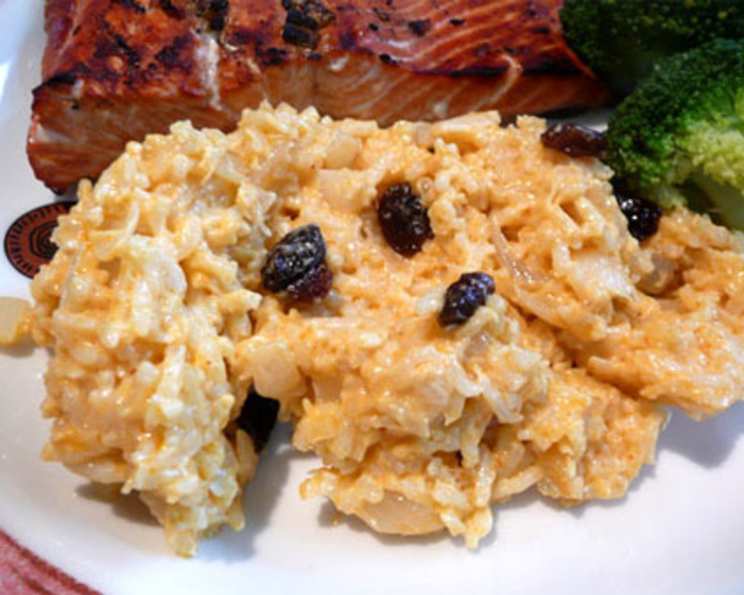
Coconut-Raisin Rice Pilaf: A Culinary Journey
The aroma of coconut transports me back to my childhood summers spent in Goa, India. My grandmother, a culinary wizard, would often prepare a fragrant rice dish with coconut, raisins, and a medley of spices that filled the entire house with warmth. It wasn’t just a meal; it was a celebration of flavors, a comforting embrace, and a reminder of home. This Coconut-Raisin Rice Pilaf, though not her exact recipe, evokes that same feeling of nostalgia and simple joy.
Recipe Overview:
- Prep Time: 30 minutes
- Cook Time: 30 minutes
- Total Time: 1 hour
- Servings: 4-5
- Dietary Type: Vegan
Ingredients:
- 3 tablespoons olive oil
- 1 medium onion, minced
- 1 garlic clove, minced
- 1 tablespoon minced fresh ginger
- 1 tablespoon Thai red curry paste
- 1 1⁄2 cups long-grain rice
- 2 cups coconut milk (see instructions below for homemade)
- 1 1⁄2 cups chicken stock
- 1⁄2 cup desiccated coconut (dry)
- 1⁄2 cup raisins or 1/2 cup currants
- Salt to taste
For the Coconut Milk:
- 8 ounces desiccated coconut (dry)
- 3 1⁄2 cups water
Equipment Needed:
- Medium-sized pot
- Blender or food processor
- Large sieve
- Medium saucepan
Instructions:
-
Make the coconut milk: In a medium-sized pot, combine the desiccated coconut and water. Stir well and let the mixture soak for 30 minutes. This allows the coconut to rehydrate and release its flavor.
-
After soaking, turn the heat to low and gently simmer the mixture, covered, for 10 minutes. Simmering coaxes out more flavor from the coconut.
-
Turn off the heat and leave the pot on the element for another 30 minutes. This allows for further infusion and develops a richer, more flavorful coconut milk.
-
Transfer the coconut mixture to a blender or food processor. Process for about 45 seconds, or until the coconut is finely ground and the mixture is well combined.
-
Place a large sieve over a bowl. Empty the coconut mixture into the sieve. Press down hard on the coconut solids with the back of a spoon to extract as much coconut milk as possible. You should yield approximately 2 cups of coconut milk. This can be made up to 2 days in advance and refrigerated, covered. The milk may separate, forming a creamy layer on top and a thinner layer underneath; this is perfectly normal and will recombine when heated.
-
Prepare the pilaf: In a medium saucepan, heat the olive oil over medium heat. Add the minced onion, garlic, fresh ginger, and Thai red curry paste. Mash the paste into the other ingredients to ensure it disperses evenly. Cook the onion mixture until softened but not browned, about 2-3 minutes.
-
Stir in the long-grain rice and cook in the oil, stirring constantly, for 2 minutes. This toasts the rice, enhancing its nutty flavor and preventing it from becoming sticky.
-
Remove the saucepan from the heat. Carefully add the coconut milk and chicken stock (be cautious as the pan will be hot!), along with the desiccated coconut. Combine everything thoroughly.
-
Taste the liquid and add salt if needed, depending on the saltiness of your stock. Seasoning at this stage ensures the rice is evenly flavored.
-
Return the saucepan to the burner and bring the mixture to a rapid boil. Boil uncovered over high heat until the liquid level is just above the rice, about 5 minutes. This step helps to concentrate the flavors and initiate the cooking process.
-
Immediately cover the saucepan tightly with a lid, reduce the heat to the lowest setting, and simmer for 10 more minutes. Maintaining a low simmer ensures the rice cooks evenly and doesn’t burn.
-
Carefully stir in the raisins (or currants), cover the pot again, and continue cooking over low heat for another 5 minutes without lifting the lid (total cooking time is 20 minutes). Allowing the pilaf to steam undisturbed is crucial for achieving a fluffy texture.
-
Remove the pot from the heat and let the pilaf “rest,” covered, for 10 minutes. This allows the steam to redistribute, resulting in perfectly cooked, separate grains of rice.
-
Finally, fluff the pilaf gently with a fork and serve hot with your favorite curry or grilled dishes.
Expert Tips & Tricks:
- Homemade coconut milk is key. While canned coconut milk can work in a pinch, freshly made coconut milk truly elevates the flavor of this pilaf. The aroma and subtle sweetness are unmatched.
- Don’t peek! Resist the urge to lift the lid during the simmering and resting periods. This releases steam and can disrupt the cooking process.
- Adjust the curry paste to your liking. If you prefer a milder flavor, use less curry paste. For a spicier kick, add a pinch of red pepper flakes.
- Use good quality rice. The type of rice you use will affect the final texture of the pilaf. Long-grain rice is recommended for its ability to stay separate and fluffy.
Serving & Storage Suggestions:
This Coconut-Raisin Rice Pilaf makes a beautiful and flavorful side dish to accompany curries, grilled meats, or even roasted vegetables. Garnish with fresh cilantro or toasted coconut flakes for an extra touch of elegance.
Leftovers can be stored in an airtight container in the refrigerator for up to 3 days. To reheat, gently microwave or steam the pilaf until heated through. Add a splash of water or coconut milk if needed to prevent it from drying out. Freezing is not recommended as it can alter the texture of the rice.
Nutritional Information:
| Nutrient | Amount per Serving | % Daily Value |
|---|---|---|
| Calories | 1278.5 kcal | N/A |
| Calories from Fat | 493 g | 39% |
| Total Fat | 54.8 g | 84% |
| Saturated Fat | 42.5 g | 212% |
| Cholesterol | 2.7 mg | 0% |
| Sodium | 387.4 mg | 16% |
| Total Carbohydrate | 189.8 g | 63% |
| Dietary Fiber | 9.1 g | 36% |
| Sugars | 114.4 g | 457% |
| Protein | 12 g | 23% |
Note: Nutritional information is an estimate and may vary based on specific ingredients and portion sizes.
Variations & Substitutions:
- For a nuttier flavor: Toast the desiccated coconut in a dry pan over medium heat until lightly golden before adding it to the pilaf.
- Add some greens: Stir in some chopped spinach or kale during the last few minutes of cooking for added nutrients and color.
- Use different dried fruits: Try using chopped dried apricots, cranberries, or dates instead of raisins.
- Make it spicier: Add a finely chopped chili pepper to the onion mixture for an extra kick.
- Vegan stock: Replace the chicken stock with vegetable stock for a completely vegan dish.
FAQs (Frequently Asked Questions):
Q: Can I use basmati rice instead of long-grain rice?
A: Yes, you can use basmati rice. It will give a slightly different flavor and texture, but it will still be delicious. You may need to adjust the cooking time slightly, so keep an eye on the rice.
Q: Is it necessary to make my own coconut milk?
A: While homemade coconut milk is highly recommended for the best flavor, you can use canned coconut milk as a substitute. Use full-fat canned coconut milk for a richer flavor.
Q: Can I add other vegetables to the pilaf?
A: Absolutely! Feel free to add diced bell peppers, peas, or carrots to the onion mixture for added texture and nutrients.
Q: How do I prevent the rice from sticking to the bottom of the pan?
A: Ensure that the heat is on the lowest setting during the simmering process and avoid lifting the lid. Also, using a heavy-bottomed saucepan will help distribute the heat more evenly.
Q: Can I make this pilaf ahead of time?
A: Yes, you can make the pilaf a few hours ahead of time. Keep it covered in a warm oven or reheat it gently before serving.
Final Thoughts:
This Coconut-Raisin Rice Pilaf is more than just a recipe; it’s an invitation to explore the vibrant flavors of South Asian cuisine. It’s a dish that’s both comforting and exciting, simple yet sophisticated. I encourage you to try this recipe, experiment with different variations, and share your feedback. Pair it with a flavorful curry, a grilled piece of fish, or simply enjoy it on its own. Happy cooking!