
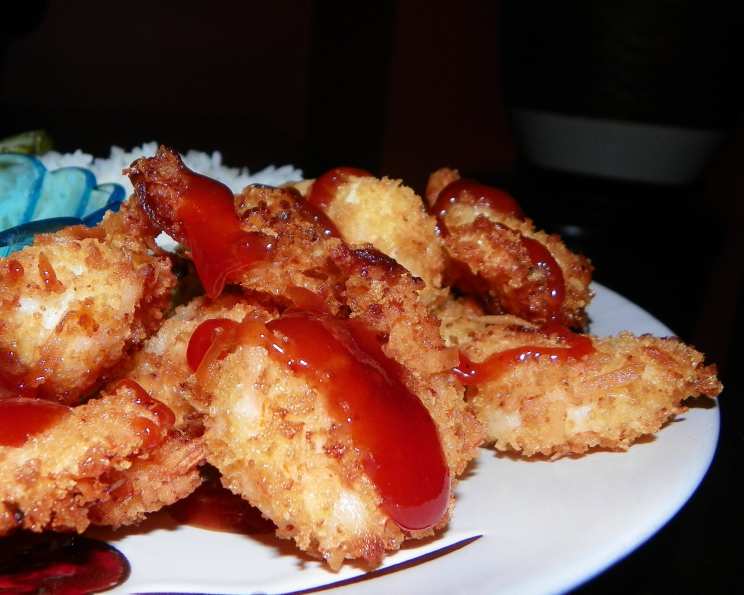
Coconut Shrimp With Guava Sweet and Sour Sauce
The first time I tasted coconut shrimp, I was a wide-eyed kid on a family vacation to Maui. The memory is so vivid – the warm, salty air, the sound of crashing waves, and that first unforgettable bite. The crisp, sweet coconut coating giving way to the succulent shrimp, all dipped in a tangy sauce that burst with tropical flavors. It was pure paradise on a plate, and it sparked a lifelong love for island cuisine. This recipe aims to capture that same magic, transporting you to a sun-drenched beach with every delicious bite.
Recipe Overview
- Prep Time: 15 minutes
- Cook Time: 3 minutes
- Total Time: 18 minutes
- Servings: 2
- Yields: 12 jumbo shrimp
- Dietary Type: Seafood
Ingredients
- 12 jumbo shrimp, peeled, deveined and butterflied
- 1 cup coconut flakes
- 1 cup panko breadcrumbs
- 3 eggs, beaten
- 1 cup flour
- 3 cups frying oil
- 1 cup guava concentrate
- ½ cup rice vinegar (or ½ cup white vinegar)
- ½ cup pineapple juice
- ½ cup sugar
- 1 tablespoon cornstarch
- 1 tablespoon water
Equipment Needed
- Medium frying pan
- Medium mixing bowl
- Saucepan
- Whisk
Instructions
-
Pre-heat oil to 350 degrees Fahrenheit in a medium frying pan. Use a thermometer to ensure accuracy, as the correct temperature is crucial for even cooking and preventing burning.
-
In a medium mixing bowl, thoroughly combine the coconut flakes and panko breadcrumbs. This mixture will create the crispy, flavorful coating for the shrimp.
-
Prepare your dredging station: place the flour in one shallow dish, the beaten eggs in another, and the coconut-panko mixture in a third.
-
Dredge each shrimp first in the flour, ensuring it’s fully coated. This helps the egg adhere properly.
-
Next, dip the floured shrimp in the beaten eggs, making sure to coat all sides. Let any excess egg drip off before moving to the next step.
-
Finally, dredge the shrimp in the panko and coconut mix, pressing down firmly to ensure proper breading. The firmer you press, the better the coating will adhere during frying.
-
Carefully place the breaded shrimp into the preheated oil, being sure not to overcrowd the pan. Overcrowding will lower the oil temperature and result in soggy shrimp. Fry in batches if necessary.
-
Fry the shrimp until golden brown, about 1-2 minutes per side, being sure not to burn them. Coconut contains a high sugar content, which means it can burn quickly. Watch closely!
-
Remove the fried shrimp from the oil and place them on a wire rack to drain excess oil. This helps keep them crispy.
-
In a separate saucepan, combine the sugar, vinegar, and pineapple juice. Bring to a boil over medium heat, stirring until the sugar is completely dissolved.
-
Add the guava concentrate and allow the mixture to return to a boil. Reduce the heat and let it simmer for a few minutes to allow the flavors to meld.
-
In a small bowl, whisk together the cornstarch and water to create a slurry. This will thicken the sauce.
-
Slowly pour the cornstarch slurry into the simmering sauce, whisking constantly to prevent lumps from forming. Continue to simmer until the sauce thickens to your desired consistency. The sauce should be able to coat the back of a spoon.
-
You can serve the sauce as a dip alongside the coconut shrimp, or simply pour the sauce over the shrimp just before serving.
Expert Tips & Tricks
- Panko Power: Using panko breadcrumbs instead of regular breadcrumbs adds extra crispiness to the coating.
- Egg Wash Alternative: If you’re looking for a lighter option, you can use a mixture of milk and a beaten egg instead of just eggs for the egg wash.
- Temperature is Key: Maintaining the oil temperature at 350°F (175°C) is crucial. If the oil is too cool, the shrimp will be greasy; if it’s too hot, the coconut will burn before the shrimp is cooked through.
- Batch Cooking: Avoid overcrowding the pan when frying. Work in batches to maintain the oil temperature and ensure even cooking.
- Spice it Up: Add a pinch of red pepper flakes to the guava sauce for a touch of heat.
- Preventing Soggy Shrimp: Place the fried shrimp on a wire rack to drain excess oil and maintain their crispiness.
- Guava Substitute: If guava concentrate is unavailable, try using guava paste blended with a little water and lemon juice.
- Make Ahead: The guava sauce can be made ahead of time and stored in the refrigerator for up to 3 days. Reheat gently before serving.
- Crispy Coating Secret: For an even crispier coating, try double-dredging the shrimp in the coconut mixture.
Serving & Storage Suggestions
Serve the Coconut Shrimp immediately after frying for the best taste and texture. Arrange them artfully on a platter, garnished with fresh pineapple wedges or cilantro sprigs. The Guava Sweet and Sour Sauce can be served on the side as a dipping sauce, or drizzled over the shrimp.
Leftover Coconut Shrimp can be stored in an airtight container in the refrigerator for up to 2 days. To reheat, bake them in a preheated oven at 350°F (175°C) for about 5-7 minutes, or until heated through and crispy. Microwaving is not recommended, as it can make the shrimp soggy. The Guava Sweet and Sour Sauce can be stored separately in the refrigerator for up to 5 days.
Nutritional Information
| Nutrient | Amount per Serving | % Daily Value |
|---|---|---|
| Calories | 2013.85 kcal | N/A |
| Calories from Fat | 1582.5 g | 79% |
| Total Fat | 175.9 g | 270.5% |
| Saturated Fat | 28.5 g | 142% |
| Cholesterol | 245.35 mg | 81.5% |
| Sodium | 789.2 mg | 32.5% |
| Total Carbohydrate | 89.75 g | 29.5% |
| Dietary Fiber | 5.6 g | 22% |
| Sugars | 40 g | 160% |
| Protein | 24.4 g | 48.5% |
Note: Nutritional information is an estimate and can vary based on specific ingredients and cooking methods.
Variations & Substitutions
- Gluten-Free: Use a gluten-free flour blend instead of all-purpose flour for dredging. You can also find gluten-free panko breadcrumbs.
- Vegan: Substitute the shrimp with firm tofu, pressed to remove excess water, and cut into shrimp-sized pieces. Use a flaxseed “egg” (1 tablespoon ground flaxseed mixed with 3 tablespoons of water, let sit for 5 minutes) instead of beaten eggs.
- Spicy: Add a pinch of cayenne pepper or a dash of hot sauce to the egg wash or the guava sauce for a spicy kick.
- Herbaceous: Mix finely chopped cilantro or parsley into the coconut-panko mixture for a fresh, herbaceous flavor.
- Citrusy: Add a tablespoon of lime or orange zest to the coconut-panko mixture for a bright, citrusy twist.
- Different Fruit Sauce: If guava isn’t your favorite, try using mango, passion fruit, or even a combination of tropical fruits for the sweet and sour sauce.
FAQs (Frequently Asked Questions)
Q: Can I bake the coconut shrimp instead of frying it?
A: Yes, you can bake the coconut shrimp! Place the breaded shrimp on a baking sheet lined with parchment paper and bake at 400°F (200°C) for about 10-12 minutes, or until golden brown and cooked through.
Q: How do I prevent the coconut from burning while frying?
A: Make sure to maintain the correct oil temperature (350°F/175°C) and watch the shrimp closely while frying, as the coconut can burn quickly due to its high sugar content.
Q: Can I use frozen shrimp for this recipe?
A: Yes, you can use frozen shrimp. Make sure to thaw them completely and pat them dry with paper towels before breading.
Q: How do I make the guava sauce thicker?
A: If the guava sauce isn’t thick enough, you can add a little more cornstarch slurry (cornstarch mixed with water) and simmer until it reaches your desired consistency.
Q: Can I prepare the coconut shrimp ahead of time?
A: You can bread the shrimp ahead of time and store them in the refrigerator for up to 2 hours before frying. However, it’s best to fry them just before serving for the crispiest texture.
Final Thoughts
This Coconut Shrimp with Guava Sweet and Sour Sauce is a delightful dish that brings a taste of the tropics to your table. Whether you’re recreating a cherished vacation memory or simply seeking a new culinary adventure, this recipe is sure to impress. Don’t be afraid to experiment with the variations and substitutions to create your own unique twist. And most importantly, don’t hesitate to share your culinary creations and experiences with friends and family. After all, food is best enjoyed when shared! This dish pairs beautifully with a light, crisp white wine or a refreshing tropical cocktail. Enjoy!