
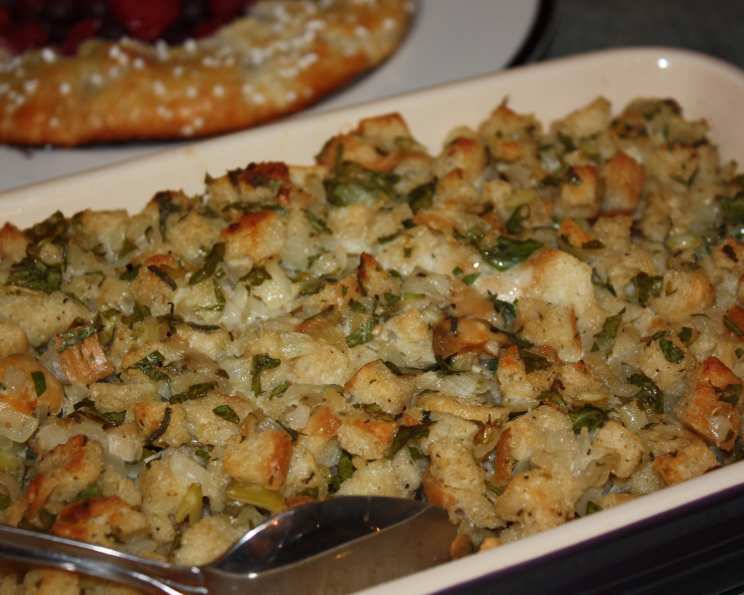
Colonial Oyster Stuffing: A Taste of History
The holidays in my childhood home always carried the scent of the sea, even though we lived far from the coast. My grandmother, a woman who held onto her family’s coastal Virginia traditions with fierce pride, insisted on oyster stuffing every Thanksgiving. It wasn’t the ubiquitous bread-and-celery version; this was something richer, earthier, and unapologetically oyster-centric. I remember watching her carefully shuck the oysters, the briny liquor pooling in the bowl, a promise of the deep, savory flavors to come. This recipe brings me right back to her bustling kitchen, the warmth of the oven mingling with the salty tang of the sea.
Recipe Overview
- Prep Time: 30 minutes
- Cook Time: 40 minutes
- Total Time: 1 hour 10 minutes
- Servings: 8
- Yield: 8 cups
- Dietary Type: Pescatarian
Ingredients
- 1 lb firm white bread, crust removed, insides cubed
- 2 medium onions, finely chopped
- 2 tablespoons olive oil
- 2 celery ribs, chopped
- 5 garlic cloves, chopped
- 1 tablespoon salt
- 1 teaspoon fresh ground pepper
- 2 fresh thyme sprigs, leaves pulled from stems
- 4 fresh sage leaves, sliced finely
- 1 teaspoon dried oregano
- 1/2 cup dry white wine
- 2 cups oysters, shucked (small oysters are preferred)
- 1 cup heavy cream
- 1/2 cup chopped parsley
- 1 cup chicken stock
Equipment Needed
- Baking pan
- Large mixing bowl
- Large skillet
- Lightly greased baking dish
- Aluminum foil
Instructions
- Begin by preheating your oven to 325°F (160°C).
- Spread the bread cubes in a single layer on a baking pan.
- Bake the bread cubes for 20-30 minutes, or until they are dry and slightly colored. This step is crucial for preventing a soggy stuffing.
- Remove the bread from the oven and transfer it to a large mixing bowl. The bread can be prepared ahead of time; simply cool it completely and store it in an airtight container until ready to use.
- In a large skillet, heat the olive oil over medium-low heat. Add the finely chopped onions and celery.
- Sauté the onions and celery until the onions are soft and translucent, about 10-15 minutes. This slow sautéing process releases their natural sweetness.
- Add the chopped garlic, salt, pepper, thyme leaves, finely sliced sage leaves, and dried oregano to the skillet.
- Sauté the mixture for another 5 minutes, allowing the garlic and herbs to infuse the oil with their aromatic flavors. Be careful not to burn the garlic.
- Pour in the dry white wine and cook until most of the wine has evaporated, approximately 5 minutes. This step adds a layer of acidity that balances the richness of the oysters and cream.
- Transfer the vegetable mixture from the skillet to the bowl with the dried bread cubes. Mix well to combine, ensuring the bread is evenly coated with the aromatic oils and spices.
- Gently fold in the shucked oysters, heavy cream, and chopped parsley. Handle the oysters with care to avoid breaking them apart too much.
- Gradually add the chicken stock to the bread mixture, mixing until the bread is moistened but not soggy. The exact amount of stock needed will depend on the dryness of your bread and vegetables, so add it a little at a time. You’re aiming for a consistency that is damp but not dripping.
- Transfer the oyster stuffing mixture to a lightly greased baking dish.
- Cover the baking dish tightly with aluminum foil.
- Bake the covered stuffing for 30 minutes. Covering it helps to steam the stuffing and ensures it cooks evenly.
- Remove the foil and bake for an additional 10 minutes, or until the top is crisp and golden brown. Keep a close eye on it to prevent burning.
- Remove the Colonial Oyster Stuffing from the oven and let it rest for a few minutes before serving. Serve while still hot.
Expert Tips & Tricks
- Bread Selection: The type of bread you use matters. A sturdy, firm white bread like a Pullman loaf holds its shape better than a softer variety. Stale bread works even better as it absorbs moisture more effectively.
- Oyster Quality: Fresh, high-quality oysters are key to a successful stuffing. Small oysters are often preferred as they distribute more evenly throughout the mixture. If you’re using larger oysters, consider chopping them into smaller pieces.
- Make-Ahead Tip: This oyster stuffing can be prepared ahead of time, up to the point of baking. Simply follow the recipe through the covered baking stage (30 minutes), then cool completely, cover tightly, and refrigerate. The next day, bake uncovered until the top is golden brown and the stuffing is heated through.
- Preventing Soggy Stuffing: The biggest mistake with stuffing is ending up with a soggy mess. Ensure your bread is thoroughly dried out in the oven before adding the wet ingredients. Add the chicken stock gradually, and stop when the mixture is just moistened.
- Enhancing Flavor: For an extra layer of flavor, consider adding a splash of oyster liquor (the liquid from the shucked oysters) to the stuffing mixture.
Serving & Storage Suggestions
Serve the Colonial Oyster Stuffing hot, directly from the oven. It pairs beautifully with roasted turkey, ham, or duck. It also makes a wonderful side dish for any seafood-centric meal.
Leftover oyster stuffing should be stored in an airtight container in the refrigerator. It will keep for 3-4 days. To reheat, bake in a preheated oven at 350°F (175°C) until heated through, or microwave in short intervals, stirring occasionally. It is not recommended to leave oyster stuffing at room temperature for more than 2 hours due to the risk of bacterial growth. Freezing is possible, but the texture may be slightly altered upon thawing. Thaw completely in the refrigerator before reheating.
Nutritional Information
| Nutrient | Amount per Serving | % Daily Value |
|---|---|---|
| Calories | 405 kcal | 20% |
| Total Fat | 18g | 28% |
| Saturated Fat | 8g | 40% |
| Cholesterol | 70mg | 23% |
| Sodium | 1357mg | 57% |
| Total Carbohydrate | 45g | 15% |
| Dietary Fiber | 3g | 10% |
| Sugars | 5g | – |
| Protein | 13g | 26% |
Note: Nutritional information is an estimate and may vary based on specific ingredients and portion sizes.
Variations & Substitutions
- Gluten-Free Version: Substitute the white bread with a gluten-free bread alternative. Ensure the bread is also dried out thoroughly before using.
- Spicy Kick: Add a pinch of red pepper flakes or a dash of hot sauce to the vegetable mixture for a spicy twist.
- Herb Variations: Experiment with different herbs. Marjoram, savory, or rosemary can be used in place of or in addition to the thyme and sage.
- Seafood Medley: Add other types of seafood, such as chopped clams or shrimp, for a more complex flavor profile.
- Vegetarian Option (Oyster Mushroom Stuffing): Use oyster mushrooms instead of oysters for a similar texture and flavor profile. Saute the mushrooms well to release their moisture and intensify their flavor.
- Different Liquors: If you don’t have white wine, a dry sherry or even chicken broth can be used as a substitute.
FAQs (Frequently Asked Questions)
Q: Can I use pre-shucked oysters?
A: Yes, you can use pre-shucked oysters, but be sure to drain them well before adding them to the stuffing mixture. Freshly shucked oysters are always preferable for the best flavor and texture.
Q: How can I tell if the oyster stuffing is cooked through?
A: The oyster stuffing is done when the top is golden brown and crisp, and the internal temperature reaches 165°F (74°C). Use a food thermometer to check the temperature in the center of the stuffing.
Q: Can I freeze leftover oyster stuffing?
A: Yes, you can freeze leftover oyster stuffing. Store it in an airtight container or freezer bag for up to 2 months. Thaw completely in the refrigerator before reheating.
Q: What can I do if my oyster stuffing is too dry?
A: If your oyster stuffing is too dry, add a little more chicken stock or cream until it reaches the desired consistency.
Q: Is it safe to eat oysters in stuffing?
A: Yes, it is safe to eat oysters in stuffing as long as they are cooked to an internal temperature of 145°F (63°C). Cooking the oysters thoroughly will eliminate any potential food safety concerns.
Final Thoughts
Colonial Oyster Stuffing is more than just a side dish; it’s a culinary journey back in time, a taste of history on your plate. The combination of savory herbs, rich cream, and the unmistakable flavor of fresh oysters creates a symphony of flavors that is both comforting and sophisticated. I urge you to try this recipe, to experience the traditions of the past, and perhaps, like me, to create your own lasting memories around this exceptional dish. Don’t be afraid to experiment with variations to suit your personal taste, and please, share your creations and feedback with me! Pair this stuffing with a crisp white wine or a light-bodied red for a truly unforgettable meal.