
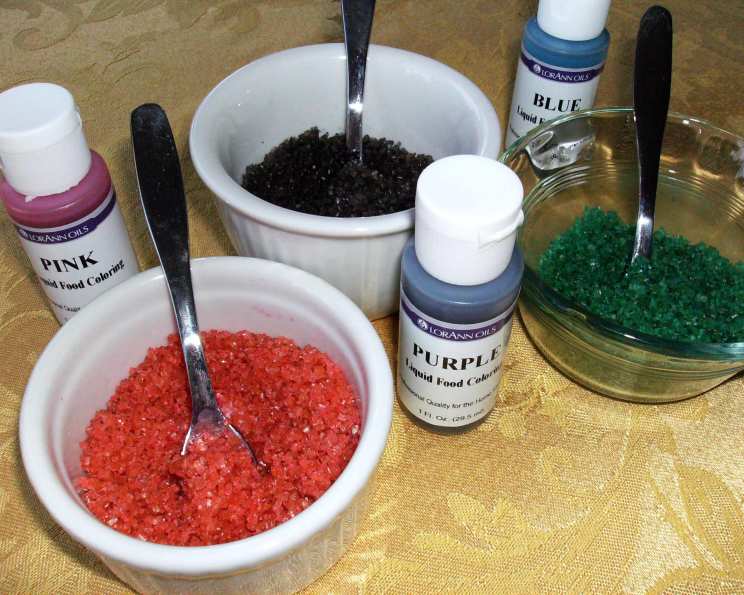
Dazzling DIY: Creating Colored Sanding Sugar for Exquisite Treats
I remember as a child, being utterly mesmerized by the glistening, vibrant sanding sugar sprinkled atop holiday cookies. It was more than just decoration; it was magic. Each tiny crystal caught the light, transforming ordinary sugar cookies into edible jewels. It was the first time I understood that food could be art, and it ignited a lifelong passion for baking and decorating. To this day, the simple act of creating my own colored sanding sugar brings back that childlike wonder, a reminder that even the smallest details can make the biggest difference.
Recipe Overview
- Prep Time: 10 minutes
- Total Time: 10 minutes
- Yields: 1 cup
- Serves: 16
- Dietary Type: Vegan, Gluten-Free, Dairy-Free
Ingredients
- 1 cup coarse turbinado sugar (or AA-grade large crystal coarse sugar)
Gel Food Dye Method:
- Gel food coloring (a tiny dab)
- Water, a couple of drops
Liquid Food Dye Method:
- 4-10 drops food coloring
Equipment Needed
- Small bowls
- Spoons
- Toothpick or fork tines
- Medicine dropper (optional, but recommended for gel food dye)
Instructions
Making your own colored sanding sugar is surprisingly simple and allows you to customize the colors to perfectly match your baking projects. Here’s how to do it, using either gel or liquid food coloring:
Gel Food Dye Method
-
Place the coarse turbinado sugar into a bowl. You can divide the sugar into multiple bowls if you want to create several colors at once.
-
On a spoon, place a tiny dab of the gel food coloring you want to use. Remember, a little goes a long way with gel colors, as they are much more concentrated than liquid dyes.
-
Using a toothpick or the tines of a fork, mix the gel food coloring with just a few drops of water—no more than 4-5 drops. This step is crucial. If there’s too little water, the color won’t diffuse properly. Too much water, and the color won’t adhere well to the sugar crystals. A medicine dropper is ideal for precise water addition.
-
Carefully stir the colored water mixture into the bowl of sugar, mixing thoroughly until the color is evenly distributed.
-
Shake the bowl occasionally to help properly disperse the coloring throughout the sugar.
-
Let the bowl of sugar sit in a safe, cool, and dry area for at least 10 minutes to allow the color to dry and set. This prevents the color from bleeding when applied to your baked goods.
Liquid Food Dye Method
-
Put the coarse turbinado sugar into a bowl. As with the gel method, divide the sugar if you’re making multiple colors.
-
The number of drops of liquid food coloring you’ll need depends on how deep you want the color to be and the intensity of the dye. Generally, 4-5 drops will create a medium shade. For example, you might only need 2-3 drops of red to get a pink hue, but 8-10 drops for a true red.
-
Put the food coloring drops on a spoon and mix thoroughly through the bowl of coarse sugar.
-
Shake the bowl a few times to disperse all the dye evenly. If it looks like the color is “spotting” (unevenly distributed), add another 2-3 drops of coloring to the spoon and mix again.
-
Once you are satisfied with the color, let the bowl sit in a cool, dry area for about 5-10 minutes to allow the color to seep into the sugar and dry.
Rainbow Sugar (Liquid Dye Only)
-
For a multi-colored, rainbow effect using liquid dyes, don’t pre-mix the dye on a spoon.
-
Randomly put a few drops of different colors directly into the bowl of sugar and quickly stir it up, being careful not to over-blend the colors together. The goal is to have distinct pockets of color, not a uniform blend.
-
Allow the sugar to dry as described above.
General Tips
- If you only need a small amount of colored sugar, divide the initial cup into separate bowls before coloring, instead of buying multiple pre-colored containers.
Expert Tips & Tricks
- Drying is Key: Ensure the sanding sugar is completely dry before using it to prevent the color from running on your baked goods. If it seems damp after 10 minutes, let it air dry for longer, stirring occasionally to prevent clumping.
- Color Intensity: Experiment with different amounts of food coloring to achieve your desired shade. Start with less and add more gradually to avoid oversaturating the sugar.
- Using Natural Dyes: For a more natural approach, consider using natural food colorings derived from fruits and vegetables. Beet juice, spinach juice, and turmeric can all be used to create beautiful pastel shades. Keep in mind that natural dyes tend to be less vibrant than artificial ones and may require slightly different drying times.
- Avoid Clumping: If the sugar clumps during the drying process, break it up with a fork or your fingers before using it. You can also pulse it briefly in a food processor for a perfectly uniform texture.
Serving & Storage Suggestions
Colored sanding sugar is best used as a decorative element on cookies, cupcakes, cakes, and other desserts. Sprinkle it on before baking for a baked-in sparkle, or after baking while the frosting is still wet.
Store your homemade colored sanding sugar in an airtight container at room temperature. When stored properly, it will last indefinitely, although the color may fade slightly over time. Avoid storing it in humid environments, as moisture can cause the sugar to clump. There is no need to refrigerate or freeze sanding sugar.
Nutritional Information
| Nutrient | Amount per Serving | % Daily Value |
|---|---|---|
| Calories | 0 kcal | 0% |
| Total Fat | 0 g | 0% |
| Saturated Fat | 0 g | 0% |
| Cholesterol | 0 mg | 0% |
| Sodium | 0 mg | 0% |
| Total Carbohydrate | 0 g | 0% |
| Dietary Fiber | 0 g | 0% |
| Sugars | 0 g | 0% |
| Protein | 0 g | 0% |
Variations & Substitutions
- Flavored Sanding Sugar: Add a few drops of extract (vanilla, almond, lemon) to the sugar while coloring for an extra layer of flavor.
- Edible Glitter: For a more glamorous look, mix in edible glitter with the colored sanding sugar.
- Spice-Infused Sugar: Mix in spices like cinnamon, nutmeg, or cardamom with the sugar before coloring. This works particularly well for holiday-themed cookies and cakes.
- Larger Crystals: While this recipe specifies coarse sugar, you can use granulated sugar if that’s all you have. The resulting sanding sugar will be finer in texture.
FAQs (Frequently Asked Questions)
Q: Can I use regular granulated sugar instead of coarse sugar?
A: Yes, you can, but the result will be a finer sanding sugar. Coarse sugar provides a more noticeable sparkle and texture.
Q: How do I prevent the color from bleeding onto my cookies?
A: Ensure the sanding sugar is completely dry before applying it. Also, avoid using too much water when mixing the dye, as excess moisture can cause bleeding.
Q: Can I mix colors to create new shades?
A: Absolutely! Experiment with mixing different food colorings to create custom shades that perfectly match your theme. Use the same techniques described above for single colors.
Q: How long will the colored sanding sugar last?
A: When stored in an airtight container in a cool, dry place, colored sanding sugar will last indefinitely, although the color may fade slightly over time.
Q: Can I use powdered food coloring?
A: While possible, powdered food coloring is not recommended, as it can be difficult to dissolve evenly and may result in a grainy texture. Gel or liquid food coloring is easier to work with.
Final Thoughts
Creating your own colored sanding sugar is a simple yet rewarding way to elevate your baking creations. With a few basic ingredients and a little bit of patience, you can transform ordinary treats into dazzling works of art. Don’t be afraid to experiment with different colors, flavors, and textures to create sanding sugar that’s uniquely yours. So go ahead, sprinkle a little magic onto your next batch of cookies or cupcakes and watch the smiles light up! I’d love to hear about your creations and any variations you try, so please share your experiences! Happy baking!