
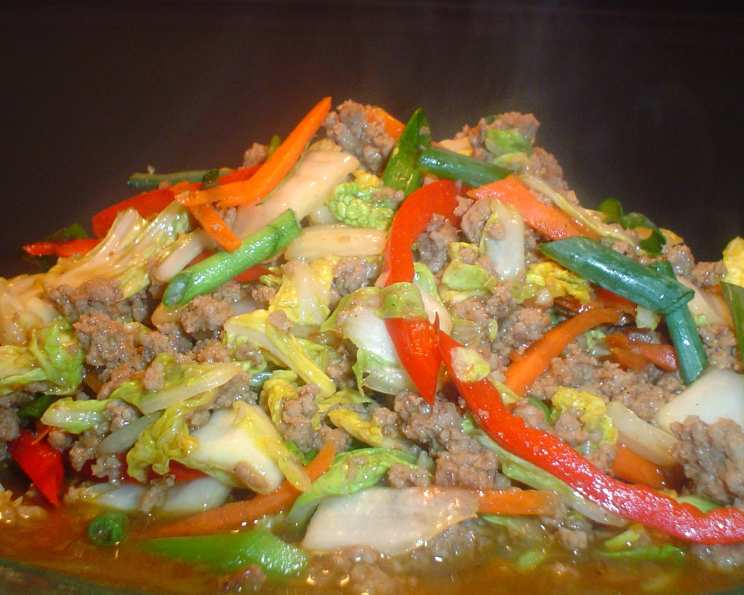
Colorful Mongolian Beef Stir Fry
The first time I encountered Mongolian beef, it was a takeout container swimming in a dark, syrupy sauce. It tasted… fine. But it wasn’t until I stumbled upon a vibrant stir-fry, practically bursting with colorful vegetables and a lighter, fresher sauce, that I understood the true potential of this dish. The crackling heat of the wok, the bright pops of red pepper and green onion, the savory-sweet dance on my tongue – it was a revelation, a far cry from the gloppy, one-note version I’d known before. This recipe captures that magic, that vividness, and brings it right to your kitchen.
Recipe Overview
- Prep Time: 20 minutes
- Cook Time: 20 minutes
- Total Time: 40 minutes
- Servings: 4
- Dietary Type: Can be adapted to Gluten-Free and Dairy-Free
Ingredients
- 500 g lean ground beef
- 5 cups finely shredded Chinese cabbage
- 2 teaspoons sea salt
- 1/4 cup vegetable oil
- 2 tablespoons dry sherry
- 2 tablespoons hoisin sauce
- 1 tablespoon oyster sauce (Substitute with mushroom sauce for vegetarian version)
- 1 teaspoon malt vinegar (Rice vinegar can be substituted)
- 1/2 teaspoon sesame oil
- 1 small carrot, peeled and finely sliced
- 1/2 medium red pepper, finely sliced
- 3/4 cup finely sliced green onion
Marinade:
- 2 tablespoons dry sherry
- 1 tablespoon light soy sauce (Use tamari for gluten-free)
- 1 tablespoon cornstarch
- 1 tablespoon finely diced gingerroot
- 3 garlic cloves, finely diced
- 1/2 teaspoon sesame oil
Equipment Needed
- Large bowl
- Wok or large skillet
- Slotted spoon
Instructions
- In a large bowl, combine the ground beef with all the marinade ingredients: dry sherry, light soy sauce, cornstarch, gingerroot, garlic, and sesame oil.
- Mix thoroughly to ensure the beef is well coated.
- Cover the bowl and refrigerate for at least 30 minutes to allow the flavors to meld.
- While the beef is marinating, prepare the cabbage. In a separate large bowl, place the finely shredded Chinese cabbage and sprinkle with sea salt.
- Using your hands, mix the cabbage and salt together well. This helps to draw out excess moisture from the cabbage.
- Let the cabbage stand for 15 minutes.
- After 15 minutes, rinse the cabbage under cold running water to remove the salt.
- Drain the cabbage thoroughly. Use your hands to squeeze out any excess liquid. This step is crucial to prevent the stir-fry from becoming watery.
- Heat 2 tablespoons of vegetable oil in a hot wok or large skillet over high heat until the surface seems to shimmer slightly. This indicates the oil is hot enough for stir-frying.
- Add half of the marinated beef to the hot wok.
- Stir-fry the beef for about 30 seconds, breaking up any lumps with a wok spoon or spatula. The goal is to sear the beef and start the cooking process.
- Remove the beef from the wok with a slotted spoon and set aside. This prevents overcrowding the wok and ensures the beef browns properly.
- Add the remaining vegetable oil (2 tablespoons) to the hot wok.
- Add the remaining beef and cook, stirring for another 30 seconds, breaking up any clumps.
- Return the reserved beef mixture to the wok.
- Add the dry sherry, hoisin sauce, oyster sauce, malt vinegar, and sesame oil.
- Stir-fry all the ingredients together for another 30 seconds to combine the flavors and create a cohesive sauce.
- Toss in the reserved cabbage, sliced carrot, and sliced red pepper.
- Stir-fry the vegetables for a further minute, ensuring they are coated with the sauce and begin to soften slightly.
- Stir through most of the sliced green onions, reserving a small amount for garnish.
- Remove the wok from the heat.
- Spoon the beef stir-fry into a serving bowl.
- Sprinkle with the remaining green onions to garnish.
- Serve immediately.
Expert Tips & Tricks
- Don’t overcrowd the wok: Working in batches is key for proper browning and even cooking. Overcrowding lowers the temperature and leads to steaming instead of stir-frying.
- High heat is your friend: This dish thrives on high heat, which creates that characteristic wok hei, a slightly charred, smoky flavor that’s essential to authentic stir-fries.
- Prepare everything in advance: Stir-fries come together quickly, so having all your ingredients prepped and ready to go (mise en place) is crucial.
- Adjust the sauce to your liking: Feel free to adjust the amounts of hoisin sauce, oyster sauce, or vinegar to suit your taste. If you prefer a sweeter sauce, add a touch more hoisin; for a tangier sauce, add a splash more vinegar.
- Spice it up: Add a pinch of red pepper flakes or a drizzle of chili oil for an extra kick.
Serving & Storage Suggestions
This Colorful Mongolian Beef Stir Fry is best served immediately while hot and the vegetables are still crisp-tender. It pairs perfectly with steamed rice or noodles. To elevate the presentation, consider serving it in a shallow bowl garnished with extra green onions and a sprinkle of sesame seeds.
Leftovers can be stored in an airtight container in the refrigerator for up to 3 days. To reheat, microwave gently or stir-fry in a wok or skillet until heated through. Add a splash of water or broth if the sauce has thickened too much. Reheating may slightly soften the vegetables, but the flavors will still be delicious. This dish is not recommended for freezing, as the texture of the cabbage and other vegetables may deteriorate upon thawing.
Nutritional Information
| Nutrient | Amount per Serving | % Daily Value |
|---|---|---|
| Calories | 479 kcal | N/A |
| Total Fat | 27.9 g | 42% |
| Saturated Fat | 7.1 g | 35% |
| Cholesterol | 81.5 mg | 27% |
| Sodium | 1774.1 mg | 73% |
| Total Carbohydrate | 15.7 g | 5% |
| Dietary Fiber | 2.6 g | 10% |
| Sugars | 5.9 g | N/A |
| Protein | 27.8 g | 55% |
Note: Nutritional information is an estimate and may vary based on specific ingredients and cooking methods.
Variations & Substitutions
- Gluten-Free: Substitute the light soy sauce with tamari and ensure the hoisin sauce is gluten-free.
- Vegetarian/Vegan: Replace the ground beef with crumbled plant-based ground meat substitute. Use mushroom sauce instead of oyster sauce. Ensure hoisin sauce is vegan-friendly (some contain honey).
- Spicier: Add a pinch of red pepper flakes to the marinade or a drizzle of chili oil to the finished dish.
- Different Vegetables: Feel free to add other vegetables like snow peas, broccoli florets, or bean sprouts. Adjust cooking time accordingly to ensure they remain crisp-tender.
- Nutty Flavor: Add a handful of roasted peanuts or cashews just before serving for added crunch and flavor.
FAQs (Frequently Asked Questions)
Q: Can I use a different type of beef?
A: While lean ground beef works well, you can also use thinly sliced steak (like flank steak) for a more traditional Mongolian beef experience. Just be sure to slice it against the grain for maximum tenderness.
Q: Can I make this ahead of time?
A: You can marinate the beef and chop the vegetables ahead of time. However, it’s best to cook the stir-fry fresh for optimal flavor and texture.
Q: What if my wok doesn’t get hot enough?
A: If you don’t have a powerful stove, cook the beef in smaller batches to avoid overcrowding the wok and lowering the temperature.
Q: Can I use rice vinegar instead of malt vinegar?
A: Yes, rice vinegar is a suitable substitute for malt vinegar, providing a slightly milder tang.
Q: How do I prevent the stir-fry from being too watery?
A: Ensure you squeeze out as much excess liquid as possible from the cabbage after rinsing it. Also, avoid overcrowding the wok, as this can lead to steaming instead of stir-frying.
Final Thoughts
This Colorful Mongolian Beef Stir Fry is more than just a quick weeknight dinner; it’s an invitation to explore vibrant flavors and textures, and to experience the joy of cooking a satisfying and nutritious meal. Don’t be afraid to experiment with the ingredients and adjust the recipe to your own personal taste. I encourage you to give this recipe a try, share your creations, and discover your own love for the art of stir-frying. Pair it with a crisp Sauvignon Blanc or a light-bodied beer for a complete and delightful dining experience. Happy cooking!