
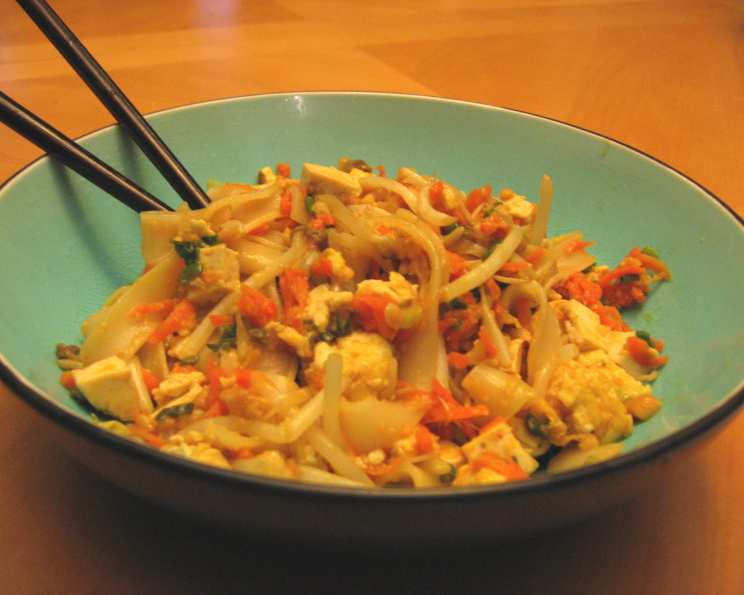
Colorful Thai-Style Noodles: A Symphony of Flavors and Textures
The first time I tasted anything resembling these Thai-style noodles was at a bustling street food market in Bangkok. The air was thick with the scents of lemongrass, chilies, and grilling meats, a sensory overload that somehow coalesced into an intoxicating invitation. Amidst the chaos, a vendor deftly tossed noodles in a wok, the vibrant colors of carrots and scallions flashing under the flickering lights. The resulting dish, a perfect balance of sweet, sour, spicy, and savory, was an epiphany – a reminder that the most exquisite flavors can often be found in the simplest of settings. It inspired me to recreate the magic back home, and this recipe is my interpretation of that cherished memory.
Recipe Overview
- Prep Time: 15 minutes
- Cook Time: 22 minutes
- Total Time: 37 minutes
- Servings: 4
- Dietary Type: Vegetarian (easily adaptable to vegan)
Ingredients
- 1 cup mung bean sprouts
- 6 ounces medium width rice noodles (wider noodles distribute the sauce better)
- 3 tablespoons fresh lime juice (or bottled)
- 2 tablespoons tomato sauce (or catsup)
- 1 tablespoon chili-garlic sauce
- ½ tablespoon sugar
- ¼ cup soy sauce or ¼ cup fish sauce
- 3 tablespoons vegetable oil
- 4 garlic cloves, minced
- 2 cups grated carrots
- 4 large eggs, lightly beaten with 1 pinch salt
- ⅔ cup finely chopped peanuts
- 6-8 scallions, chopped
- 1 ½ tablespoons grated gingerroot
- 6 ounces firm tofu, cut into very small cubes
Equipment Needed
- Large pot
- Strainer
- Large wok or skillet
- Mixing bowl
- Spatula
- Mortar and pestle (optional, for crushing peanuts)
Instructions
- Begin by preparing the mung bean sprouts. Bring a pot of water to a boil. Once boiling, quickly blanch the mung bean sprouts for no more than 20 seconds. Immediately strain them and run cool water over them to preserve their crispness. Set aside.
- Using the same pot, bring more water to a boil. Boil the rice noodles for 3 to 5 minutes, or according to package directions. The noodles should be tender but still have some elasticity. Once cooked, strain them and rinse with cool water to prevent them from becoming gummy. Set aside.
- Prepare the sauce by combining the following ingredients in a mixing bowl: lime juice, sugar, soy sauce (or fish sauce), chili-garlic sauce, and tomato sauce. Note: the proportions of chili-garlic sauce and tomato sauce can be adjusted depending on your desired level of spiciness. I often use a ratio of 2 parts chili-garlic sauce to 1 part tomato sauce.
- Heat the vegetable oil in a large wok or skillet over medium-high heat. Add the minced garlic and swirl it around for about 20 seconds, until fragrant but not browned.
- Add the grated carrots and grated gingerroot to the wok. Stir-fry for one minute, until the carrots begin to soften slightly.
- Using a spatula, push the carrots up along the sides of the wok, creating a well in the center. Pour the lightly beaten eggs into the center of the wok.
- Quickly scramble the eggs until they are set but still slightly moist.
- Pour in the prepared sauce and add the tofu cubes, stirring briefly until the tofu has been warmed through and coated evenly with the sauce.
- Add the remaining ingredients to the wok: the mung bean sprouts, cooked rice noodles, chopped scallions, and finely chopped peanuts. Toss all ingredients together until they are evenly distributed and coated with the sauce.
- Serve immediately for the best taste and texture.
Expert Tips & Tricks
- Noodle Selection: Using the right type of rice noodle is crucial. I find that medium-width noodles work best, as they provide a good balance between sauce absorption and structural integrity. Avoid overcooking the noodles, as they will become mushy and unappetizing.
- Tofu Preparation: Pressing the tofu before cubing it helps to remove excess water, allowing it to absorb the sauce more effectively. You can press it by wrapping it in paper towels and placing a heavy object on top for about 30 minutes.
- Spice Level Adjustment: The amount of chili-garlic sauce can be adjusted to suit your personal preference. If you prefer a milder dish, start with a smaller amount and add more to taste. For a spicier dish, you can also add a pinch of red pepper flakes.
- Peanut Perfection: Toasting the peanuts before chopping them enhances their flavor and adds a pleasant crunch. Simply spread them on a baking sheet and toast them in a 350°F (175°C) oven for about 5-7 minutes, or until lightly golden brown.
- Make-Ahead Prep: To save time, you can prepare the sauce and chop the vegetables ahead of time. Store them in separate airtight containers in the refrigerator until ready to use.
Serving & Storage Suggestions
Serve these colorful Thai-style noodles immediately while they are hot and the noodles are still tender. Garnish with extra chopped peanuts and scallions for added flavor and visual appeal. A wedge of lime on the side allows diners to customize the acidity to their liking.
Leftovers can be stored in an airtight container in the refrigerator for up to 2 days. Reheat gently in a wok or skillet over medium heat, adding a splash of water if needed to prevent the noodles from drying out. While the texture of the noodles may change slightly upon reheating, the flavor will remain delicious. Freezing is not recommended, as it can significantly alter the texture of the noodles.
Nutritional Information
| Nutrient | Amount per Serving | % Daily Value |
|---|---|---|
| Calories | 553.2 kcal | N/A |
| Calories from Fat | 263 kcal | N/A |
| Total Fat | 29.3 g | 45% |
| Saturated Fat | 5 g | 25% |
| Cholesterol | 186 mg | 62% |
| Sodium | 1291.8 mg | 53% |
| Total Carbohydrate | 55 g | 18% |
| Dietary Fiber | 6.4 g | 25% |
| Sugars | 8.5 g | N/A |
| Protein | 21.6 g | 43% |
Note: Nutritional information is an estimate and may vary based on specific ingredients and preparation methods.
Variations & Substitutions
- Vegan Option: To make this dish vegan, simply omit the eggs and ensure your soy sauce does not contain any animal-derived ingredients.
- Gluten-Free: Verify that your soy sauce or fish sauce is gluten-free. Many brands offer gluten-free tamari, which is a great substitute for soy sauce.
- Protein Boost: Add cooked shrimp, chicken, or beef for a heartier meal.
- Vegetable Medley: Incorporate other colorful vegetables such as bell peppers, broccoli florets, or snow peas for added nutrients and visual appeal.
- Nut-Free: Substitute the peanuts with toasted sunflower seeds or pumpkin seeds for a nut-free option.
FAQs (Frequently Asked Questions)
Q: Can I use different types of noodles?
A: While rice noodles are traditional, you can experiment with other types of noodles such as udon or soba noodles. However, be sure to adjust the cooking time accordingly.
Q: How do I prevent the noodles from sticking together?
A: Rinsing the cooked noodles with cool water helps to remove excess starch and prevent them from becoming sticky. You can also toss them with a small amount of vegetable oil.
Q: Can I make this dish ahead of time?
A: While the dish is best served immediately, you can prepare the individual components (sauce, vegetables, noodles) ahead of time and assemble them just before serving.
Q: What can I substitute for chili-garlic sauce?
A: If you don’t have chili-garlic sauce, you can use a combination of sriracha and minced garlic. Adjust the amounts to your desired level of spiciness.
Q: Can I use bottled lime juice instead of fresh?
A: While fresh lime juice is always preferable, bottled lime juice can be used in a pinch. However, the flavor may not be as vibrant.
Final Thoughts
These Colorful Thai-Style Noodles are more than just a recipe; they’re an invitation to explore the vibrant flavors of Southeast Asia. With its harmonious blend of sweet, sour, spicy, and savory notes, this dish is sure to delight your taste buds and transport you to the bustling streets of Bangkok. So, gather your ingredients, fire up your wok, and embark on a culinary adventure. And don’t hesitate to share your own unique variations and feedback – I’m always eager to hear how you’ve made this recipe your own!