
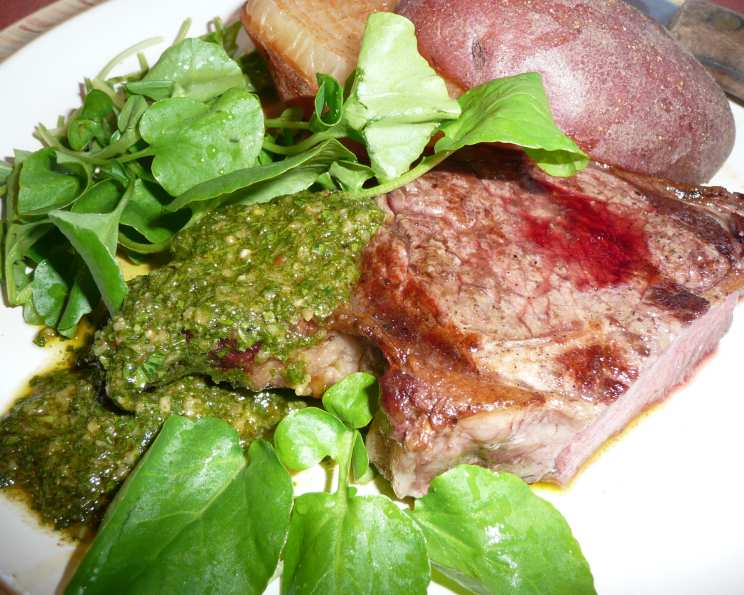
Cool Jazz and Hot to Trot South American Chimichurri Steak!
The sizzle of steak hitting a hot pan always transports me back to summer barbecues with my family. My grandfather, a jazz enthusiast with a well-worn vinyl collection, would man the grill, humming along to Miles Davis while flipping steaks with practiced ease. The air would fill with the smoky aroma of the grill and the tangy scent of the chimichurri his Argentinian friend taught him to make – a vibrant, herby sauce that cut through the richness of the beef with a welcome burst of freshness. This Chimichurri Steak recipe is my homage to those cherished memories, a fusion of cool jazz vibes and the bold flavors of South America.
Recipe Overview
- Prep Time: 15 minutes
- Cook Time: 5 minutes
- Total Time: 20 minutes
- Servings: 1
- Dietary Type: Gluten-Free, Dairy-Free
Ingredients
For the Chimichurri Relish:
- 1 bunch flat leaf parsley, leaves only
- 3 garlic cloves, peeled
- 3 tablespoons red wine vinegar
- ½ lime, juice of only
- 3 tablespoons chopped oregano leaves
- 1 teaspoon ground cumin
- 1 teaspoon smoked paprika
- 120 ml extra virgin olive oil
- 1 red chili pepper, halved and seeded
For the Steak:
- 1 (200g) rib eye steak
- 1 tablespoon oil
- Salt and freshly ground black pepper to taste
To Serve:
- 1 bunch watercress
- Cooked potato, sautéed with ground cumin
Equipment Needed
- Food processor
- Griddle pan
Instructions
- Let’s start with the vibrant Chimichurri Relish: Place the flat leaf parsley leaves, garlic cloves, red wine vinegar, lime juice, chopped oregano leaves, ground cumin, smoked paprika, extra virgin olive oil, and halved and seeded red chili pepper into a food processor.
- Blend all the chimichurri ingredients together until you achieve a coarse paste. It shouldn’t be completely smooth; you want to retain some texture from the herbs.
- Season the chimichurri relish generously with salt and freshly ground black pepper to taste. Remember, seasoning is key to unlocking the flavors!
- Now, onto the star of the show: the Rib Eye Steak. Pat the steak dry with a paper towel – this helps to achieve a good sear.
- Brush the steak with oil on both sides. This will prevent the steak from sticking to the pan and also aids in even browning.
- Season the steak generously with salt and freshly ground black pepper. Don’t be shy! Proper seasoning is crucial for a flavorful steak.
- Heat a griddle pan over high heat until it is smoking hot. A smoking hot pan is essential for creating that beautiful crust on the outside of the steak.
- Carefully place the steak onto the hot griddle pan.
- Cook the steak for 2-3 minutes on each side for medium-rare. If you prefer your steak more well-done, continue cooking for a few more minutes per side, monitoring the internal temperature with a meat thermometer.
- For a medium steak aim for an internal temperature of 130-135°F (54-57°C), for medium-well 140-145°F (60-63°C), and for well-done 155-165°F (68-74°C).
- Once the steak is cooked to your liking, remove it from the griddle pan and set it aside to rest for at least 5 minutes before serving. Resting allows the juices to redistribute throughout the steak, resulting in a more tender and flavorful final product.
- To serve, arrange the watercress on a plate, place the rested steak on top, and generously spoon over the freshly made chimichurri relish.
- Serve with the cumin-spiced sautéed potatoes as a side dish. The earthy cumin complements the richness of the steak and the brightness of the chimichurri beautifully.
Expert Tips & Tricks
- Don’t overcrowd the food processor: When making the chimichurri, if you have a small food processor, it might be better to blend the ingredients in batches to ensure a consistent texture.
- Use high-quality olive oil: The flavor of the olive oil really shines through in the chimichurri, so using a good quality one will make a noticeable difference.
- Adjust the chili pepper to your taste: If you prefer a milder chimichurri, use half a chili pepper or remove the seeds and membranes completely. For more heat, leave the seeds in or add an extra chili.
- Reverse Sear: For an even more perfectly cooked steak, try the reverse sear method. Cook the steak in a low oven (around 275°F/135°C) until it reaches your desired internal temperature minus about 10 degrees. Then, sear it in a hot pan for 1-2 minutes per side to develop a beautiful crust.
- Rest is best: Don’t skip the resting period for the steak. It’s crucial for achieving a juicy and tender result. Tent the steak loosely with foil to keep it warm while it rests.
Serving & Storage Suggestions
This Chimichurri Steak is best served immediately after cooking to enjoy the vibrant flavors and perfect texture. However, the chimichurri relish can be made ahead of time and stored in an airtight container in the refrigerator for up to a week. In fact, some say the flavors meld together even more after a day or two!
Leftover steak can be stored in an airtight container in the refrigerator for up to 3 days. To reheat, gently warm it in a skillet over low heat or in a microwave. Be careful not to overcook it, as it can become tough. Cold steak is also delicious in salads or sandwiches.
Nutritional Information
| Nutrient | Amount per Serving | % Daily Value |
|---|---|---|
| Calories | 1690.7 kcal | N/A |
| Calories from Fat | 1473g | 87% |
| Total Fat | 163.7 g | 251% |
| Saturated Fat | 34.4 g | 172% |
| Cholesterol | 136 mg | 45% |
| Sodium | 202.3 mg | 8% |
| Total Carbohydrate | 20.6 g | 6% |
| Dietary Fiber | 7.4 g | 29% |
| Sugars | 4.3 g | 17% |
| Protein | 41.7 g | 83% |
Variations & Substitutions
- Spice it up: Add a pinch of cayenne pepper to the chimichurri for an extra kick.
- Herb variations: Feel free to experiment with different herbs in the chimichurri. Cilantro, mint, or basil can all be delicious additions.
- Vinegar swap: If you don’t have red wine vinegar, white wine vinegar or apple cider vinegar can be used as a substitute.
- Steak options: While rib eye is a classic choice, other cuts of steak like sirloin, flank steak, or skirt steak also work well with chimichurri. Adjust cooking times accordingly.
- Vegetarian option: Grill halloumi cheese or portobello mushrooms and serve with the chimichurri for a vegetarian alternative.
FAQs (Frequently Asked Questions)
Q: Can I make the chimichurri ahead of time?
A: Absolutely! In fact, making the chimichurri a day or two in advance allows the flavors to meld together even more. Store it in an airtight container in the refrigerator.
Q: What’s the best way to tell if my steak is cooked to the right doneness?
A: The most accurate way is to use a meat thermometer. Insert it into the thickest part of the steak to check the internal temperature.
Q: Can I use dried oregano instead of fresh?
A: While fresh oregano is preferred for its vibrant flavor, you can substitute it with dried oregano. Use about 1 teaspoon of dried oregano for every 3 tablespoons of fresh.
Q: My chimichurri is too oily. What can I do?
A: Add a little more red wine vinegar or lime juice to balance out the oil.
Q: What other dishes can I use chimichurri on?
A: Chimichurri is incredibly versatile! Try it on grilled chicken, fish, vegetables, or even as a marinade.
Final Thoughts
I truly hope you give this Cool Jazz and Hot to Trot South American Chimichurri Steak recipe a try! It’s a dish that’s as vibrant and exciting as a live jazz performance. The combination of the rich, savory steak and the zesty, herbaceous chimichurri is a culinary experience that’s sure to delight your taste buds. Don’t hesitate to experiment with the ingredients and make it your own. And when you do, please share your feedback! What music did you listen to while cooking? What sides did you pair with the steak? I’d love to hear about your culinary adventures! Perhaps pair it with a crisp Argentinian Malbec for the ultimate South American experience. Happy cooking!