
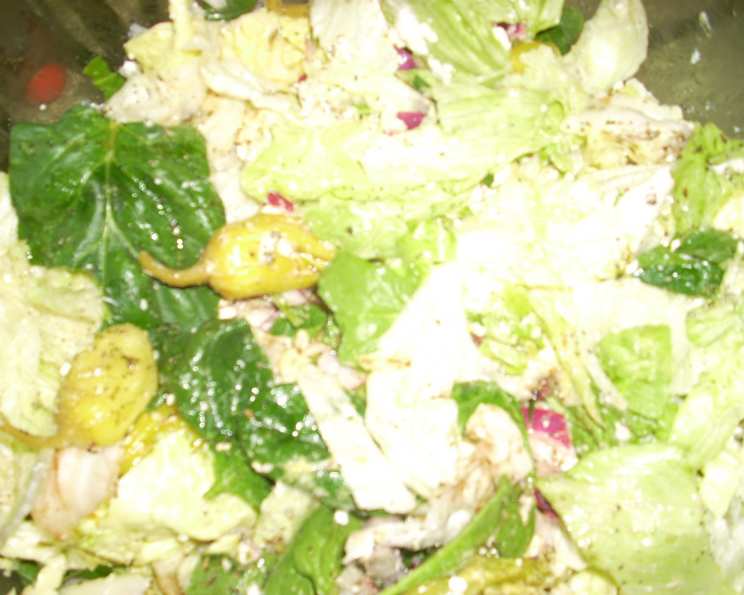
Copy Cat Greek Salad from the Corner Greek Deli
The memory is as vivid as the crimson red of a perfectly ripe tomato: the summer I spent working at my uncle’s accounting firm in Chicago. Lunch was always a highlight, and invariably, it meant a trek to the little Greek deli on the corner. The aroma of oregano, garlic, and brine hung heavy in the air, an intoxicating blend that promised a culinary escape from spreadsheets and tax returns. But the real star was their Greek salad – a symphony of fresh, crisp vegetables, salty olives, tangy peppers, and creamy feta, all bathed in a vibrant vinaigrette. It was more than just a salad; it was sunshine on a plate. This recipe attempts to recreate that magic, to bring back those summer lunches and the joy of simple, honest food.
Recipe Overview
- Prep Time: 20 minutes
- Total Time: 24 minutes
- Servings: 6
- Dietary Type: Vegetarian
Ingredients
Part One: The Salad
- 1 head lettuce, rinsed, shaken dry, and chopped (Romaine is best)
- 1 medium red onion, peeled and thinly sliced
- 2-3 roma tomatoes, cut into wedges
- 1 cup feta cheese, crumbled or diced smaller
- 12 ounces Greek peppers (drained, such as Mezzetta Imported Garlic & Dill Peperoncini)
- 10 ounces pitted kalamata olives
- 1 cucumber, sliced and then cut in half
Part Two: The Dressing
- ½ cup olive oil (extra virgin, first cold pressed)
- ¼ cup red wine vinegar
- 1 teaspoon garlic powder or 1-2 teaspoons fresh garlic clove, minced
- 1 teaspoon dried oregano
- 1 teaspoon dried basil
- 1 teaspoon balsamic vinegar
- 1 teaspoon black pepper
- 1 teaspoon Dijon mustard or 1 teaspoon spicy brown mustard
Equipment Needed
- Large serving bowl
- Small mixing bowl
- Whisk or fork
Instructions
- Begin by preparing your ingredients. Rinse and chop the lettuce, slice the red onion thinly, and wedge the roma tomatoes. Dice or crumble the feta cheese, drain the Greek peppers, and halve the cucumber slices.
- In a large serving bowl, combine all of the “Part One” ingredients: lettuce, red onion, tomatoes, feta cheese, Greek peppers, olives, and finally, the cucumber. Layer the cucumber last, as it tends to release water.
- In a separate small bowl (or even the empty feta container to save on dishes!), whisk together all the “Part Two” ingredients: olive oil, red wine vinegar, garlic powder (or minced garlic), dried oregano, dried basil, balsamic vinegar, black pepper, and Dijon mustard (or spicy brown mustard). Whisk vigorously until the dressing is emulsified and well combined.
- Pour the prepared dressing over the salad in the large serving bowl.
- Cover the bowl tightly with plastic wrap or a lid and chill in the refrigerator. You can serve immediately, but the flavors meld and deepen significantly if you allow the salad to chill for a few hours before serving. The longer it sits, the better it gets!
- Before serving, gently stir the salad to redistribute the dressing that may have settled at the bottom of the bowl. Be careful not to over-mix, as this can make the lettuce wilt.
- Cover while storing, otherwise your refrigerator will remember for a few days what your made! Use olive oil that is Extra Virgin and has not been open for more than a few weeks. Better get a fresh bottle — It is worth it — .
Expert Tips & Tricks
- Lettuce Prep is Key: The success of any salad hinges on the quality of the lettuce. Make sure your romaine is crisp and dry. After washing, spin it in a salad spinner or pat it thoroughly with paper towels. Excess water will dilute the dressing and make the salad soggy.
- Onion Taming: Raw red onions can be quite pungent. To mellow their bite, soak the sliced onions in ice water for about 10 minutes before adding them to the salad. This will also help to make them more digestible.
- Feta Factor: Don’t skimp on the feta! A good quality feta cheese is worth the splurge. Look for feta that is packed in brine, as it tends to be creamier and more flavorful than pre-crumbled feta.
- Dressing Distribution: To ensure that the salad is evenly coated with dressing, pour it around the edges of the bowl rather than directly in the center. This will help to prevent pockets of undressed lettuce.
- Garlic Power: If using fresh garlic instead of garlic powder, be sure to mince it very finely. A garlic press can be helpful for this task. Let the minced garlic sit for a few minutes before adding it to the dressing; this allows the allicin (the compound that gives garlic its pungent flavor) to develop fully.
Serving & Storage Suggestions
Serve this Greek salad chilled as a refreshing side dish, a light lunch, or a vibrant component of a larger Mediterranean spread. It pairs beautifully with grilled chicken, fish, or lamb. For a vegetarian meal, serve it with warm pita bread and hummus.
Leftovers can be stored in an airtight container in the refrigerator for up to 2 days. The salad will be best on the first day, as the lettuce will gradually wilt over time. It is not recommended to freeze this salad, as the vegetables will become mushy upon thawing.
Nutritional Information
| Nutrient | Amount per Serving | % Daily Value |
|---|---|---|
| Calories | 319.8 kcal | N/A |
| Calories from Fat | 258 g | 81% |
| Total Fat | 28.7 g | 44% |
| Saturated Fat | 7 g | 34% |
| Cholesterol | 22.2 mg | 7% |
| Sodium | 662.3 mg | 27% |
| Total Carbohydrate | 11.2 g | 3% |
| Dietary Fiber | 3.4 g | 13% |
| Sugars | 3.8 g | 15% |
| Protein | 5.7 g | 11% |
Note: Nutritional information is an estimate and may vary based on specific ingredients and portion sizes.
Variations & Substitutions
- Vegan Greek Salad: Substitute the feta cheese with a plant-based feta alternative made from tofu or almonds.
- Grilled Vegetables: Add grilled zucchini, eggplant, or bell peppers for a smoky flavor and added nutrients.
- Herbed Dressing: Enhance the dressing with fresh herbs like parsley, dill, or mint.
- Spicy Kick: Add a pinch of red pepper flakes to the dressing for a touch of heat.
- Protein Boost: Add cooked chickpeas, lentils, or quinoa for a more substantial salad.
FAQs (Frequently Asked Questions)
Q: Can I make this salad ahead of time?
A: Yes, you can prepare the salad several hours in advance, but it’s best to add the dressing just before serving to prevent the lettuce from wilting.
Q: What type of olives are best for Greek salad?
A: Kalamata olives are the classic choice, but you can also use other varieties such as black olives or green olives.
Q: Can I use a different type of vinegar?
A: While red wine vinegar is traditional, you can substitute it with white wine vinegar or even lemon juice for a slightly different flavor profile.
Q: How long will the leftover salad last in the refrigerator?
A: The salad will last for up to 2 days in the refrigerator, but the lettuce may become slightly wilted over time.
Q: Can I add other vegetables to this salad?
A: Absolutely! Feel free to add other vegetables such as bell peppers, carrots, or celery to customize the salad to your liking.
Final Thoughts
This Copy Cat Greek Salad is more than just a recipe; it’s a journey back to simpler times, to sun-drenched lunches and the joy of sharing good food with friends and family. I encourage you to try this recipe and make it your own. Experiment with different variations, adjust the ingredients to your liking, and most importantly, share it with someone you love. Pair it with a crisp glass of white wine or a refreshing lemonade, and transport yourself to the corner Greek deli, even if just for a moment. Don’t hesitate to let me know how it turns out – your feedback is always welcome!