
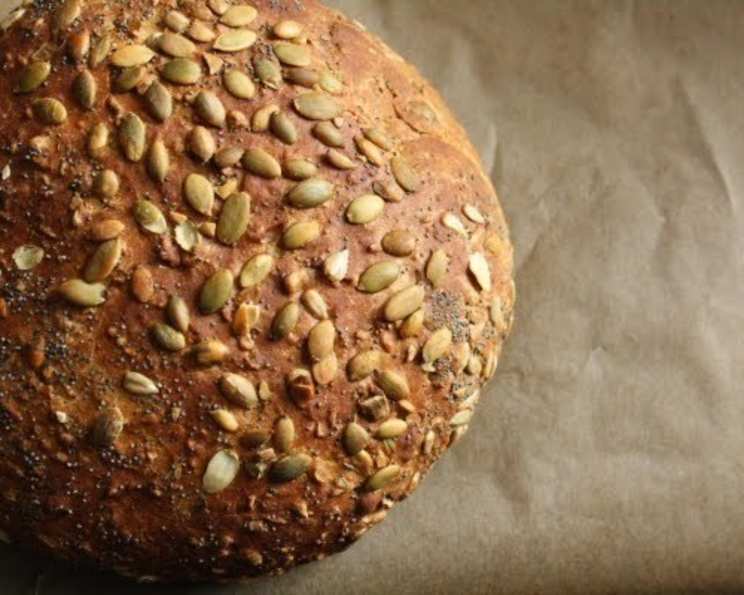
Seeduction Sensation: Baking a Copycat Whole Foods Bread at Home
I remember the first time I saw it: a loaf almost overflowing with seeds, nestled amongst its brethren in the Whole Foods bakery. Its rustic appearance, promising a deeply satisfying chew, was irresistible. I bought a loaf and, tearing off a hunk in the car, was immediately hooked. The earthy, nutty flavor, the satisfying crunch of seeds – it was unlike any other bread I’d tasted. Now, after much experimentation, I’m thrilled to share my take on this seedy masterpiece so you can enjoy it fresh from your own oven.
Recipe Overview
- Prep Time: 25 minutes
- Rise Time: 3 hours
- Cook Time: 30-35 minutes
- Yield: 2 small loaves
- Dietary Type: Vegetarian
Ingredients
- 1⁄2 cup lukewarm water (95° to 105° F)
- 2 1⁄2 teaspoons active dry yeast (1 packet)
- 1⁄4 cup mild-flavored honey (such as Wildflower or Mesquite)
- 2 3⁄4 cups bread flour (all-purpose works fine)
- 1 cup whole wheat flour
- 1⁄2 cup bulgur (or couscous or cracked wheat)
- 1 1⁄2 teaspoons salt
- 1⁄4 cup sunflower oil (or grapeseed oil)
- 1 cup cool water
- 1 cup raw sunflower seeds
- 1⁄2 cup millet (toasted if you like)
- 3 tablespoons poppy seeds
- 1⁄2 cup plus 3 tablespoons raw pumpkin seeds (pepitas)
Equipment Needed
- 2-cup measuring cup
- Stand mixer with paddle attachment
- Greased bowl
- Plastic wrap
- Baking sheet
- Parchment paper or Silpat liner
- Clean work surface
- Sharp knife or bench scraper
Instructions
-
Begin by activating the yeast. Pour the lukewarm water into a 2-cup measuring cup. Sprinkle the active dry yeast over the water. Add the honey and stir gently. Let the mixture sit for about 10 minutes, or until it becomes foamy. This indicates that the yeast is active and ready to use.
-
Prepare the dry ingredients. In the bowl of a stand mixer fitted with the paddle attachment, combine the bread flour, whole wheat flour, bulgur (or couscous or cracked wheat), and salt. Mix on low speed for a few seconds to combine the ingredients evenly.
-
Combine wet and dry ingredients. Pour the sunflower oil and cool water into the yeast mixture. With the mixer running on low speed, slowly and steadily pour the wet ingredients into the bowl with the dry ingredients. Let the mixer run until the dough stops sticking to the outside walls of the bowl and forms a ball.
-
Adjust the dough consistency (if needed). If the dough is not sticky enough to form a ball, add water, 1 to 2 teaspoons at a time, until the desired consistency is achieved. Conversely, if the dough appears too wet, add flour, 1 to 2 teaspoons at a time, until it forms a cohesive ball.
-
Knead the dough. Once the dough has come together, let the mixer continue to run for another minute to knead it. This brief kneading process helps to develop the gluten, resulting in a better texture.
-
First rise: Place the dough ball in a greased bowl. Flip the dough around in the bowl to ensure that all sides are lightly coated with grease. This prevents the dough from drying out during the rising process. Cover the bowl tightly with plastic wrap. Place the bowl in a warm, draft-free spot and allow the dough to rise for 2 hours. The dough should double in size.
-
Prepare for shaping. Line a baking sheet with parchment paper or a Silpat liner. This will prevent the loaves from sticking during baking.
-
Shape and seed the loaves. Turn the risen dough out onto a clean work surface. Knead it a few times to deflate it slightly. Form the dough into a large, flattish oval. Sprinkle the millet and sunflower seeds (reserving 3 tablespoons of pumpkin seeds) evenly over the top of the oval. Fold the dough in half, enclosing the seeds. Knead the dough gently to distribute the seeds evenly throughout.
-
Divide and shape again. Divide the dough into two equal portions. Form each portion into a tight, round ball.
-
Prepare the tops. Coarsely chop the remaining pumpkin seeds. Roll the tops of each dough ball in the chopped pumpkin seeds, pressing gently to ensure they adhere. You can also use more poppy seeds if preferred.
-
Second rise: Place the seeded loaves on the prepared baking sheet, leaving enough space between them for expansion. Cover the loaves loosely with plastic wrap and allow them to rise for 45 minutes to 1 hour.
-
Preheat the oven. Preheat your oven to 375°F (190°C).
-
Bake the loaves. Bake the loaves on the center rack of the preheated oven for 30-35 minutes, or until they are golden brown and sound hollow when tapped on the bottom. The internal temperature should reach around 200°F (93°C).
-
Cool and enjoy. Remove the baked loaves from the oven and transfer them to a wire rack to cool completely before slicing. This prevents the bread from becoming gummy.
Expert Tips & Tricks
- Toasting the millet before adding it to the dough enhances its nutty flavor. Simply toast it in a dry skillet over medium heat for a few minutes, until lightly golden and fragrant, being careful not to burn it.
- For an even deeper flavor, try toasting the sunflower seeds as well.
- The bulgur can be replaced with couscous or cracked wheat. Bulgur adds a slightly chewier texture, while couscous provides a softer crumb.
- If you don’t have a stand mixer, you can knead the dough by hand on a lightly floured surface for 8-10 minutes, until it becomes smooth and elastic.
- A slightly higher baking temperature, around 400°F (200°C), can result in a crustier loaf. Reduce the baking time slightly to prevent the bread from drying out.
- If the crust is browning too quickly, tent the loaves loosely with aluminum foil during the last 10-15 minutes of baking.
Serving & Storage Suggestions
This Seeduction bread is incredibly versatile. Enjoy it plain, toasted with butter, slathered with peanut butter or jam, or torn into hunks for dipping in hummus. It’s also fantastic as sandwich bread or served alongside soup or salad.
Store the cooled bread in an airtight container at room temperature for up to 3 days. For longer storage, wrap the loaves tightly in plastic wrap and freeze them for up to 2 months. To thaw, simply leave the frozen bread at room temperature for several hours. Reheat slices in a toaster or oven for a warm, freshly baked taste.
Nutritional Information
| Nutrient | Amount per Serving | % Daily Value |
|---|---|---|
| Calories | 1091 kcal | N/A |
| Total Fat | 45g | N/A |
| Saturated Fat | 5.5g | N/A |
| Cholesterol | 0mg | 0% |
| Sodium | 889mg | N/A |
| Total Carbohydrate | 148g | N/A |
| Dietary Fiber | 17g | N/A |
| Sugars | 19g | N/A |
| Protein | 32g | N/A |
Note: Nutritional information is an estimate and may vary based on specific ingredients and portion sizes.
Variations & Substitutions
- Gluten-Free: Substitute the bread flour and whole wheat flour with a gluten-free bread flour blend. You may need to adjust the amount of liquid to achieve the right dough consistency.
- Different Seeds: Experiment with other types of seeds, such as sesame seeds, flax seeds, or chia seeds.
- Sweet Variation: Add a tablespoon of molasses or maple syrup to the dough for a slightly sweeter flavor.
- Spicy Variation: Add a pinch of red pepper flakes to the dough for a hint of heat.
FAQs (Frequently Asked Questions)
Q: Can I use instant yeast instead of active dry yeast?
A: Yes, you can substitute instant yeast. Simply add it directly to the dry ingredients without proofing it in water first.
Q: How can I tell if my dough has risen enough?
A: The dough should have doubled in size and feel light and airy. You can also use the “poke test”: gently poke the dough with your finger; if the indentation remains, the dough is ready.
Q: My bread is browning too quickly. What should I do?
A: Tent the loaves loosely with aluminum foil during the last 10-15 minutes of baking.
Q: Can I freeze this bread?
A: Yes, this bread freezes well. Wrap the cooled loaves tightly in plastic wrap and freeze for up to 2 months.
Q: What can I substitute for honey?
A: Maple syrup or agave nectar can be used as substitutes for honey.
Final Thoughts
This copycat Whole Foods Seeduction bread is more than just a recipe; it’s an invitation to create something special in your own kitchen. The aroma alone, as it bakes, is enough to fill your home with warmth and comfort. I encourage you to give it a try, experiment with different seeds, and make it your own. Share your creations and feedback – I’d love to hear how it turns out! Pair a slice of this bread with a hearty bowl of soup or a smear of creamy avocado for a truly satisfying experience. Happy baking!