
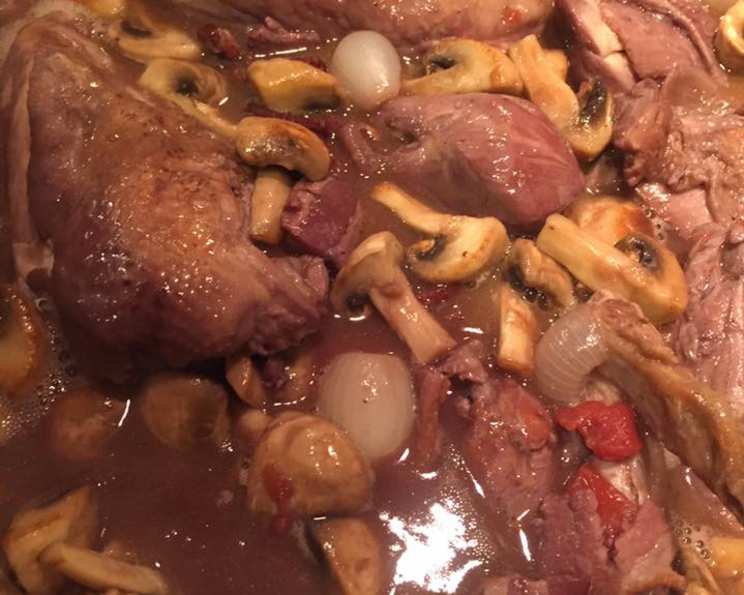
Mastering Coq Au Vin: A Culinary Journey with Julia Child
The first time I made Coq Au Vin, I was a nervous culinary student, intimidated by the dish’s reputation. The aroma alone, a heady mix of wine, herbs, and rich chicken, filled my tiny apartment with a sense of classic French elegance that felt almost too grand for my humble kitchen. The moment I flamed the cognac, a dramatic blue flare against the stainless steel, all my anxiety melted away. That single, exhilarating act transformed a simple dinner into an experience, a testament to the transformative power of food and the enduring legacy of Julia Child.
Recipe Overview
- Prep Time: 30 minutes
- Cook Time: 1 hour 20 minutes
- Total Time: 1 hour 50 minutes
- Servings: 4-6
- Yield: 1 casserole
- Dietary Type: Not Gluten-Free
Ingredients
- 1/2 cup lardons, cut into 1/4 by 1 1/2 inch strips
- 2 tablespoons olive oil (or more)
- 2 1/2 lbs ready-cut frying chickens, thoroughly dried (a selection of parts, or all of one kind)
- 1/4 cup cognac or 1/4 cup armagnac
- Salt and pepper
- 1 imported bay leaf
- 1/4 teaspoon thyme
- 16-20 small white onions, peeled
- 3 tablespoons flour
- 2 cups red wine (Burgundy, Cotes du Rhone, or Pinot Noir)
- 2 cups brown chicken stock or 2 cups beef bouillon (more or less)
- 1-2 clove garlic, mashed or minced
- 1 tablespoon tomato paste
- 3/4 lb fresh mushrooms, trimmed, washed, and quartered
Equipment Needed
- Heavy-bottomed casserole dish
- Large skillet
- Slotted spoon
- Ladle
- Cutting board
- Chef’s knife
Instructions
-
Render the Lardons (Optional): If using lardons, sauté them for several minutes in 2 tablespoons of olive oil in a heavy-bottomed casserole until lightly browned. Remove the lardons with a slotted spoon to a side dish, leaving the rendered fat in the pan. If you are not using lardons, film the pan with about 1/8 inch of olive oil.
-
Brown the Chicken: Heat the rendered fat or olive oil in the pan over moderately high heat. Add the thoroughly dried chicken pieces, ensuring not to overcrowd the pan. Turn the chicken frequently to brown it nicely on all sides. Browning the chicken in batches ensures even coloring and prevents the pan temperature from dropping too low.
-
Flaming the Cognac: Pour in the cognac or armagnac, shake the pan for a few seconds until it’s bubbling hot. Then, ignite the cognac with a match or lighter. Be very careful and stand back when igniting the cognac.
-
Burn Off the Alcohol: Let the flame burn for a minute, swirling the pan by its handle to burn off the alcohol. Extinguish the flame by covering the pan with a lid. The flambéing process adds a depth of flavor and removes the harshness of the alcohol.
-
Season and Add Aromatics: Season the chicken pieces generously with salt and pepper. Add the bay leaf and thyme.
-
Incorporate the Onions: Place the peeled small white onions around the chicken in the casserole.
-
First Simmer: Cover the casserole and cook slowly for 10 minutes, turning the chicken and onions once halfway through.
-
Flour Power: Uncover the pan and sprinkle the flour over the chicken and onions, turning them so the flour is absorbed. Cook for 3 to 4 minutes more, turning once or twice. This creates a roux that will help thicken the sauce later on.
-
Add Wine and Stock: Remove the casserole from the heat. Gradually stir and swirl in the red wine and enough chicken stock or beef bouillon to almost cover the chicken. Ensure the liquid is well incorporated to avoid lumps.
-
Return the Lardons and Add Flavor Enhancers: Add the browned lardons, mashed or minced garlic, and tomato paste to the casserole. The tomato paste adds a subtle richness and depth to the sauce.
-
Simmering to Perfection: Cover the casserole and simmer slowly for 25 to 30 minutes. Then, test the chicken for doneness. Remove any pieces that are already tender and continue cooking the remaining pieces for a few minutes longer. The cooking time will vary depending on the size and cut of the chicken.
-
Final Touches: Return all the chicken to the pan, add the quartered fresh mushrooms, and simmer for 4 to 5 minutes, or until the mushrooms are tender.
-
Season and Adjust the Sauce: Taste the sauce carefully and correct the seasoning with salt and pepper as needed. The sauce should be thick enough to lightly coat the chicken and vegetables. If the sauce is too thin, boil it down rapidly to concentrate the flavors. If it’s too thick, thin it out with spoonfuls of chicken stock or beef bouillon.
Expert Tips & Tricks
- Dry the chicken thoroughly: Patting the chicken dry before browning is crucial for achieving a beautiful, golden-brown crust. Moisture inhibits browning.
- Don’t overcrowd the pan: Brown the chicken in batches to maintain the pan’s temperature and ensure even browning. Overcrowding will steam the chicken instead.
- Use good quality wine: The quality of the wine will significantly impact the flavor of the dish. Choose a dry red wine that you enjoy drinking.
- Make it ahead: Coq Au Vin is even better the next day. The flavors meld together beautifully as it sits. Prepare it a day in advance and simply reheat before serving.
- For a richer sauce: Add a tablespoon of butter at the end of cooking for extra richness and shine.
- To thicken the sauce further: Mix 1 tablespoon of cornstarch with 2 tablespoons of cold water to create a slurry. Slowly whisk the slurry into the simmering sauce until it reaches the desired consistency.
Serving & Storage Suggestions
Serve the Coq Au Vin hot, directly from the casserole dish, for a rustic presentation. Garnish with fresh parsley or thyme sprigs for added visual appeal. It pairs perfectly with buttered egg noodles, mashed potatoes, crusty bread, or rice to soak up the delicious sauce.
Leftovers can be stored in an airtight container in the refrigerator for up to 3 days. For longer storage, freeze in a freezer-safe container for up to 2 months. Thaw completely in the refrigerator before reheating. Reheat gently in a saucepan over low heat, or in the microwave, until heated through. Add a splash of chicken stock or red wine if the sauce has thickened too much during storage.
Nutritional Information
| Nutrient | Amount per Serving | % Daily Value |
|---|---|---|
| Calories | 650 kcal | 33% |
| Total Fat | 35g | 54% |
| Saturated Fat | 12g | 60% |
| Cholesterol | 180mg | 60% |
| Sodium | 500mg | 22% |
| Total Carbohydrate | 25g | 8% |
| Dietary Fiber | 4g | 16% |
| Sugars | 8g | – |
| Protein | 50g | 100% |
Nutritional information is an estimate and may vary depending on specific ingredients and portion sizes.
Variations & Substitutions
- Vegetarian Coq Au Vin: Substitute the chicken with hearty mushrooms like cremini or portobello. Use vegetable broth instead of chicken stock.
- Gluten-Free Coq Au Vin: Replace the flour with a gluten-free flour blend or cornstarch for thickening the sauce. Ensure all other ingredients are gluten-free.
- Coq Au Riesling: Replace the red wine with a dry Riesling for a lighter, fruitier flavor.
- Coq Au Vin Blanc: Use a dry white wine like Sauvignon Blanc or Pinot Grigio instead of red wine.
- Spicy Coq Au Vin: Add a pinch of red pepper flakes or a dash of hot sauce to the sauce for a kick.
FAQs (Frequently Asked Questions)
Q: Can I use chicken breasts instead of chicken thighs?
A: Yes, you can use chicken breasts, but be mindful of the cooking time as they tend to dry out faster than thighs. Reduce the simmering time and check for doneness frequently.
Q: Can I skip the flambéing step?
A: While flambéing adds a unique depth of flavor, you can skip it if you’re uncomfortable with the process. In this case, simply simmer the cognac in the pan for a few minutes to reduce the alcohol content.
Q: What if I don’t have imported bay leaves?
A: Domestic bay leaves will work just fine. The difference in flavor is subtle.
Q: How do I know when the chicken is cooked through?
A: The chicken is cooked through when the internal temperature reaches 165°F (74°C). Use a meat thermometer to check the temperature in the thickest part of the thigh.
Q: Can I add other vegetables to the dish?
A: Absolutely! Carrots, celery, or parsnips would be delicious additions to the Coq Au Vin. Add them along with the onions for best results.
Final Thoughts
Coq Au Vin is more than just a recipe; it’s an invitation to embrace the joy of cooking, to experiment with flavors, and to create something truly special. Don’t be intimidated by its reputation – Julia Child’s recipe is surprisingly approachable, and the results are undeniably rewarding. Gather your ingredients, pour a glass of wine, and prepare to embark on a culinary adventure. I hope you enjoy making (and eating!) this classic French dish as much as I do. Bon appétit!