
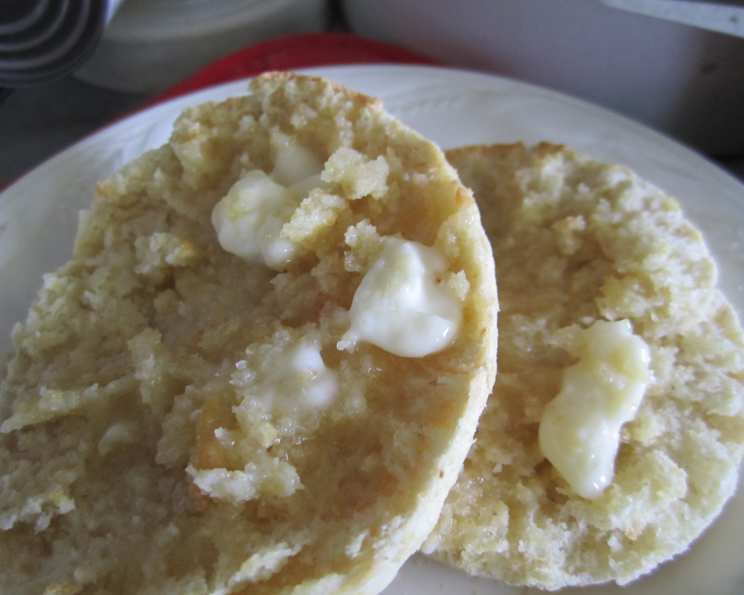
Cornmeal-Oat English Muffins: A Rustic Start to Your Day
There’s something utterly comforting about the smell of yeast and warm grains mingling in the air. My grandmother, a woman of simple pleasures and unfailing resourcefulness, used to bake a version of these muffins every Sunday. I remember standing on a stool, mesmerized as she expertly kneaded the dough, the rhythmic thud a comforting soundtrack to our weekend mornings. While her recipe was a closely guarded secret, these Cornmeal-Oat English Muffins bring me right back to her cozy kitchen, filling my home with the same love and warmth that only homemade bread can provide.
Recipe Overview
- Prep Time: 45 minutes (includes rising time)
- Cook Time: 14 minutes
- Total Time: 59 minutes
- Yields: 18-24 muffins
- Serves: 18-24
- Dietary Type: Vegetarian (can be made vegan by using plant-based shortening)
Ingredients
- 2 (1/4 ounce) packages active dry yeast
- 2 cups warm water, 105 F-115 F (too cool and yeast won’t activate, too warm and you kill the yeast)
- 1/2 cup shortening, softened (vegetable or other)
- 1 tablespoon sugar
- 2 teaspoons salt
- 1/2 cup yellow cornmeal
- 1 cup rolled oats (old fashioned or quick)
- 5 – 5 1/2 cups bread flour or 5 – 5 1/2 cups unbleached all-purpose flour
- Cornmeal, for dusting baking sheets
Equipment Needed
- Large bowl
- Measuring cups and spoons
- Wooden spoon or stand mixer with dough hook
- Floured surface
- Rolling pin
- 4-inch cutter (biscuit cutter or clean tuna can)
- Baking sheets
- Spatula
- Griddle or electric fry pan
Instructions
-
In a large bowl, dissolve the yeast in the warm water. Let it stand for 5 minutes, or until the yeast foams. This step is crucial to ensure your yeast is active and will properly leaven the dough. If it doesn’t foam, your yeast may be old and you’ll need to start again with fresh yeast.
-
Add the softened shortening, sugar, salt, cornmeal, oats, and 1 cup of the flour to the yeast mixture. Beat everything together until smooth. This incorporates the ingredients and starts to develop the gluten in the flour.
-
Gradually add the remaining flour, a cup at a time, to make a stiff dough. Beat well after each addition. The dough will be quite stiff at the end. You can do this by hand with a sturdy wooden spoon for a good arm workout, or use a stand mixer with a dough hook. If using a mixer, be careful not to overmix, as this can result in tough muffins.
-
Lightly flour a work surface. Roll the dough out to a thickness of 1/4″ to 3/8″. Aim for even thickness to ensure the muffins bake uniformly.
-
Cut the dough into rounds using a floured 4″ cutter. A biscuit cutter works perfectly, but a clean, empty tuna can with both lids removed can also be used in a pinch. Dip the cutter in flour before each cut to prevent sticking.
-
Place the rounds on ungreased baking sheets that have been generously sprinkled with cornmeal. The cornmeal will prevent sticking and add a delightful, slightly crunchy texture to the bottom of the muffins.
-
Sprinkle the tops of the rounds with more cornmeal. This gives them a lovely rustic appearance and adds to the overall flavor profile.
-
Let the muffins rise in a warm place for 30 minutes, or until they are light and puffy. A slightly warm oven (turned off!) or a draft-free spot in your kitchen works well. Don’t rush this step; allowing the muffins to rise properly is essential for a light and airy texture.
-
Carefully move the risen muffins onto a preheated griddle or electric fry pan set to about 360°F (180°C). Use a spatula to avoid deflating them.
-
Bake the muffins for 7 minutes on each side, or until they are light golden brown. Keep a close eye on them, as cooking times may vary depending on your griddle or fry pan. You want them to be cooked through but not burnt.
-
Let the muffins cool on a wire rack. This prevents them from becoming soggy.
-
Split, toast, and enjoy! Use a fork to split them open for that classic English muffin texture with lots of nooks and crannies.
Expert Tips & Tricks
- For a richer flavor, try using melted butter instead of shortening. Keep in mind, this will make them no longer vegan.
- If you don’t have time to bake them right away, you can refrigerate the cut-out muffins for up to 24 hours before baking. Just be sure to cover them tightly to prevent them from drying out. Let them come to room temperature before baking.
- To ensure even cooking on the griddle, use a thermometer to check the surface temperature.
- If your muffins are browning too quickly, reduce the heat slightly.
- If you want a slightly tangier flavor, add a tablespoon of apple cider vinegar to the dough.
- For perfectly uniform muffins, use a kitchen scale to weigh each round of dough before cutting.
Serving & Storage Suggestions
Serve these Cornmeal-Oat English Muffins warm, split, and toasted with your favorite toppings. They are delicious with butter and jam, cream cheese, peanut butter, or even as a base for eggs benedict. They are also great for breakfast sandwiches with bacon, egg, and cheese.
Store cooled muffins in an airtight container at room temperature for up to 3 days. For longer storage, freeze them in a single layer on a baking sheet, then transfer them to a freezer bag. They can be frozen for up to 2 months. To reheat, toast them from frozen or thaw them in the refrigerator and then toast.
Nutritional Information
Here’s an estimate of the nutritional content per muffin. Keep in mind that these values are approximate and can vary based on specific ingredients used.
| Nutrient | Amount per Serving | % Daily Value |
|---|---|---|
| Calories | 185 kcal | 9% |
| Total Fat | 5g | 6% |
| Saturated Fat | 1g | 5% |
| Cholesterol | 0mg | 0% |
| Sodium | 230mg | 10% |
| Total Carbohydrate | 30g | 11% |
| Dietary Fiber | 2g | 7% |
| Sugars | 1g | 2% |
| Protein | 4g | 8% |
Variations & Substitutions
- Gluten-Free: Substitute a gluten-free all-purpose flour blend for the bread flour. You may need to add a binder like xanthan gum to help with the texture.
- Vegan: Ensure your shortening is plant-based. Many vegetable shortenings are vegan, but always double-check the label.
- Sweet and Savory: Add a tablespoon of honey or maple syrup for a touch of sweetness, or a pinch of red pepper flakes for a little heat.
- Herbaceous: Mix in a tablespoon of chopped fresh herbs like rosemary, thyme, or chives for a flavorful twist.
- Spiced: Add a teaspoon of cinnamon or pumpkin pie spice for a warm, comforting flavor.
FAQs (Frequently Asked Questions)
Q: Why is my yeast not foaming?
A: The water may be too cold or too hot, or your yeast may be expired. Make sure the water is between 105 F and 115 F, and check the expiration date on your yeast package.
Q: Can I use quick oats instead of rolled oats?
A: Yes, you can use quick oats. They will result in a slightly softer texture.
Q: My muffins are browning too quickly. What should I do?
A: Lower the heat on your griddle or electric fry pan. You can also move the muffins to a cooler part of the cooking surface.
Q: Can I freeze the dough instead of baking the muffins right away?
A: While it’s best to bake them before freezing, you can freeze the dough after it has risen. Thaw it in the refrigerator overnight before rolling out and cutting the muffins.
Q: How can I get those signature nooks and crannies in my English muffins?
A: Don’t overmix the dough and split the cooked muffins open with a fork instead of a knife.
Final Thoughts
These Cornmeal-Oat English Muffins are more than just breakfast bread; they’re a taste of home, a connection to simpler times, and a delicious way to start your day. I encourage you to try this recipe and experience the satisfaction of baking your own muffins from scratch. Don’t be afraid to experiment with different variations and toppings to create your own signature muffin. And most importantly, share your creations with loved ones and spread the warmth of homemade bread. Happy baking!