
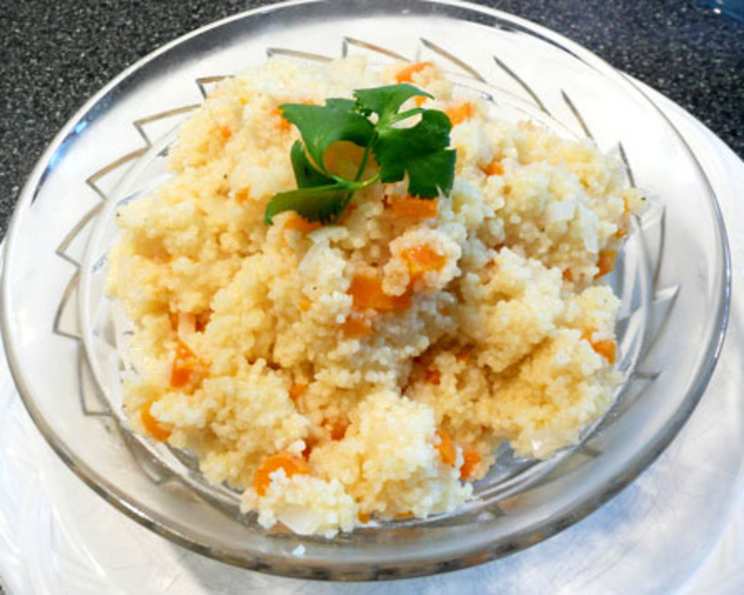
Couscous Pilaf: A Taste of Home
The aroma of simmering broth and sauteed vegetables always takes me back to my grandmother’s kitchen. I remember sitting at her table as a child, eagerly awaiting the moment she’d lift the lid of her well-worn pot, revealing a fluffy, golden mound of couscous studded with colorful carrots and onions. It wasn’t just a side dish; it was a symbol of comfort, family, and the simple joys of sharing a home-cooked meal. Though her recipe was a closely guarded secret, I’ve spent years crafting my own version, hoping to recapture that same sense of warmth and deliciousness.
Recipe Overview
- Prep Time: 10 minutes
- Cook Time: 30 minutes
- Total Time: 40 minutes
- Servings: 4
- Yield: About 4 cups
- Dietary Type: Vegetarian (can be made vegan)
Ingredients
- 1 onion, chopped
- 2 carrots, sliced
- 2 chicken bouillon cubes (or vegetable bouillon cubes for vegan)
- Salt to taste
- Pepper to taste
- 1 cup couscous
- 1 tablespoon butter (or olive oil for vegan)
Equipment Needed
- Large saucepan with lid
- Measuring cups and spoons
- Cutting board
- Knife
- Stirring spoon
Instructions
-
Begin by dissolving the chicken bouillon cubes in 2 ½ cups of water in a large saucepan. Stir until the bouillon is fully dissolved.
-
Bring the broth to a boil over high heat. Once boiling, add the chopped onion and sliced carrots to the pot.
-
Reduce the heat to low, cover the saucepan with a lid, and let it simmer gently for 15 minutes, or until the carrots are tender and easily pierced with a fork.
-
Season the simmering mixture with salt and pepper to taste. Be mindful of the saltiness from the bouillon cubes and adjust accordingly.
-
Stir in the couscous into the saucepan.
-
Cook, uncovered, for 1 minute, stirring constantly to prevent sticking. The couscous will begin to absorb the broth.
-
Add the butter (or olive oil) to the couscous mixture.
-
Cook and stir for 2 minutes, allowing the butter to melt and coat the couscous evenly. This adds richness and flavor to the pilaf.
-
Remove the saucepan from the heat, cover it tightly with the lid, and let it stand for 10 minutes. This allows the couscous to fully absorb the remaining liquid and become fluffy. Do not lift the lid during this time.
-
After 10 minutes, remove the lid and fluff the couscous with a fork to separate the grains. This will prevent the pilaf from becoming clumpy.
-
Serve immediately.
Expert Tips & Tricks
- Toast the Couscous: For a nuttier flavor, lightly toast the couscous in a dry pan over medium heat for a few minutes before adding it to the broth. Watch carefully to prevent burning.
- Infuse the Broth: Enhance the flavor of the broth by adding herbs like bay leaf, thyme, or rosemary while it simmers. Remove the herbs before adding the couscous.
- Vegetable Variations: Feel free to add other vegetables to the pilaf, such as peas, corn, bell peppers, or zucchini. Add them along with the carrots for even cooking.
- Vegan Option: Easily make this recipe vegan by substituting vegetable bouillon cubes for chicken bouillon cubes and using olive oil instead of butter.
- Broth Consistency: If the couscous seems dry after cooking, add a tablespoon or two of hot broth at a time until it reaches your desired consistency.
- Preventing Clumping: Ensure the couscous is evenly distributed in the broth before covering it to prevent clumping. Fluffing with a fork after resting is also crucial.
Serving & Storage Suggestions
Couscous pilaf is a versatile side dish that pairs well with a variety of main courses. It complements grilled chicken, roasted vegetables, fish, or lamb beautifully. Garnish with fresh herbs like parsley or cilantro for a pop of color and freshness.
Leftover couscous pilaf can be stored in an airtight container in the refrigerator for up to 3 days. To reheat, add a splash of water or broth to the couscous and microwave it in short intervals, stirring in between, until heated through. You can also reheat it in a saucepan over low heat, stirring frequently. Freezing is not recommended as it can alter the texture of the couscous.
Nutritional Information
| Nutrient | Amount per Serving | % Daily Value |
|---|---|---|
| Calories | 200 kcal | 10% |
| Total Fat | 4g | 6% |
| Saturated Fat | 2g | 10% |
| Cholesterol | 5mg | 2% |
| Sodium | 600mg | 25% |
| Total Carbohydrate | 35g | 12% |
| Dietary Fiber | 3g | 12% |
| Sugars | 5g | N/A |
| Protein | 5g | 10% |
Note: Nutritional information is an estimate and may vary based on specific ingredients and portion sizes.
Variations & Substitutions
- Mediterranean Couscous: Add chopped sun-dried tomatoes, Kalamata olives, and feta cheese after cooking for a Mediterranean twist.
- Spiced Couscous: Incorporate warm spices like cumin, coriander, and turmeric into the broth for a flavorful and aromatic pilaf.
- Citrus Couscous: Add lemon or orange zest and juice to the couscous during the last few minutes of cooking for a bright and refreshing flavor.
- Herbaceous Couscous: Mix in fresh herbs like dill, mint, or chives after cooking for a vibrant and aromatic pilaf.
- Nutty Couscous: Sprinkle toasted almonds, pine nuts, or walnuts over the couscous before serving for added texture and flavor.
- Gluten-Free Couscous: While traditional couscous is made from semolina (wheat), you can find gluten-free couscous alternatives made from corn or other grains. Be sure to adjust cooking times according to package directions.
FAQs (Frequently Asked Questions)
Q: Can I use different types of couscous for this recipe?
A: Yes, you can use either regular or pearl couscous. Pearl couscous will require a slightly longer cooking time. Follow the package directions for the specific type of couscous you’re using.
Q: Can I make this recipe ahead of time?
A: Yes, you can prepare the couscous pilaf ahead of time and reheat it when ready to serve. Store it in an airtight container in the refrigerator for up to 3 days.
Q: How do I prevent the couscous from becoming mushy?
A: Avoid overcooking the couscous and be sure to fluff it with a fork after it has rested to separate the grains.
Q: Can I add protein to this dish?
A: Absolutely! Adding cooked chickpeas, lentils, or diced chicken can transform this side dish into a complete meal.
Q: Can I use water instead of broth?
A: While you can use water, using broth or bouillon enhances the flavor significantly. If using water, consider adding extra herbs and spices for a more flavorful pilaf.
Final Thoughts
I truly believe that the best recipes are those that are shared with love and bring people together. This Couscous Pilaf is more than just a simple side dish; it’s a versatile canvas for your own culinary creativity. Don’t be afraid to experiment with different vegetables, spices, and herbs to create a flavor profile that suits your taste. I encourage you to try this recipe and share it with your loved ones. I hope it brings as much warmth and comfort to your table as it does to mine. Bon appétit!