
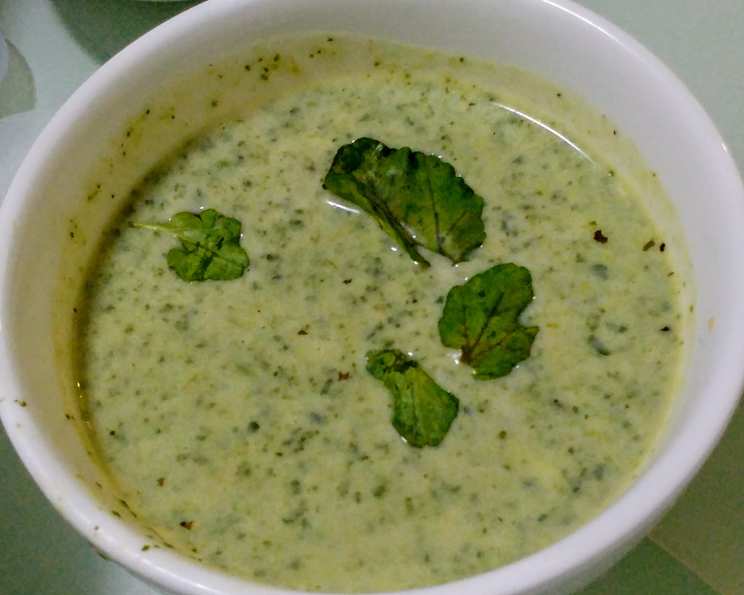
Emerald Dreams: Cream of Watercress Soup
There are certain dishes that instantly transport you back to a specific time and place. For me, cream of watercress soup evokes memories of my grandmother’s cottage garden, bursting with vibrant greens and the gentle murmur of bees. She always had a patch of watercress thriving near the little stream, and this soup was a springtime ritual, a celebration of the season’s first harvest. The peppery bite of the watercress, mellowed by creamy richness, was always a comforting taste of home.
Recipe Overview
- Prep Time: 10 minutes
- Cook Time: 25 minutes
- Total Time: 35 minutes
- Servings: 4
- Yield: Approximately 6 cups
- Dietary Type: Vegetarian (can be vegan with substitutions)
Ingredients
- 1 medium onion, diced
- 1 small potato, diced
- 25 g butter (or vegan butter alternative)
- 85 g watercress, rinsed
- 300 ml milk (or plant-based milk)
- 300 ml vegetable stock
- 4 tablespoons double cream (heavy cream) (or plant-based cream alternative)
- Salt and freshly ground black pepper to taste
Equipment Needed
- Medium saucepan
- Immersion blender (or regular blender)
Instructions
-
Begin by gently melting the butter in a medium saucepan over medium heat. Once melted, add the diced onion and sauté until it becomes transparent and softened. This usually takes about 5-7 minutes. Stir occasionally to prevent browning. The goal is to sweat the onion, releasing its sweet aroma without adding any color.
-
Add the diced potato to the softened onions. The potato will act as a natural thickener for the soup, providing a smooth and creamy texture. Stir the potato and onion together for a minute or two, allowing the potato to lightly coat in the butter.
-
Next, add the rinsed watercress to the saucepan. Watercress can be a bit gritty, so ensure it is thoroughly washed. The watercress will wilt down quickly as it hits the heat. Stir it into the onion and potato mixture.
-
Pour in the milk and vegetable stock. Bring the mixture to a boil over medium-high heat. Keep a close eye on it to prevent it from boiling over.
-
Once boiling, reduce the heat to low, cover the saucepan with a lid, and simmer for 20 minutes. This allows the potato to become tender and the flavors to meld together beautifully. The simmering process is crucial for creating a well-balanced and flavorful soup.
-
Carefully remove the saucepan from the heat. Using an immersion blender, blend the soup until it is completely smooth and creamy. If you don’t have an immersion blender, you can carefully transfer the soup to a regular blender in batches. Remember to vent the lid to prevent pressure from building up.
-
Return the blended soup to the saucepan. Stir in the double cream (or plant-based alternative) and season to taste with salt and freshly ground black pepper. Adjust the seasoning according to your preference.
-
Gently heat the soup through if needed, but do not boil it after adding the cream. Overheating can cause the cream to curdle. Serve immediately.
Expert Tips & Tricks
- For a brighter green color: Add a handful of fresh spinach along with the watercress. Spinach adds extra nutrients and enhances the vibrant hue of the soup.
- Make-ahead tip: The soup (before adding the cream) can be made a day ahead and stored in the refrigerator. Add the cream just before serving.
- Enhance the flavor: A squeeze of fresh lemon juice just before serving can brighten the flavors and add a touch of acidity.
- Spice it up: Add a pinch of red pepper flakes for a subtle kick.
- Troubleshooting: If the soup is too thick, add a little more milk or vegetable stock to thin it out. If it’s too thin, simmer it uncovered for a few minutes to reduce the liquid.
Serving & Storage Suggestions
Cream of watercress soup can be served hot or cold, making it a versatile dish for any season. For a hot serving, garnish with a swirl of cream, a sprinkle of fresh watercress leaves, or a few croutons. For a cold serving, chill the soup thoroughly and garnish similarly.
Leftover soup can be stored in an airtight container in the refrigerator for up to 3 days. It can also be frozen for up to 2 months. Thaw frozen soup in the refrigerator overnight before reheating gently on the stovetop. Reheating in the microwave is also possible, but stir frequently to ensure even heating. Avoid boiling when reheating.
Nutritional Information
| Nutrient | Amount per Serving | % Daily Value |
|---|---|---|
| Calories | 190 kcal | 10% |
| Total Fat | 14g | 18% |
| Saturated Fat | 9g | 45% |
| Cholesterol | 45mg | 15% |
| Sodium | 90mg | 4% |
| Total Carbohydrate | 15g | 5% |
| Dietary Fiber | 2g | 7% |
| Sugars | 2g | 4% |
| Protein | 5g | 10% |
Variations & Substitutions
- Vegan Cream of Watercress Soup: Substitute the butter with vegan butter, the milk with almond or soy milk, and the double cream with cashew cream or coconut cream.
- Dairy-Free Cream of Watercress Soup: Use plant-based milk and cream alternatives as mentioned above.
- Potato Substitute: If you’re watching your carbohydrate intake, you can substitute the potato with cauliflower. The cauliflower will still provide a creamy texture but with fewer carbs.
- Watercress Alternative: If watercress is unavailable, you can use rocket (arugula) for a similar peppery flavor.
- Spicy Watercress Soup: Add a pinch of cayenne pepper or a dash of hot sauce for a spicy kick.
FAQs (Frequently Asked Questions)
Q: Can I make this soup without a blender?
A: While a blender creates the smoothest texture, you can mash the soup with a potato masher for a chunkier, rustic version. It won’t be as creamy, but it will still be delicious.
Q: How do I prevent the soup from separating when reheating?
A: Reheat the soup gently over low heat, stirring frequently. Avoid boiling it, as this can cause the cream to separate. Adding a tablespoon of milk or cream while reheating can also help.
Q: Can I use frozen watercress?
A: Fresh watercress is preferred for its flavor and texture. However, if frozen is all you have, be sure to thaw it completely and squeeze out any excess water before adding it to the soup.
Q: How can I make this soup lower in calories?
A: Use skim milk or a lower-fat plant-based milk alternative and omit the double cream. You can also reduce the amount of butter used.
Q: What should I serve with cream of watercress soup?
A: Cream of watercress soup pairs well with crusty bread, a grilled cheese sandwich, or a side salad. It also makes a lovely starter for a more elaborate meal.
Final Thoughts
Cream of watercress soup is a celebration of fresh, vibrant flavors and comforting textures. Its simple elegance makes it perfect for a light lunch, a sophisticated starter, or a cozy supper. I hope this recipe inspires you to create your own memories around this delightful dish. Don’t hesitate to experiment with variations and personalize it to your taste. And please, share your creations and feedback – I’d love to hear how you’ve made this emerald dream your own!