
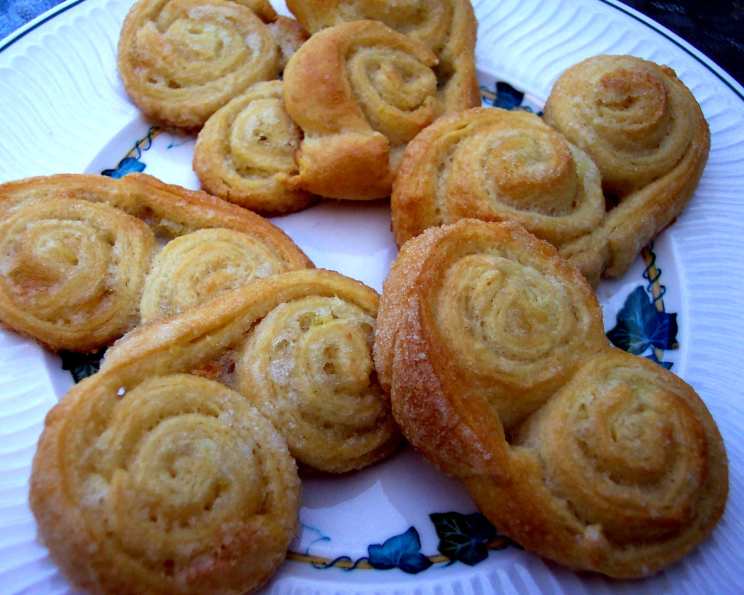
Crescent Roll Dough Palmiers: A Sweet Symphony of Simplicity
I remember the first time I tasted a palmier. It was in a tiny Parisian bakery, the air thick with the scent of butter and sugar. The pastry, crisp and caramelized, shattered in my mouth, leaving behind a delicate sweetness and a hint of something almost floral. I’ve strived to recreate that experience ever since. While the traditional method can be time-consuming, this shortcut recipe using crescent roll dough captures the essence of a classic palmier with surprising ease. These little hearts of flaky goodness are incredibly light, subtly lemony, and dangerously addictive – the perfect treat when unexpected guests arrive.
Recipe Overview
- Prep Time: 10 minutes
- Cook Time: 8-11 minutes
- Total Time: 18-21 minutes
- Yields: 24 palmiers
- Serves: 24
- Dietary Type: Vegetarian
Ingredients
- 4-6 tablespoons granulated sugar, divided
- 2 teaspoons grated lemon zest
- 1 (8 ounce) can crescent roll dough (tube)
- 1 egg white, lightly beaten
Equipment Needed
- Small bowl
- Work surface
- Pastry brush
- Sharp knife
- Greased cookie sheets
- Cooling rack
Instructions
- Begin by preheating your oven to 375°F (190°C). This ensures the palmiers bake evenly and achieve that beautiful golden-brown color.
- In a small bowl, combine 2 tablespoons of the granulated sugar with the lemon zest. Mix well to distribute the zest evenly throughout the sugar. This lemon-infused sugar will impart a bright and refreshing flavor to your palmiers. Set this mixture aside.
- Sprinkle some of the remaining granulated sugar onto a clean work surface. Ensure there is enough to lightly dust the area. This will prevent the dough from sticking and help create a crisp, caramelized exterior.
- Open the can of crescent roll dough. Separate the dough into two rectangular pieces. Gently press together any of the triangular perforations so that you have two flat, separate rectangles. This will provide a smooth surface for rolling and shaping.
- Roll out each rectangle separately onto the sugared surface to even out the dough. Aim for a thickness of about 1/8 inch. Rolling the dough helps to create those desirable flaky layers.
- Using a pastry brush, generously paint the beaten egg white across both pieces of dough. The egg white acts as a glue, helping the sugar and lemon zest adhere to the dough. If needed, you may use an additional egg white to ensure full coverage.
- Sprinkle the sugar/lemon zest mixture evenly over each rectangle. Make sure the entire surface is covered to ensure a balanced flavor in every bite.
- Starting with one rectangle of dough, roll up the left and right longest sides of the rectangle (jelly-roll style) towards the center, meeting at the center. You should end up with a double roll resembling a snail.
- Repeat the rolling process with the second rectangle of dough.
- Using a sharp knife, cut small slices (about 1/4 inch thick) from the short edge of each roll. The cut pieces of dough, when placed flat, should look almost like bowties – with two coils at either side.
- Place the cut palmiers, cut side down, so they lie flat, onto greased cookie sheets. Ensure there is some space between each palmier to allow for even baking and prevent sticking.
- Sprinkle the palmiers lightly with some of the remaining granulated sugar. This extra sprinkle will contribute to the caramelized, crispy edges.
- Bake in the preheated 375°F (190°C) oven for 8-11 minutes, or until the palmiers are golden brown. Keep a close eye on them as baking times may vary depending on your oven.
- Once baked, cool for 1 minute before removing them from the cookie sheets. This brief cooling period allows the palmiers to firm up slightly, making them easier to handle.
- Set the palmiers on a wire rack to cool completely. This allows air to circulate around the pastries, preventing them from becoming soggy.
Expert Tips & Tricks
- Chilling the dough: For even more defined layers and less spreading during baking, chill the rolled-up dough logs in the freezer for about 10-15 minutes before slicing. This makes the dough firmer and easier to cut.
- Even Baking: Rotate the baking sheets halfway through the baking time to ensure the palmiers brown evenly on all sides.
- Sugar Consistency: Use a coarser granulated sugar for a more pronounced crunch.
- Egg Wash Alternative: If you’re out of eggs, you can use melted butter or milk instead, though the browning might be slightly different.
Serving & Storage Suggestions
These palmiers are best served fresh, while they are still warm and crispy. They make a delightful accompaniment to a cup of coffee or tea.
- Storage: Store leftover palmiers in an airtight container at room temperature for up to 2 days. They tend to lose their crispness over time, but they will still taste delicious.
- Reheating: To restore some of their crispness, you can reheat them in a preheated oven at 300°F (150°C) for a few minutes.
- Freezing: You can freeze the unbaked, sliced palmiers. Place them on a baking sheet lined with parchment paper and freeze until solid. Then transfer them to a freezer bag. Bake directly from frozen, adding a few extra minutes to the baking time.
Nutritional Information
| Nutrient | Amount per Serving | % Daily Value |
|---|---|---|
| Calories | 38 kcal | N/A |
| Calories from Fat | 5 g | 14% |
| Total Fat | 0.6 g | 0% |
| Saturated Fat | 0.1 g | 0% |
| Cholesterol | 4.7 mg | 1% |
| Sodium | 53.8 mg | 2% |
| Total Carbohydrate | 7 g | 2% |
| Dietary Fiber | 0.4 g | 1% |
| Sugars | 2.5 g | 10% |
| Protein | 1.1 g | 2% |
Note: Nutritional information is an estimate and may vary based on specific ingredients and portion sizes.
Variations & Substitutions
- Spice it up: Add a pinch of cinnamon or cardamom to the sugar mixture for a warm, aromatic twist.
- Chocolate Palmiers: Brush the dough with melted chocolate before rolling it up.
- Savory Palmiers: Omit the sugar and lemon zest and use grated Parmesan cheese, herbs, and spices instead.
- Citrus Zest: Experiment with different citrus zests, such as orange or lime, for a unique flavor profile.
- Nutty Palmiers: Sprinkle chopped nuts, such as almonds or pecans, over the dough along with the sugar.
FAQs (Frequently Asked Questions)
Q: Can I use puff pastry instead of crescent roll dough?
A: Yes, you can! Puff pastry will create an even flakier and more traditional palmier, but it will require more prep time.
Q: Why are my palmiers not crispy?
A: This could be due to several factors: not enough sugar, baking at too low a temperature, or not allowing the palmiers to cool completely on a wire rack.
Q: Can I make these ahead of time?
A: You can prepare the rolled-up dough logs ahead of time and store them in the refrigerator for up to 24 hours before slicing and baking.
Q: What if my crescent roll dough is too sticky to work with?
A: Place the dough in the refrigerator for about 15 minutes to firm up before rolling it out.
Q: Can I use a sugar substitute instead of granulated sugar?
A: While you can try a sugar substitute, it may affect the caramelization and texture of the palmiers. Granulated sugar provides the best results for crispness and flavor.
Final Thoughts
These crescent roll dough palmiers are a testament to the fact that delicious treats don’t have to be complicated. With just a few simple ingredients and minimal effort, you can create a batch of these delightful pastries that are sure to impress. So go ahead, embrace the simplicity, and enjoy the sweet symphony of flavors and textures that these little hearts have to offer. I’d love to hear your own variations and experiences with this recipe – feel free to share your thoughts and creations! Perhaps pair them with a light, floral tea or a glass of chilled prosecco for the perfect afternoon indulgence.