
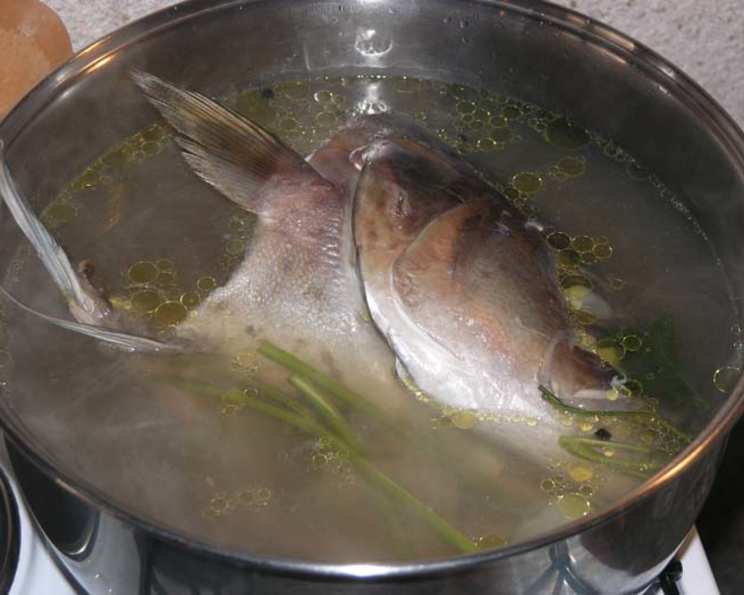
Croatian Boiled Fish (And Soup): A Taste of the Adriatic
The scent of the Adriatic sea always brings me back to my grandmother’s kitchen on the island of Hvar. She had a way of transforming the simplest ingredients into something extraordinary, and her lešo riba – boiled fish – was a prime example. The tender, flaky fish, infused with the aroma of garlic and bay leaves, was a revelation. The broth, repurposed into a delicate soup, was just as comforting. This wasn’t just a meal; it was a connection to family, tradition, and the heart of Dalmatia.
Recipe Overview
- Prep Time: 15 minutes
- Cook Time: 25 minutes
- Total Time: 40 minutes
- Servings: 4
- Yield: 4 portions
- Dietary Type: Dairy-Free
Ingredients
- 1 kg fish (salt water, cod-fish, or any high quality white meat fish)
- 2 liters water
- 200 g onions (or two medium onions)
- 8 g garlic (or 3-5 garlic cloves)
- 1 tablespoon vinegar (from red wine but not aceto balsamico)
- Salt
- Pepper
- 2 bay leaves
- 2 tablespoons olive oil
- Cooked rice (for soup)
- Fresh parsley (for soup)
Equipment Needed
- Large pot with low rim
- Fine-mesh sieve or cheesecloth (for soup)
Instructions
-
Begin by selecting a large pot with a low rim. This allows for even cooking of the fish. Add 2 liters of water to the pot.
-
Prepare the aromatic base for the fish. Peel and roughly chop 200g of onions (or two medium onions). Add them to the pot.
-
Peel 8g of garlic (about 3-5 cloves). You can either mince or simply crush the garlic cloves before adding them to the pot. Crushing releases more of the garlic’s flavor.
-
Add 2 bay leaves and pepper to the pot. Use whole black peppercorns for the best flavor.
-
Bring the water to a boil over medium-high heat. Once boiling, reduce the heat to medium and let the mixture simmer for 20 minutes, or until the onions are softened. This step is crucial for infusing the water with the flavors of the vegetables and spices. You can gently crush the garlic cloves against the side of the pot during the last few minutes of simmering to extract even more flavor.
-
While the aromatic base simmers, prepare the fish. Ensure the fish is thoroughly cleaned and scaled. It’s important to leave the fish whole, rather than chopping it into smaller pieces. This helps to retain moisture during cooking.
-
After the 20-minute simmering period, add salt to the boiling water. The amount of salt will depend on your preference, but start with about 1 tablespoon and adjust to taste.
-
Add 1 tablespoon of red wine vinegar (but not aceto balsamico) to the pot. The vinegar adds a subtle tanginess that complements the fish.
-
Drizzle 2 tablespoons of olive oil into the boiling water. The olive oil adds richness and helps to keep the fish moist.
-
Gently place the whole fish into the boiling water. Ensure that the fish is fully submerged.
-
The cooking time for the fish will vary depending on its size and thickness. As a general guideline, cook the fish for approximately 5 to 20 minutes. A good way to check for doneness is to gently pierce the fish with a fork. If the fish flakes easily and is opaque throughout, it is cooked. Be careful not to overcook the fish, as it can become dry and tough.
-
Once the fish is cooked, carefully remove it from the pot using a slotted spoon or spatula. Place the cooked fish on a serving plate alongside cooked potatoes. Drizzle with additional olive oil and serve immediately.
-
To make the soup: Strain the water in which the fish was cooked through a fine-mesh sieve or cheesecloth to remove any solids.
-
Add cooked rice to the filtered broth. The amount of rice will depend on your desired consistency.
-
Stir in fresh parsley (chopped) and a drizzle of olive oil.
-
Serve the soup hot as a flavorful starter or light meal.
Expert Tips & Tricks
- For a richer flavor, consider adding a splash of white wine to the boiling water along with the vinegar.
- To prevent the fish from sticking to the bottom of the pot, you can place a few sprigs of fresh parsley or a trivet on the bottom before adding the fish.
- If you’re using a thicker cut of fish, you can gently simmer it in the water for a longer period to ensure it’s cooked through.
- Don’t discard the vegetables after cooking the fish! They can be pureed and added back into the soup for extra flavor and nutrients.
- Taste the broth before adding the rice and adjust the seasoning as needed.
- Using sea salt will also enhance the flavors of the dish.
Serving & Storage Suggestions
Serve the boiled fish immediately while it’s still warm and moist. The accompanying potatoes can be boiled or roasted, depending on your preference. A simple green salad or steamed vegetables also make excellent side dishes.
Leftover boiled fish can be stored in an airtight container in the refrigerator for up to 2 days. To reheat, gently steam the fish or microwave it on low power to prevent it from drying out. The soup can also be stored in the refrigerator for up to 3 days. Reheat it gently on the stovetop or in the microwave. I do not recommend freezing either the fish or the soup.
Nutritional Information
| Nutrient | Amount per Serving | % Daily Value |
|---|---|---|
| Calories | 250 kcal | 13% |
| Total Fat | 10g | 15% |
| Saturated Fat | 2g | 10% |
| Cholesterol | 75mg | 25% |
| Sodium | 150mg | 7% |
| Total Carbohydrate | 5g | 2% |
| Dietary Fiber | 1g | 4% |
| Sugars | 2g | – |
| Protein | 30g | 60% |
Variations & Substitutions
- For a spicier version, add a pinch of red pepper flakes or a chopped chili pepper to the boiling water.
- You can use vegetable broth instead of water for a more intense flavor in the soup.
- Experiment with different herbs and spices, such as dill, thyme, or oregano, to customize the flavor profile of the dish.
- For a richer soup, stir in a dollop of crème fraîche or sour cream before serving.
- Try adding other vegetables to the broth, such as carrots, celery, or zucchini, for a heartier soup.
- If you don’t have red wine vinegar, you can substitute it with white wine vinegar or lemon juice.
- Different types of white fish can be used for this recipe, such as sea bass, grouper, or snapper.
FAQs (Frequently Asked Questions)
Q: What type of fish is best for this recipe?
A: Any high-quality white fish will work well. Cod is a classic choice, but sea bass, grouper, or snapper are also excellent options.
Q: Can I use dried bay leaves instead of fresh?
A: Yes, dried bay leaves can be used. Use 1 dried bay leaf in place of 2 fresh ones.
Q: How do I prevent the fish from overcooking?
A: Monitor the fish closely and check for doneness by gently piercing it with a fork. If it flakes easily and is opaque throughout, it’s cooked.
Q: Can I make this dish ahead of time?
A: While the fish is best served fresh, you can prepare the broth ahead of time and store it in the refrigerator. Add the fish just before serving.
Q: What should I serve with the fish and soup?
A: Boiled potatoes and a simple green salad are classic accompaniments. Crusty bread is also great for soaking up the flavorful broth.
Final Thoughts
This Croatian Boiled Fish (and Soup) is more than just a recipe; it’s a glimpse into a culinary tradition built on simplicity, fresh ingredients, and a deep connection to the sea. I encourage you to try this recipe and experience the flavors of Dalmatia for yourself. Don’t be afraid to experiment with different variations and substitutions to create a dish that truly reflects your own tastes. And please, share your creations and feedback – I’d love to hear about your culinary journey! Dobar tek! (Bon appétit!)