
Mastering Croissants and Puff Pastry: A Baker’s Journey
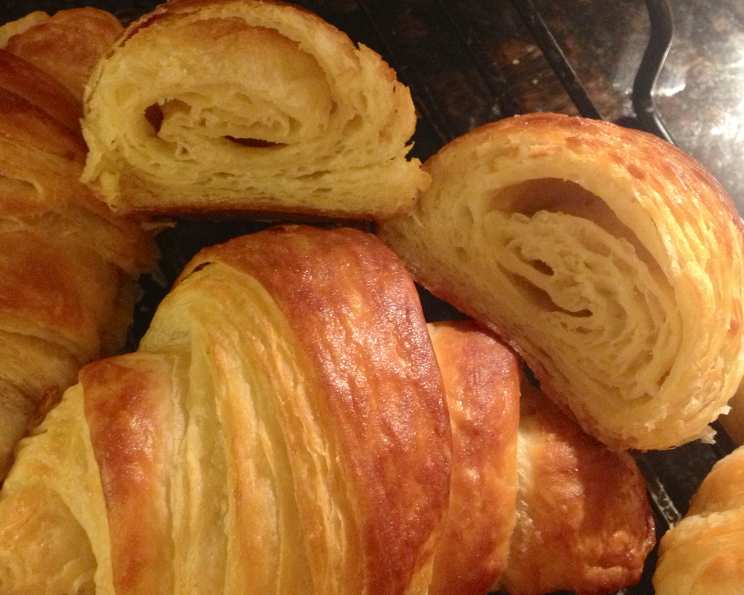
The scent of baking croissants is, for me, the very essence of a perfect Sunday morning. I still vividly remember my first attempt at making them, a chaotic yet exhilarating experience in my tiny apartment kitchen. Flour dusted every surface, the butter block threatened to melt into oblivion, and the entire process felt like a delicate dance with the dough. But when those golden, flaky crescents finally emerged from the oven, the sheer triumph was unparalleled. From that day forward, I was hooked on the art of lamination.
Recipe Overview
- Prep Time: 2 hours (plus overnight refrigeration)
- Cook Time: 24-27 minutes
- Total Time: 26-29 hours (including refrigeration and proofing)
- Servings: 14
- Yield: 14 croissants
- Dietary Type: Not Vegetarian
Ingredients
Dough
- 4 cups all-purpose flour (514 g unbleached)
- 2 tablespoons sugar (26 g)
- 2 teaspoons salt (scant teaspoons or 10 g)
- 1 tablespoon instant yeast (scant tablespoon or 8 g)
- ¾ cup milk (170 g)
- ⅔ cup water (room temperature, 151 g)
- 1 tablespoon butter (softened, 12 g)
Butter Block
- 8 ounces butter (2 sticks, unsalted or 228 g)
- 1 egg (mix with 1 tablespoon water for optional egg wash)
Equipment Needed
- Mixing bowl
- Plastic wrap
- Rolling pin
- Baking sheets
- Parchment paper
- Pastry brush (optional, for egg wash)
Instructions
- In a large mixing bowl, combine the flour, sugar, salt, and instant yeast. Mix thoroughly until well combined.
- Add the milk, water, and softened butter to the dry ingredients. Mix until a shaggy dough forms. It’s not necessary to knead the dough extensively at this stage; just ensure the ingredients are well incorporated. A few turns of the dough in the bowl will suffice.
- Place the dough in a lightly greased, covered bowl. Refrigerate overnight (or up to 24 hours). This long, cold fermentation is crucial for developing flavor and relaxing the gluten.
- Prepare the butter block: Place the two sticks of butter side-by-side between two sheets of plastic wrap. Use a rolling pin to pound the butter until it forms a 5-inch by 6-inch rectangle. The butter should be cold but pliable – soft enough to leave a slight indentation when pressed with a finger. If the butter is too warm, it will melt into the dough during lamination, resulting in a greasy, less flaky croissant.
- Lightly flour your work surface and the chilled dough. Roll the dough out into a 5.5-inch by 12.5-inch rectangle. Brush off any excess flour.
- Place the prepared butter block on one half of the dough rectangle. Fold the other half of the dough over the butter, creating a sealed package. Gently press the edges to seal the dough around the butter, preventing it from escaping during rolling.
- Lightly flour the top of the dough package. Using a rolling pin, gently tap the dough to distribute the butter evenly. Roll the dough out into an 8-inch by 18-inch rectangle. Work carefully and avoid applying too much pressure, which can cause the butter to break through the dough.
- Brush off any excess flour. Fold the dough like a letter, bringing one-third of the dough over the center, then folding the other third on top, creating three layers. You should now have an 8-inch by 6-inch bundle.
- Wrap the folded dough tightly in plastic wrap and chill in the refrigerator for 30 minutes. This chilling period allows the gluten to relax and the butter to firm up, preventing it from melting during the next rolling.
- Repeat the rolling and folding process two more times, chilling the dough for 30 minutes between each turn. Each turn creates more layers of dough and butter, resulting in the characteristic flaky texture of croissants. Aim for an 8-inch by 18-inch rectangle each time before the triple fold.
- After the final 30-minute chill, remove the dough from the refrigerator. On a lightly floured surface, roll it out into an 8-inch wide, 28-inch long rectangle. Trim off any uneven edges to create a neat rectangle.
- Divide the dough into 7 equal rectangles, each 4 inches wide and 8 inches long. Then, divide each rectangle diagonally to create 14 triangles, each with a 4-inch base and an 8-inch tip.
- Take each triangle and make a ¾-inch slit at the center of the base. This slit helps to create a more defined crescent shape. Gently stretch the triangle from base to tip, and then stretch the base slightly.
- Starting at the base, roll each triangle up tightly towards the tip. Place the rolled croissants on baking sheets or baking pans lined with parchment paper. Lightly spray the parchment paper with oil to prevent sticking.
- Preheat your oven to 450°F (232°C), but be prepared to reduce the temperature once the croissants are in the oven.
- Cover the croissants loosely with oiled plastic wrap. This prevents a skin from forming on the dough as they rise. Let them proof (rise) for 60 to 90 minutes, or until they have increased in volume by about 1.5 times.
- If desired, brush the croissants lightly with an egg wash (a mixture of one egg and one tablespoon of water) for a shiny, golden-brown surface. This step is optional but highly recommended for visual appeal.
- Once the croissants have proofed and the oven is preheated, reduce the oven temperature to 375°F (190°C). Bake the croissants in the upper portion of the oven for 12 minutes.
- Rotate the pan and bake for an additional 12 to 15 minutes, or until the croissants are deeply golden brown and have an internal temperature of 205°F (96°C). The internal temperature is important to ensure the dough is fully cooked.
- Remove the croissants from the oven and let them cool on a wire rack for a few minutes before serving.
Expert Tips & Tricks
- Temperature is key: Keeping the dough and butter cold is paramount for successful lamination. If the butter becomes too soft, it will melt into the dough layers, preventing the formation of distinct flaky layers.
- Gentle handling: Avoid overworking the dough. Excessive kneading can develop the gluten too much, resulting in a tough croissant.
- Accurate measurements: Use a kitchen scale for precise measurements, especially for the flour and butter. This ensures consistent results.
- Proofing environment: A warm, humid environment is ideal for proofing croissants. You can create a makeshift proofing box by placing a bowl of hot water in the oven with the croissants.
- Oven calibration: Ensure your oven is properly calibrated. An inaccurate oven temperature can lead to underbaked or overbaked croissants.
Serving & Storage Suggestions
Serve croissants warm from the oven for the best flavor and texture. They are delicious on their own, or accompanied by butter, jam, or your favorite fillings. Leftover croissants can be stored at room temperature in an airtight container for up to 2 days. For longer storage, freeze the baked croissants in a freezer-safe bag. To reheat, thaw the croissants completely and bake in a preheated oven at 350°F (175°C) for 5-10 minutes, or until warmed through. You can also refresh the crispness by briefly toasting them.
Nutritional Information
| Nutrient | Amount per Serving | % Daily Value |
|---|---|---|
| Calories | 276.7 kcal | N/A |
| Calories from Fat | N/A | 49% |
| Total Fat | 15.2 g | 23% |
| Saturated Fat | 9.3 g | 46% |
| Cholesterol | 52.1 mg | 17% |
| Sodium | 468.1 mg | 19% |
| Total Carbohydrate | 30.1 g | 10% |
| Dietary Fiber | 1.2 g | 4% |
| Sugars | 1.9 g | 7% |
| Protein | 5.1 g | 10% |
Note: Nutritional information is an estimate and may vary based on specific ingredients and preparation methods.
Variations & Substitutions
- Chocolate Croissants (Pain au Chocolat): Add batons of dark chocolate to the base of each triangle before rolling.
- Almond Croissants: After baking, slice the croissants in half horizontally, soak them in a syrup flavored with almond extract, fill with almond cream, and bake again until golden brown.
- Savory Croissants: Fill the croissants with ham and cheese before baking.
- Gluten-Free Croissants: While challenging, gluten-free croissants can be made using a blend of gluten-free flours and a binding agent such as xanthan gum.
- Vegan Croissants: Substitute the butter with a high-quality vegan butter alternative and use plant-based milk. Omit the egg wash or use a plant-based milk wash.
FAQs (Frequently Asked Questions)
Q: Why is it important to keep the butter cold?
A: Cold butter is essential for creating distinct layers of dough and butter during lamination. If the butter melts, it will blend into the dough, resulting in a dense, greasy croissant.
Q: Can I use salted butter instead of unsalted butter?
A: While you can use salted butter, it’s best to use unsalted butter to control the salt content of the croissants.
Q: How can I tell if my croissants are proofed enough?
A: The croissants should be light and puffy, and they should have increased in size by about 1.5 times. Gently press the side of a croissant; if the indentation slowly springs back, it’s ready to bake.
Q: Why did my butter leak out during baking?
A: This usually happens when the butter is too soft or the dough is not properly sealed. Make sure to keep the butter cold and press the edges of the dough firmly to prevent leakage.
Q: Can I freeze the unbaked croissants?
A: Yes, you can freeze the unbaked croissants after shaping them. Place them on a baking sheet and freeze until solid, then transfer them to a freezer-safe bag. To bake, thaw them overnight in the refrigerator and proof as usual before baking.
Final Thoughts
Embarking on the journey of making croissants and puff pastry is an adventure, a testament to patience and precision. While the process may seem daunting at first, the reward of warm, flaky, homemade croissants is well worth the effort. Don’t be discouraged by initial imperfections; each attempt is a learning experience. Gather your ingredients, embrace the process, and prepare to be amazed by the magic of lamination. And when you finally bite into that perfectly layered croissant, share the joy with friends and family – because the best things in life are always best enjoyed together.