
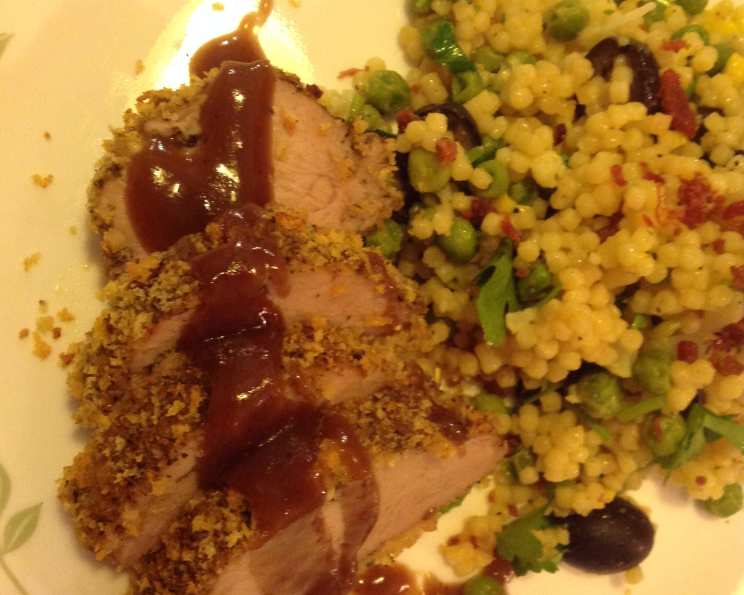
Crust Pork Tenderloin With Raspberry Balsamic Vinegar Sauce
The aroma of roasting pork has always transported me back to my grandmother’s kitchen. She had a knack for transforming simple ingredients into unforgettable feasts, and I still remember the excitement of seeing a perfectly browned pork roast emerge from her oven. While her recipes were often closely guarded secrets, I’ve enjoyed experimenting with pork tenderloin over the years, adding my own twists and flavor combinations. This recipe, with its savory crust and sweet-tart raspberry balsamic glaze, is a tribute to those cherished memories and a celebration of innovative flavors.
Recipe Overview
- Prep Time: 20 minutes
- Cook Time: 40 minutes
- Total Time: 60 minutes
- Servings: 4-6
- Yield: 2 tenderloins
- Dietary Type: Gluten-free (if using gluten-free breadcrumbs)
Ingredients
- 2 lbs pork tenderloin
- 1/2 cup olive oil
- 1 tablespoon balsamic vinegar
- 2 tablespoons soy sauce
- 2 tablespoons steak seasoning (or crushed pepper with kosher salt)
- 1 teaspoon dried rosemary
- 1 teaspoon dried thyme
- 1 teaspoon dried parsley
- 4 garlic cloves, minced
- 2 cups Italian seasoned breadcrumbs (plain breadcrumbs work too, but the Italian seasoning adds depth.)
For the raspberry balsamic sauce:
- 2 tablespoons butter
- 1 tablespoon flour
- 2 tablespoons balsamic vinegar
- 1/4 cup raspberry jam
- 2 tablespoons soy sauce
- 1 1/2 cups water
- 1/2 teaspoon pepper
- Salt, to taste
Equipment Needed
- Large sandwich bag or container
- Shallow cooking sheet
- Skillet
- Measuring cups and spoons
- Knife
- Cutting board
Instructions
-
Marinate the pork tenderloin: In a large sandwich bag or container, combine the olive oil, balsamic vinegar, soy sauce, steak seasoning (or crushed pepper with kosher salt), dried rosemary, dried thyme, dried parsley, and minced garlic. Add the pork tenderloin, seal the bag or cover the container, and marinate in the refrigerator for at least 1 hour, or up to 2 hours. This step infuses the pork with flavor and helps to tenderize it.
-
Preheat the oven: Preheat your oven to 425 degrees F (220 degrees C). Ensure the oven is fully preheated before baking the pork tenderloin for even cooking.
-
Prepare the crust: Remove the pork tenderloin from the marinade and place it on a shallow cooking sheet. Press the Italian seasoned breadcrumbs onto all sides of the pork, creating a crust about 1/4 inch thick. Press firmly to ensure the breadcrumbs adhere well.
-
Bake the pork: Bake the pork tenderloin for approximately 40 minutes, or until the internal temperature reaches 145 degrees F (63 degrees C). Use a meat thermometer inserted into the thickest part of the tenderloin to ensure accurate doneness. The pork should be cooked through but still slightly pink in the center for optimal tenderness.
-
Rest the pork: Once cooked, remove the pork tenderloin from the oven and let it rest for about 10 minutes before slicing. This allows the juices to redistribute, resulting in a more moist and flavorful final product. Tent loosely with foil to keep warm.
-
Prepare the raspberry balsamic sauce: While the pork is resting, prepare the sauce. Place a skillet over medium heat and melt the butter.
-
Make the roux: Add the flour to the melted butter and cook, stirring constantly, until the mixture is lightly browned. This creates a roux, which will thicken the sauce.
-
Add the liquids: Gradually add the balsamic vinegar, soy sauce, raspberry jam, and water to the flour mixture, whisking continuously to prevent lumps from forming.
-
Simmer the sauce: Bring the sauce to a simmer and cook, stirring occasionally, until it has thickened and is smooth. This should take about 5-7 minutes.
-
Season the sauce: Add the pepper and salt to taste. Adjust the seasonings as needed to balance the sweet, savory, and tangy flavors of the sauce.
-
Slice and serve: Slice the rested pork tenderloin into medallions and serve immediately, drizzled with the raspberry balsamic sauce.
Expert Tips & Tricks
- Don’t overcook the pork: Pork tenderloin is lean and can become dry if overcooked. Using a meat thermometer is the best way to ensure it’s cooked to the perfect internal temperature of 145 degrees F (63 degrees C).
- Make ahead: The marinade can be prepared a day in advance. The sauce can also be made ahead of time and reheated gently before serving.
- Breadcrumb variations: Experiment with different types of breadcrumbs, such as panko for a crispier crust, or add grated Parmesan cheese to the breadcrumbs for extra flavor.
- Spice it up: Add a pinch of red pepper flakes to the breadcrumbs or sauce for a touch of heat.
- Broiling for extra crispness: For an extra crispy crust, broil the pork for the last 1-2 minutes of cooking time, keeping a close eye on it to prevent burning.
Serving & Storage Suggestions
Serve the sliced pork tenderloin immediately, drizzled generously with the raspberry balsamic sauce. Garnish with fresh herbs, such as parsley or rosemary, for added visual appeal. This dish pairs well with roasted vegetables, mashed potatoes, or a fresh salad.
Storage: Leftover pork tenderloin should be stored in an airtight container in the refrigerator for up to 3-4 days. The sauce should be stored separately.
Reheating: Reheat the pork tenderloin gently in a preheated oven at 325 degrees F (160 degrees C) until warmed through. The sauce can be reheated in a saucepan over low heat, stirring occasionally. You can also microwave both, but be careful not to overcook the pork when reheating.
Nutritional Information
| Nutrient | Amount per Serving | % Daily Value |
|---|---|---|
| Calories | 650 kcal | 33% |
| Total Fat | 35g | 54% |
| Saturated Fat | 12g | 60% |
| Cholesterol | 140mg | 47% |
| Sodium | 1200mg | 50% |
| Total Carbohydrate | 40g | 13% |
| Dietary Fiber | 3g | 12% |
| Sugars | 12g | N/A |
| Protein | 40g | 80% |
Note: Nutritional information is an estimate and may vary based on specific ingredients and preparation methods.
Variations & Substitutions
- Gluten-Free: Use gluten-free breadcrumbs to make this dish gluten-free.
- Herb Variations: Experiment with different herbs in the marinade and breadcrumb crust. Try using oregano, sage, or marjoram.
- Jam Variations: Substitute the raspberry jam with other berry jams, such as strawberry or blackberry, for a different flavor profile.
- Vinegar Variations: Try using other types of balsamic vinegar, such as white balsamic or flavored balsamic, to add unique nuances to the sauce.
- Spice Level: Add a pinch of red pepper flakes to the marinade or sauce for a bit of heat.
FAQs (Frequently Asked Questions)
Q: Can I marinate the pork tenderloin for longer than 2 hours?
A: While marinating for a longer period can intensify the flavors, it’s generally not recommended to marinate pork tenderloin for more than 2 hours, as the acidity in the marinade can start to break down the meat fibers and make it mushy.
Q: Can I use pre-minced garlic instead of mincing fresh garlic?
A: While pre-minced garlic is convenient, using freshly minced garlic will provide a more intense and flavorful garlic flavor.
Q: Can I substitute the steak seasoning with something else?
A: Yes, if you don’t have steak seasoning, you can use a mixture of crushed black pepper, kosher salt, garlic powder, onion powder, and paprika.
Q: How do I know when the pork tenderloin is done?
A: The best way to ensure the pork tenderloin is cooked to the correct temperature is to use a meat thermometer. Insert the thermometer into the thickest part of the tenderloin, and cook until it reaches an internal temperature of 145 degrees F (63 degrees C).
Q: Can I freeze the leftover raspberry balsamic sauce?
A: Yes, the raspberry balsamic sauce can be frozen in an airtight container for up to 2-3 months. Thaw it in the refrigerator overnight before reheating.
Final Thoughts
I sincerely hope you’ll give this Crust Pork Tenderloin with Raspberry Balsamic Vinegar Sauce a try. It’s a surprisingly simple dish to prepare, yet delivers a gourmet-level flavor experience that is perfect for a weeknight dinner or a special occasion. If you do try it, I’d love to hear your feedback and any creative twists you’ve added to the recipe! Consider pairing this dish with a crisp Sauvignon Blanc or a light-bodied Pinot Noir to complement the flavors. Happy cooking!