
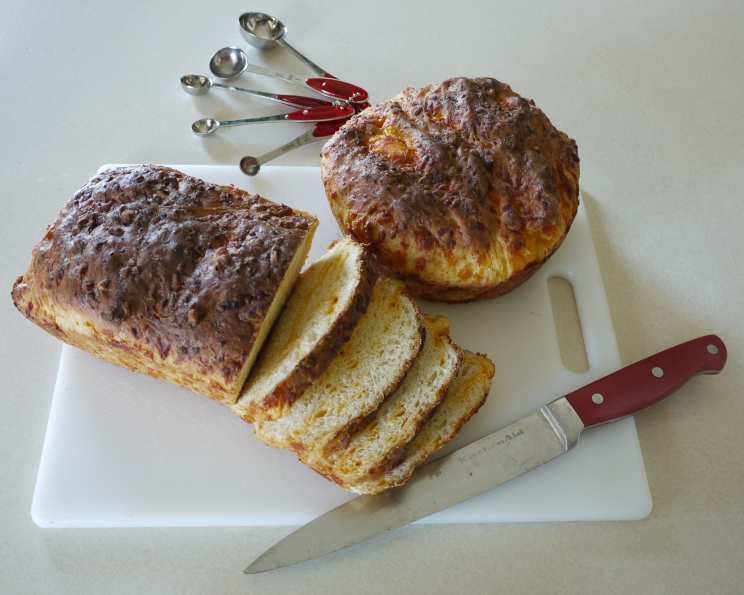
Crusty Cheese Bread: A Slice of Nostalgia
The scent of baking bread always takes me back to my grandmother’s kitchen. But it wasn’t just any bread; it was her crusty cheese bread, a golden-brown loaf that filled the air with a savory, comforting aroma. I remember impatiently watching through the oven door as it puffed up, the anticipation building with each passing minute. That first warm slice, slathered with butter, was pure bliss – a taste of home and a testament to simple, heartfelt cooking. It was so good, my brother and I would fight for the last slice of crust! This recipe brings back all of those wonderful memories.
Recipe Overview
- Prep Time: 20 minutes
- Cook Time: 40-50 minutes
- Total Time: 2 hours 10 minutes
- Yields: 1 loaf
- Dietary Type: Not suitable for Dairy-Free
Ingredients
- 1 package active dry yeast
- 1/4 cup water, warm
- 1 cup cottage cheese
- 1 tablespoon sugar
- 1 1/2 teaspoons salt
- 1 egg
- 2 1/4 cups flour
Optional Variations:
- 1 tablespoon grated onion
- 2 tablespoons toasted sesame seeds
- 1 cup grated sharp cheddar cheese
Equipment Needed
- Large mixing bowl
- Mixer (optional, but recommended)
- 1 1/2 quart casserole dish
- Measuring cups and spoons
- Clean kitchen towel
- Oven
Instructions
- Begin by activating the yeast. In a small bowl, sprinkle the active dry yeast over the warm water. Let it stand for 5 minutes, allowing the yeast to bloom. You’ll know it’s ready when it becomes foamy. If the yeast doesn’t foam, it may be old and you’ll need to use fresh yeast.
- In a large mixing bowl, blend the softened yeast mixture with the cottage cheese, sugar, salt, and egg. An electric mixer will make this easier, but you can also do it by hand. Make sure the cottage cheese is well-distributed.
- Gradually add the flour in 1/2 cup portions to the wet ingredients, forming a stiff dough. Beat well after each addition, incorporating the flour thoroughly. If you’re using a mixer, use the dough hook attachment. If kneading by hand, this step requires some elbow grease!
- Cover the dough with a clean kitchen towel and let it rise in a warm place until doubled in size, approximately 1 hour. A warm oven (turned off!) or a sunny spot works well. The rise is crucial for a light and airy texture.
- Butter a 1 1/2 quart casserole dish thoroughly. This prevents the bread from sticking and helps create a golden-brown crust.
- Stir down the risen dough to release the air. If using the optional cheddar cheese, mix in 1 cup of grated sharp cheddar cheese at this stage.
- Transfer the dough to the prepared buttered casserole dish.
- Let the dough rise again for another 30 to 40 minutes, or until almost doubled. This second rise contributes to the final texture and volume of the bread.
- Preheat the oven to 350 degrees Fahrenheit (175 degrees Celsius).
- Bake for 40 to 50 minutes, or until the crust is golden brown and the bread sounds hollow when tapped on the bottom. Insert a wooden skewer or toothpick into the center; if it comes out clean, the bread is done. If the top is browning too quickly, tent it loosely with foil.
- Immediately brush the crust with melted butter for a richer flavor and a glossy finish.
- Let the bread cool slightly before slicing and serving.
Expert Tips & Tricks
- For a more intense cheese flavor, use extra sharp cheddar or add a blend of cheeses.
- If you don’t have time for a full second rise, you can skip it, but the bread will be slightly denser.
- To enhance the crust, brush it with an egg wash (1 egg beaten with 1 tablespoon of water) before baking.
- Make sure your yeast is fresh. If it doesn’t foam when mixed with warm water, it’s likely expired and will prevent the bread from rising properly.
- Adding a little garlic powder to the dough will make it very flavorful.
- If your kitchen is cold and the dough is taking too long to rise, try placing the bowl on top of the refrigerator or near a warm appliance.
Serving & Storage Suggestions
Serve the crusty cheese bread warm, either on its own or as an accompaniment to soups, salads, or pasta dishes. It’s also delicious toasted with butter or used to make sandwiches.
Leftovers can be stored at room temperature for up to 2 days in an airtight container. For longer storage, wrap tightly and refrigerate for up to a week, or freeze for up to 2 months. To reheat, wrap in foil and bake in a preheated oven at 350°F (175°C) until warmed through, or toast individual slices. Freezing will change the texture of the crust a bit, but it will still taste great.
Nutritional Information
| Nutrient | Amount per Serving | % Daily Value |
|---|---|---|
| Calories | 1373.2 kcal | N/A |
| Calories from Fat | 153 g | N/A |
| Total Fat | 17.1 g | 26% |
| Saturated Fat | 5.7 g | 28% |
| Cholesterol | 221.7 mg | 73% |
| Sodium | 4334.8 mg | 180% |
| Total Carbohydrate | 237.7 g | 79% |
| Dietary Fiber | 9.5 g | 38% |
| Sugars | 19.1 g | 76% |
| Protein | 61.6 g | 123% |
Note: Nutritional information is an estimate and may vary based on specific ingredients and portion sizes.
Variations & Substitutions
- Herbed Cheese Bread: Add 1-2 tablespoons of chopped fresh herbs such as rosemary, thyme, or oregano to the dough.
- Spicy Cheese Bread: Incorporate a pinch of red pepper flakes or a dash of hot sauce for a kick.
- Garlic Cheese Bread: Mix in 1-2 cloves of minced garlic or 1 teaspoon of garlic powder.
- Gluten-Free: Substitute the all-purpose flour with a gluten-free flour blend. Be sure to use a blend designed for bread making, and you may need to adjust the liquid slightly.
- Vegan: This recipe is not easily adaptable for vegan diets as it contains egg and cottage cheese. Significant substitutions would be required to achieve similar results.
FAQs (Frequently Asked Questions)
Q: Can I use instant yeast instead of active dry yeast?
A: Yes, you can substitute instant yeast directly for active dry yeast. You can skip the proofing step and add it directly to the dry ingredients.
Q: What if my dough doesn’t rise?
A: Ensure your yeast is fresh and that the water is warm, not hot. Also, the room temperature should be warm enough to encourage rising.
Q: Can I make this dough in a bread machine?
A: Yes, you can use the dough cycle on your bread machine. Once the dough is ready, transfer it to the casserole dish for the second rise and baking.
Q: How do I prevent the bottom of the bread from burning?
A: Place a baking sheet on the rack below the bread to deflect some of the heat.
Q: Can I add other types of cheese?
A: Absolutely! Experiment with different cheeses like Monterey Jack, Pepper Jack, or Gouda. Just be sure not to add too much, as it can make the bread too dense.
Final Thoughts
Now it’s your turn to experience the simple joy of baking and sharing this incredible crusty cheese bread. Whether you’re a seasoned baker or just starting out, this recipe is sure to impress. Don’t be afraid to experiment with different variations and make it your own. And please, share your creations and feedback – I’d love to hear how it turns out! I recommend pairing this cheese bread with a hearty bowl of tomato soup or a glass of crisp white wine. Enjoy!