
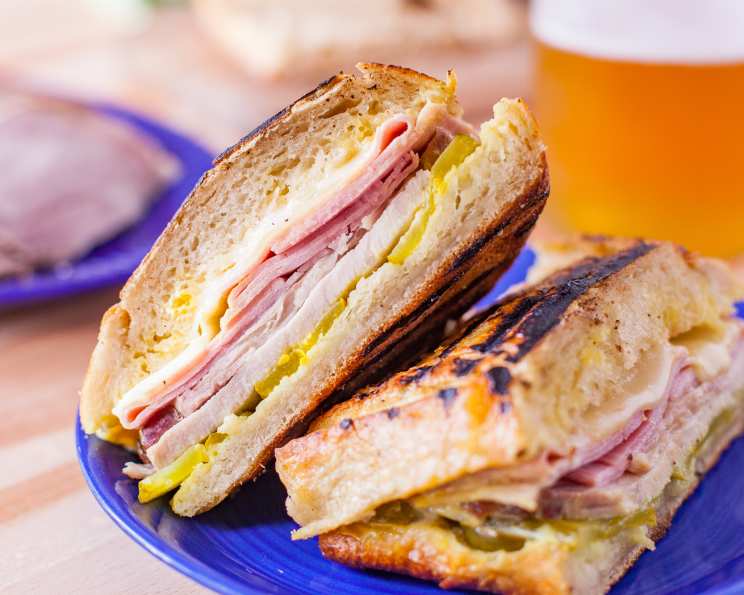
The Quintessential Cuban Sandwich: A Taste of History
The first time I sank my teeth into a perfectly pressed Cuban sandwich, I was instantly transported. Not just to a sunny corner cafe in Miami, but seemingly back in time. The crisp, buttery bread yielding to layers of savory pork, ham, tangy pickles, and melted Swiss was a symphony of flavors and textures. More than just a sandwich, it was a history lesson, a cultural icon, a testament to simple ingredients combined with skill and tradition. From that moment, I was determined to master this iconic creation.
Recipe Overview
- Prep Time: 30 minutes
- Cook Time: 1 hour 4 minutes
- Total Time: 1 hour 34 minutes
- Servings: 4
- Yield: 4 sandwiches
- Dietary Type: Not Gluten-Free
Ingredients
For the Cuban Roast Pork:
- 3 garlic cloves
- 1 teaspoon salt
- 1 tablespoon dried oregano
- 1 cup minced onion
- 1 cup sour orange juice (If unavailable, use equal parts orange and grapefruit juice or a 2:1:1 ratio of orange, lemon, and lime juice.)
- ½ cup Spanish olive oil
- 1 (2 lb) boneless center cut pork loin roast
For the Cuban Sandwich:
- Cuban bread
- Butter, softened
- Sliced dill pickles
- 1 lb thinly sliced Cuban cooked pork (from the roast pork recipe)
- 1 lb thinly sliced good-quality ham
- ½ lb thinly sliced mild Swiss cheese
- Yellow mustard (optional)
- Mayonnaise (optional)
Equipment Needed
- Mortar and pestle
- Small bowl
- Saucepan
- Sharp knife or fork
- Roasting pan with rack
- Meat thermometer
- Cutting board
- Pancake griddle or large skillet
- Cooking spray
- Heavy iron skillet (or similar heavy object)
Instructions
- Prepare the Cuban Roast Pork Marinade: Begin by making the mojo, the flavorful marinade that defines Cuban roast pork. Using a mortar and pestle, mash the garlic cloves and salt together into a paste. This releases the essential oils of the garlic, creating a more intense flavor. If you don’t have a mortar and pestle, you can finely mince the garlic and combine it with the salt.
- Combine Marinade Ingredients: Transfer the garlic-salt mixture to a small bowl. Add the dried oregano, minced onion, and sour orange juice. Mix everything thoroughly until well combined. The mojo should have a slightly acidic and herbaceous aroma.
- Heat the Marinade: Heat the Spanish olive oil in a saucepan over medium heat. Add the mojo mixture to the heated oil and whisk to blend. This step helps to bloom the spices and meld the flavors together.
- Remove from Heat: Once the marinade is heated through, remove the saucepan from the heat and set aside to cool slightly.
- Prepare the Pork: Pierce the pork roast all over with a sharp knife or fork. This allows the marinade to penetrate deep into the meat, ensuring maximum flavor.
- Marinate the Pork: Reserve a small amount of the marinade to use during the roasting period. Pour the remaining marinade over the pork roast, ensuring it’s evenly coated. Cover the pork and refrigerate for 2-3 hours. The longer the pork marinates, the more flavorful it will be.
- Preheat Oven: Preheat your oven to 325°F (163°C).
- Roast the Pork: Remove the pork roast from the marinade and place it on a rack in a roasting pan. This allows air to circulate around the pork, promoting even cooking. Sprinkle the reserved marinade over the pork.
- Roasting Time: Roast the pork until it is completely cooked and a meat thermometer inserted into the thickest part registers 160°F (71°C). This will take approximately 20 minutes per pound.
- Baste the Pork: During the roasting process, baste the pork occasionally with the pan juices. This helps to keep the pork moist and adds flavor.
- Rest the Pork: Remove the pork from the oven and let it rest for at least 20 minutes before thinly slicing. This allows the juices to redistribute, resulting in a more tender and flavorful roast.
- Prepare Pan Juices: While the pork rests, bring the remaining pan juices to a boil in a saucepan and simmer until the juice is reduced by half. This concentrated juice will be used to sprinkle onto the sliced meat in the sandwiches.
- Slice the Pork: Thinly slice the rested pork roast.
- Assemble the Sandwiches: Cut the Cuban bread into 4 sections, each about 8 inches long. Slice these sections in half horizontally. Spread softened butter generously on the inside of both halves of each bread section.
- Layer the Filling: Generously layer the sandwiches with the filling ingredients in the following order: sliced dill pickles, thinly sliced roasted pork, thinly sliced ham, and thinly sliced Swiss cheese.
- Add Condiments (Optional): Spread with yellow mustard or mayonnaise if desired. Purists often forgo these additions, but they can add a nice tang or creaminess.
- Prepare Griddle or Skillet: Preheat a pancake griddle or large skillet over medium heat.
- Grill the Sandwiches: Lightly coat the hot griddle or skillet with cooking spray. Place the first sandwich on the griddle (ensure the griddle or skillet is not too hot, or the crust will burn before the cheese melts).
- Press the Sandwiches: Place a heavy iron skillet (or another heavy object) on top of the sandwich to flatten it. You want to compress the bread to about a third of its original size. This is crucial for achieving the signature crispy and compressed Cuban sandwich.
- Cook and Flip: Grill the sandwich for 2-3 minutes on each side, until the cheese is melted, the bread is golden brown, and the sandwich is heated through.
- Repeat: Repeat the grilling and pressing process for each sandwich.
- Serve: Slice each sandwich in half diagonally and serve immediately. The diagonal cut not only looks appealing but also makes the sandwich easier to handle.
Expert Tips & Tricks
- Sour Orange Juice Substitute: If you can’t find sour oranges, the combination of orange and grapefruit juice, or even orange juice with lemon and lime, works surprisingly well. The key is to get that tangy citrus note.
- Bread is Key: Authentic Cuban bread is essential for the right texture. It’s light, airy, and slightly sweet, with a crisp crust. If you can’t find it, a similar Italian loaf can be used as a substitute, but it won’t be quite the same.
- The Press is Crucial: The heavy pressing of the sandwich is what creates that signature crispy crust and melds all the flavors together. Don’t skip this step!
- Don’t Overfill: While you want a generous filling, avoid overstuffing the sandwich, as it will be difficult to press and grill evenly.
- Pre-Slice the Pork: Slicing the pork thinly while it’s still slightly warm makes it easier to handle.
Serving & Storage Suggestions
Serve the Cuban sandwich immediately after grilling for the best flavor and texture. The crispy bread and melted cheese are best enjoyed fresh.
Leftover Cuban pork can be stored in an airtight container in the refrigerator for up to 3 days. Reheat gently in a skillet or oven before using in sandwiches or other dishes. Assembled sandwiches are best eaten immediately, as the bread will soften over time.
Nutritional Information
| Nutrient | Amount per Serving | % Daily Value |
|---|---|---|
| Calories | 1430.4 kcal | N/A |
| Calories from Fat | 880 g | 62% |
| Total Fat | 97.9 g | 150% |
| Saturated Fat | 33.2 g | 165% |
| Cholesterol | 340.3 mg | 113% |
| Sodium | 2578.1 mg | 107% |
| Total Carbohydrate | 14.6 g | 4% |
| Dietary Fiber | 1.2 g | 4% |
| Sugars | 7.7 g | 30% |
| Protein | 117.6 g | 235% |
Variations & Substitutions
- Spicy Cuban: Add sliced jalapeños or a dash of hot sauce to the sandwich for a spicy kick.
- Vegetarian Cuban: Replace the pork and ham with marinated grilled vegetables such as zucchini, eggplant, and bell peppers. Use a vegetarian Swiss cheese alternative.
- Turkey Cuban: Substitute the pork with sliced turkey breast for a leaner option.
- Different Cheese: Experiment with different types of cheese, such as provolone or Gruyere, for a slightly different flavor profile.
- Sweet and Savory: Add a thin layer of guava paste for a touch of sweetness that complements the savory ingredients.
FAQs (Frequently Asked Questions)
Q: Can I make the roast pork ahead of time?
A: Absolutely! The roast pork can be made a day or two in advance and stored in the refrigerator. This actually helps the flavors meld together even more.
Q: What kind of pickles are best for a Cuban sandwich?
A: Dill pickles are the traditional choice, offering a tangy contrast to the rich meats and cheese. Bread and butter pickles are too sweet and don’t provide the same balance.
Q: Do I have to use a panini press?
A: While a panini press works great, a heavy skillet is a perfectly acceptable substitute. The key is to apply even pressure to the sandwich while it’s grilling.
Q: Can I freeze Cuban sandwiches?
A: It’s not recommended to freeze assembled Cuban sandwiches, as the bread will become soggy upon thawing. However, you can freeze the cooked pork for up to 2 months.
Q: Is mustard or mayo traditionally used on a Cuban sandwich?
A: Traditionally, mustard is used. Mayo is a more modern addition and considered heresy by some, but ultimately, it’s a matter of personal preference!
Final Thoughts
The Cuban sandwich is more than just a meal; it’s a celebration of flavors, history, and tradition. Don’t be intimidated by the process – it’s simpler than it looks. With a little patience and these tips, you can create a truly authentic and delicious Cuban sandwich that will transport you straight to the heart of Little Havana. So gather your ingredients, fire up your griddle, and get ready to experience the magic of this iconic sandwich. And be sure to share your creations and experiences – I’d love to hear how it turns out!