
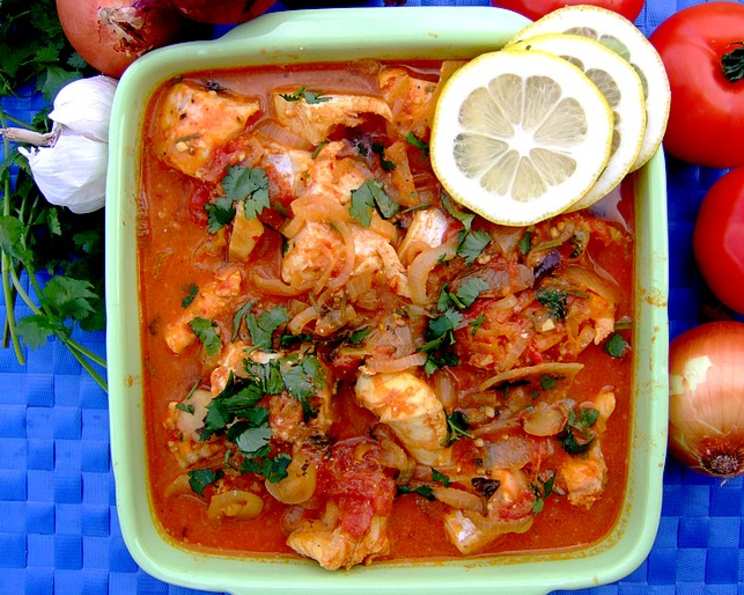
Curried Fish (Mchuzi Wa Samaki): A Taste of the Swahili Coast
The scent of curry simmering in coconut milk always transports me back to my travels along the Kenyan coast. I remember vividly the vibrant colors of the marketplaces overflowing with spices, the warmth of the coastal breeze, and the unforgettable flavors of the Swahili cuisine. One particular dish, a fragrant curried fish stew known as Mchuzi wa Samaki, etched itself into my memory with its delicate balance of spices and the tender, flaky fish. Each spoonful was a journey of its own, a tapestry woven with the richness of the land and the bounty of the Indian Ocean. This dish is more than just food; it’s a story, a connection to a culture, and a culinary adventure I’m thrilled to share.
Recipe Overview: Curried Fish (Mchuzi Wa Samaki)
- Prep Time: 10 minutes
- Cook Time: 25 minutes
- Total Time: 35 minutes
- Servings: 2
- Dietary Type: Dairy-Free
Ingredients
- 1 tablespoon vegetable oil
- 2 onions, sliced
- 3 garlic cloves, crushed
- 1 teaspoon curry powder
- 2 tomatoes, sliced
- 1 teaspoon tomato puree
- 1 tablespoon fresh coriander, chopped
- 1 lb fish fillets (such as red snapper, tilapia, or cod)
- 1 tablespoon lemon juice
- 1 teaspoon salt
- 1/2 cup water
Equipment Needed
- Large skillet or pan with lid
- Cutting board
- Knife
- Measuring spoons and cups
Instructions
-
Begin by heating the vegetable oil in a large skillet or pan over medium heat.
-
Add the sliced onions to the hot oil and fry until they turn golden brown, which should take approximately 5-7 minutes. Stir occasionally to ensure even browning and prevent burning.
-
Once the onions are browned, add the crushed garlic and curry powder to the pan.
-
Stir vigorously to combine the garlic and curry powder with the onions. Cook for about 1 minute, stirring constantly to prevent the spices from burning. This step is crucial to bloom the spices and release their aromatic oils.
-
Add the sliced tomatoes, tomato puree, and chopped fresh coriander to the pan.
-
Cook for another minute, stirring occasionally, allowing the tomatoes to soften and the flavors to meld together.
-
Gently place the fish fillets on top of the tomato mixture in the pan.
-
Sprinkle the fish with lemon juice and salt.
-
Pour in the water.
-
Cover the pan with a lid, reduce the heat to low, and cook for 15-20 minutes, or until the fish is cooked through and flakes easily with a fork. The cooking time will depend on the thickness of the fish fillets. Be careful not to overcook the fish, as it will become dry.
-
Once the fish is cooked, remove the pan from the heat.
-
Serve the Curried Fish (Mchuzi Wa Samaki) hot with rice.
Expert Tips & Tricks
- Fish Selection: While the original recipe suggests red snapper, feel free to experiment with other types of fish like tilapia, cod, or even shrimp. The key is to choose a fish that holds its shape well during cooking.
- Spice Level: Adjust the amount of curry powder to suit your taste. For a milder flavor, start with 1/2 teaspoon. For a spicier dish, add up to 1 1/2 teaspoons.
- Blooming the Spices: Don’t skip the step of cooking the garlic and curry powder in oil. This process releases the aromatic oils in the spices, resulting in a more flavorful dish.
- Tomato Puree Substitute: While tomato puree adds depth of flavor and sweetness, in a pinch, you can use a tablespoon of ketchup mixed with a teaspoon of water as a substitute, though the taste will be noticeably different.
- Freshness Matters: Use fresh coriander for the best flavor. If you don’t have fresh, you can use dried, but reduce the amount to 1 teaspoon.
- Gentle Handling: Be gentle when adding the fish and during cooking to prevent it from breaking apart.
- Add Coconut Milk: Adding 1/2 cup of coconut milk to the sauce adds a wonderful creamy texture and richness to the dish.
Serving & Storage Suggestions
Serve the Curried Fish (Mchuzi Wa Samaki) hot, spooned generously over a bed of fluffy rice. A sprinkle of fresh coriander adds a pop of color and freshness. You can also serve it with a side of steamed vegetables or a simple salad.
Leftovers can be stored in an airtight container in the refrigerator for up to 2 days. To reheat, gently warm the fish in a skillet over low heat, adding a splash of water if needed to prevent it from drying out. Reheating in the microwave is also an option, but be careful not to overcook the fish. Freezing is not recommended, as the texture of the fish may change.
Nutritional Information
| Nutrient | Amount per Serving | % Daily Value |
|---|---|---|
| Calories | 350 kcal | 18% |
| Total Fat | 15g | 23% |
| Saturated Fat | 3g | 15% |
| Cholesterol | 80mg | 27% |
| Sodium | 600mg | 26% |
| Total Carbohydrate | 20g | 7% |
| Dietary Fiber | 5g | 20% |
| Sugars | 8g | – |
| Protein | 35g | 70% |
| Note: Nutritional information is an estimate and may vary based on specific ingredients and cooking methods. |
Variations & Substitutions
- Coconut Milk Version: Replace the water with 1/2 cup of coconut milk for a richer, creamier sauce.
- Vegetarian Option: Substitute the fish with cubed tofu or chickpeas for a vegetarian version.
- Spice it Up: Add a pinch of chili flakes or a finely chopped chili pepper for extra heat.
- Vegetable Medley: Incorporate other vegetables such as bell peppers, zucchini, or eggplant for a heartier stew.
- Swahili Coast Twist: Try adding a squeeze of lime juice instead of lemon for a more authentic coastal flavor.
- Ginger Garlic Paste: Use a ginger-garlic paste when you don’t have fresh ingredients.
FAQs (Frequently Asked Questions)
Q: Can I use frozen fish fillets for this recipe?
A: Yes, you can use frozen fish fillets. Make sure to thaw them completely before cooking. Pat them dry with paper towels to remove any excess moisture.
Q: How can I prevent the fish from sticking to the pan?
A: Ensure the pan is well-heated before adding the oil. You can also use a non-stick pan or add a little more oil to prevent sticking.
Q: Can I make this dish ahead of time?
A: While the fish is best served fresh, you can prepare the sauce ahead of time and store it in the refrigerator for up to 24 hours. Add the fish and cook just before serving.
Q: What is the best way to serve Curried Fish (Mchuzi Wa Samaki)?
A: Traditionally, it’s served hot with rice. You can also serve it with chapati, ugali, or naan bread.
Q: Can I use a different type of curry powder?
A: Absolutely! Feel free to experiment with different types of curry powder to create your own unique flavor profile. Garam masala can also be added for a warmer flavor.
Final Thoughts
Curried Fish (Mchuzi wa Samaki) is a delightful culinary adventure that brings the exotic flavors of the Swahili Coast right to your kitchen. Its simplicity and versatility make it a perfect dish for both weeknight dinners and special occasions. I encourage you to try this recipe and experience the warmth and vibrancy of East African cuisine. Don’t hesitate to experiment with different ingredients and spice levels to create your own signature version. Share your feedback and creations – I’d love to hear how it turned out! This dish pairs wonderfully with a crisp, dry white wine or a refreshing glass of iced tea. Karibu! (Welcome!)