
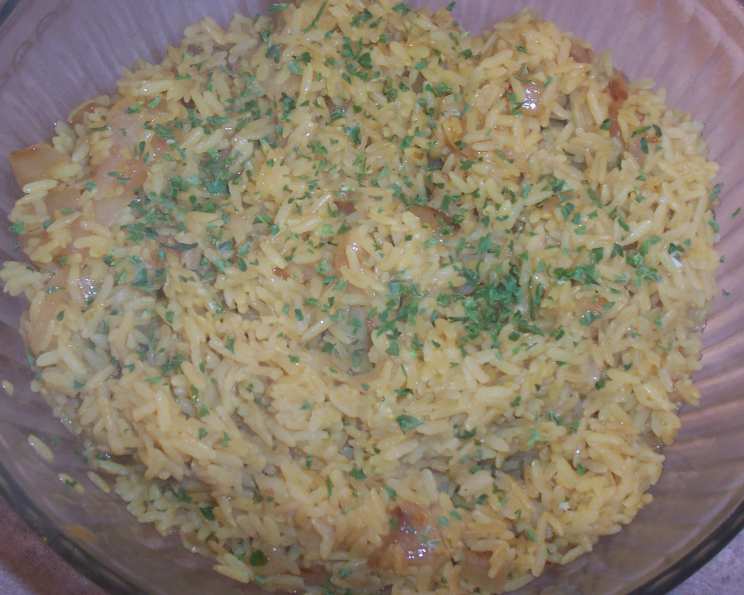
The Easiest Curried Sauce for Rice: A Family Staple
I still remember my grandmother’s kitchen, a cozy haven filled with the comforting aroma of simmering spices. She always had a pot of rice on the stove, ready to be transformed into a complete meal with the simplest of sauces. This curried sauce for rice brings me right back to those cherished moments, a reminder that the most satisfying dishes are often the easiest to make and share. It’s a taste of home, no matter where I am.
Recipe Overview
- Prep Time: 5 minutes
- Cook Time: 15 minutes
- Total Time: 20 minutes
- Yields: 2 cups
- Serves: 4-6
- Dietary Type: Vegetarian (easily adaptable to vegan)
Ingredients
- 1 tablespoon butter or 1 tablespoon margarine
- ½ cup onion, chopped
- 2 cups chicken broth (vegetable broth for vegan)
- ½ teaspoon salt
- ¼ teaspoon pepper
- ½ tablespoon curry powder
- 1 lemon, juice of
- 2 tablespoons dried parsley
Equipment Needed
- Saucepan
- Measuring cups and spoons
- Knife
- Cutting board
Instructions
- Begin by placing your saucepan over medium heat. Add 1 tablespoon of either butter or margarine. Allow it to melt completely. If using margarine for a vegan option, ensure it is a dairy-free variety.
- Add ½ cup of chopped onion to the melted butter. Reduce the heat slightly to medium-low, and cook the onions slowly until they are tender and translucent. This usually takes about 5-7 minutes. Stir occasionally to prevent burning and ensure even cooking.
- Pour in 2 cups of chicken broth (or vegetable broth for a vegan version). Add ½ teaspoon of salt, ¼ teaspoon of pepper, ½ tablespoon of curry powder, the juice of 1 lemon, and 2 tablespoons of dried parsley.
- Stir all ingredients together well. Bring the sauce to a gentle simmer, then reduce the heat to low. Allow the sauce to simmer for about 10 minutes, stirring occasionally. This will allow the flavors to meld together beautifully and the sauce to thicken slightly.
- Serve the curried sauce warm over servings of hot, freshly cooked rice.
- If desired, sprinkle a dash of paprika over the sauce for an added touch of color and a subtle smoky flavor.
Expert Tips & Tricks
- Bloom the Curry Powder: For a more intense curry flavor, consider “blooming” the curry powder. Add the curry powder directly to the melted butter with the onions and cook for about a minute before adding the broth. This helps to release the essential oils in the spices.
- Adjust the Curry: Start with ½ tablespoon of curry powder and taste as you go. You can always add more to reach your preferred level of spiciness. Different curry powders have different heat levels, so adjust accordingly.
- Fresh Herbs: While the recipe calls for dried parsley, fresh parsley will add a brighter flavor. If using fresh parsley, add it at the very end of the cooking process.
- Thickening the Sauce: If you prefer a thicker sauce, you can create a slurry by mixing 1 tablespoon of cornstarch with 2 tablespoons of cold water. Whisk this mixture into the simmering sauce during the last few minutes of cooking until it reaches your desired consistency.
- Make-Ahead Tip: The sauce can be made a day or two in advance. Store it in an airtight container in the refrigerator, and reheat it gently on the stovetop before serving.
- Vegan Variation Enhancement: To elevate the vegan version, consider adding a tablespoon of nutritional yeast towards the end of cooking for a cheesy, umami depth.
Serving & Storage Suggestions
Serve this curried sauce immediately over hot rice. For an elegant presentation, garnish with a sprinkle of fresh cilantro or a lemon wedge. This sauce pairs wonderfully with brown rice, jasmine rice, or basmati rice. It can also be served with roasted vegetables, grilled chicken, or tofu.
Leftover sauce should be stored in an airtight container in the refrigerator. It will keep for up to 3 days. To reheat, simply warm it gently in a saucepan over low heat, stirring occasionally. You can also reheat it in the microwave in 30-second intervals, stirring in between. Freezing is not recommended, as the texture of the sauce may change upon thawing.
Nutritional Information
| Nutrient | Amount per Serving | % Daily Value |
|---|---|---|
| Calories | 61 kcal | 3% |
| Total Fat | 4g | 5% |
| Saturated Fat | 2g | 10% |
| Cholesterol | 8mg | 3% |
| Sodium | 697mg | 30% |
| Total Carbohydrate | 4g | 1% |
| Dietary Fiber | 1g | 4% |
| Sugars | 2g | 4% |
| Protein | 3g | 6% |
Note: Nutritional information is an estimate and may vary based on specific ingredients used.
Variations & Substitutions
- Spice Level: Adjust the amount of curry powder to your liking. For a spicier sauce, add a pinch of cayenne pepper or a dash of hot sauce.
- Vegetable Boost: Add diced vegetables like carrots, peas, or bell peppers to the sauce for extra flavor and nutrients. Sauté the vegetables along with the onions.
- Coconut Curry: Replace half of the chicken broth with coconut milk for a richer, creamier sauce with a hint of coconut flavor.
- Ginger and Garlic: Add a teaspoon of minced ginger and a clove of minced garlic to the onions while sautéing for added warmth and aroma.
- Creamy Curry: Stir in a tablespoon of heavy cream or coconut cream at the end of cooking for a richer, more decadent sauce (omit for vegan version).
- Lemon-Lime: Use a combination of lemon and lime juice for a more complex citrus flavor.
- Other Broths: Besides chicken or vegetable broth, try using beef broth for a deeper, richer flavor.
FAQs (Frequently Asked Questions)
Q: Can I use a different type of onion?
A: Yes, you can use any type of onion you prefer. Yellow onions are a good all-purpose choice, but white or red onions will also work. Shallots can also be used for a milder flavor.
Q: Is it possible to make this without broth?
A: While broth adds depth of flavor, you can use water in a pinch. Add a bouillon cube for a richer flavor if using water.
Q: Can I use fresh curry leaves instead of curry powder?
A: Fresh curry leaves will impart a more authentic flavor. Sauté about 10 fresh curry leaves with the onions until fragrant. You may still want to add a small amount of curry powder for color and depth.
Q: What type of curry powder should I use?
A: There are many different types of curry powder, ranging from mild to hot. Experiment with different blends to find your favorite. Madras curry powder is a good all-purpose option.
Q: Can I add meat to the sauce?
A: Absolutely! Cooked chicken, shrimp, or beef can be added to the sauce during the last few minutes of cooking. Ensure the meat is fully cooked before adding it to the sauce.
Final Thoughts
This curried sauce is a true testament to the power of simple ingredients. It transforms plain rice into a flavorful and satisfying meal that is perfect for any night of the week. Don’t be afraid to experiment with different variations and make it your own. I encourage you to try this recipe and share it with your loved ones. And if you do, let me know how it turns out! Pair it with a crisp, dry white wine for a complete and delightful dining experience. Happy cooking!