
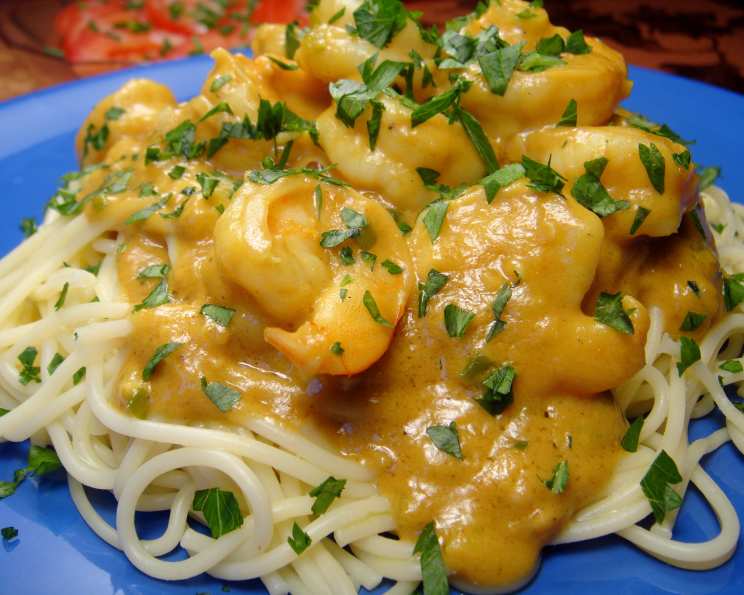
Curried Shrimp in Peanut Sauce: A Culinary Adventure
The first time I tasted curried shrimp in peanut sauce, I was a wide-eyed culinary student on a shoestring budget. A tiny hole-in-the-wall Thai restaurant near my campus offered it as their daily special, and the intoxicating aroma alone drew me in. The sweet, savory, and slightly spicy sauce clung to the perfectly cooked shrimp, served over a bed of steaming rice. It was a revelation, a symphony of flavors that I knew I had to recreate.
Recipe Overview
- Prep Time: 15 minutes
- Cook Time: 15 minutes
- Total Time: 30 minutes
- Servings: 4
- Dietary Type: Adaptable (can be gluten-free with rice noodles or rice)
Ingredients
- 8 ounces fettuccine, uncooked
- 2/3 cup reduced-sodium fat-free chicken broth
- 1/2 cup creamy peanut butter
- 2 tablespoons balsamic vinegar
- 1/2 teaspoon salt
- 1/8 teaspoon black pepper
- 1 (1/2 inch) piece fresh ginger, peeled and thinly sliced
- 1 tablespoon olive oil
- 1 1/2 cups green onions, sliced
- 2 teaspoons curry powder
- 1 1/2 teaspoons garlic, minced
- 1 1/2 lbs large shrimp, peeled and deveined
- 2 tablespoons fresh cilantro, chopped
Equipment Needed
- Large pot
- Blender or food processor
- Large nonstick skillet
Instructions
- Begin by cooking the fettuccine according to the package directions. Crucially, omit the salt and fat often suggested in the instructions, as the sauce will provide ample flavor and richness. Ensure the pasta is cooked al dente, with a slight firmness to the bite, to prevent it from becoming mushy when combined with the sauce. Drain well once cooked.
- While the pasta is cooking, prepare the peanut sauce. In a blender or food processor, combine the reduced-sodium fat-free chicken broth, creamy peanut butter, balsamic vinegar, salt, black pepper, and fresh ginger. Process until the mixture is completely smooth and emulsified. The ginger adds a subtle warmth and complexity to the sauce, so don’t be tempted to skip it. Taste and adjust seasoning as necessary.
- Heat the olive oil in a large nonstick skillet over medium heat. Make sure the skillet is adequately heated before adding the vegetables to ensure they sauté properly and don’t steam.
- Add the sliced green onions, curry powder, and minced garlic to the skillet. Sauté for approximately 3 minutes, stirring frequently, until the green onions are softened and the garlic is fragrant. Be careful not to burn the garlic, as it can become bitter. The curry powder will bloom in the hot oil, releasing its aromatic spices.
- Add the peeled and deveined large shrimp to the skillet. Cook for about 6 minutes, or until the shrimp are pink and opaque. Be careful not to overcook the shrimp, as they will become rubbery. The cooking time will depend on the size of the shrimp, so keep a close eye on them.
- Stir in the prepared peanut sauce into the skillet with the shrimp. Cook for approximately 1 minute, or until the sauce is thoroughly heated and coats the shrimp evenly.
- Serve the curried shrimp in peanut sauce immediately over the cooked fettuccine. Garnish with freshly chopped cilantro for a burst of freshness. The cilantro complements the rich sauce and adds a vibrant pop of color to the dish.
Expert Tips & Tricks
- For a richer sauce, use full-fat coconut milk instead of chicken broth.
- If you want to kick up the spice, add a pinch of red pepper flakes to the sauce.
- To prevent the shrimp from overcooking, ensure they are patted dry before adding them to the skillet. This will help them sear properly and retain their moisture.
- Make sure the ginger is finely sliced before blending to get a smooth sauce.
Serving & Storage Suggestions
Serve this dish immediately after cooking for the best flavor and texture. The hot pasta and succulent shrimp are best enjoyed fresh. To elevate the presentation, consider serving in warmed bowls and garnish generously with cilantro.
Leftovers can be stored in an airtight container in the refrigerator for up to 2 days. Reheat gently in a skillet over low heat, adding a splash of water or broth if needed to prevent the sauce from drying out. Microwaving is also an option, but be careful not to overheat the shrimp, as they can become tough. Freezing is not recommended, as the texture of the shrimp and sauce may be compromised upon thawing.
Nutritional Information
| Nutrient | Amount per Serving | % Daily Value |
|---|---|---|
| Calories | 583.6 kcal | N/A |
| Calories from Fat | 216 g | 37% |
| Total Fat | 24.1 g | 37% |
| Saturated Fat | 4.8 g | 23% |
| Cholesterol | 262.8 mg | 87% |
| Sodium | 1424.7 mg | 59% |
| Total Carbohydrate | 53.6 g | 17% |
| Dietary Fiber | 5.2 g | 20% |
| Sugars | 6.2 g | 24% |
| Protein | 40.3 g | 80% |
Variations & Substitutions
- Gluten-Free: Substitute the fettuccine with gluten-free rice noodles or brown rice for a gluten-free option.
- Vegetarian/Vegan: Replace the shrimp with tofu or tempeh for a vegetarian or vegan version. Ensure the broth is vegetable-based.
- Spice Level: Adjust the amount of curry powder or add a pinch of red pepper flakes to customize the spice level to your preference.
- Nut Allergy: Sunflower seed butter or tahini can be used as a substitute for peanut butter, although the flavor profile will be slightly different.
- Vegetable Boost: Add sliced bell peppers, snap peas, or broccoli florets to the skillet along with the green onions for added nutrition and color.
FAQs (Frequently Asked Questions)
Q: Can I use frozen shrimp for this recipe?
A: Yes, you can use frozen shrimp. Make sure to thaw them completely and pat them dry before cooking to ensure they sear properly.
Q: Can I make the peanut sauce ahead of time?
A: Absolutely! The peanut sauce can be made up to 2 days in advance and stored in an airtight container in the refrigerator.
Q: Is there a substitute for balsamic vinegar?
A: If you don’t have balsamic vinegar, you can use rice vinegar or a squeeze of lemon juice as a substitute.
Q: Can I use a different type of pasta?
A: Yes, you can use any type of pasta you prefer, such as spaghetti, linguine, or penne.
Q: How do I prevent the peanut sauce from being too thick?
A: If the peanut sauce is too thick, add a little more chicken broth or water to thin it out to your desired consistency.
Final Thoughts
Curried Shrimp in Peanut Sauce is a dish that embodies both comfort and adventure. It’s a culinary journey that brings together the familiar warmth of pasta with the exciting flavors of curry and peanut. Don’t be afraid to experiment with the ingredients and adjust the spice level to your liking. I encourage you to try this recipe, share it with your loved ones, and let the vibrant flavors transport you to a place where every bite is a celebration of taste. Pair it with a crisp glass of Sauvignon Blanc or a refreshing Thai iced tea for the perfect culinary experience. Bon appétit!