
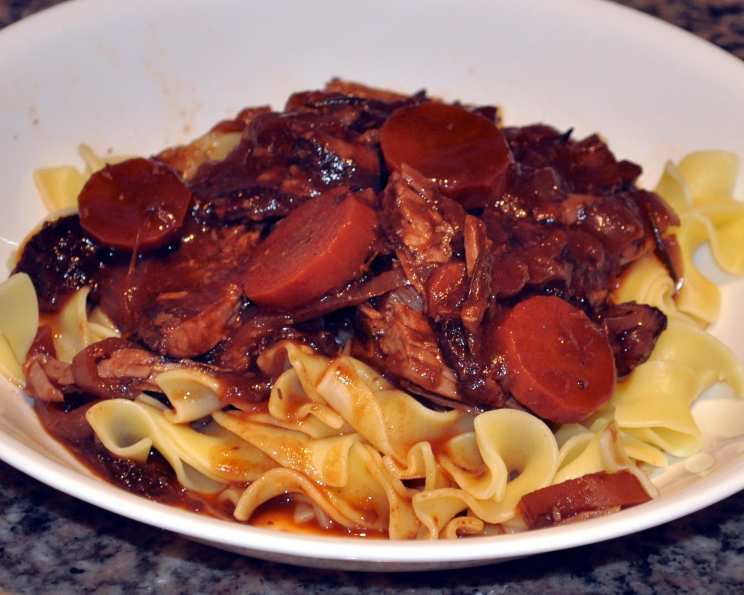
Dalmatian Pot Roast: Pasticada, A Croatian Culinary Treasure
The aroma alone can transport me back to my grandmother’s kitchen in Split. I remember being a child, perched on a stool, watching her patiently tend to a large pot, the rich, complex scent of wine, herbs, and plums filling the air. That pot held pasticada, Dalmatian pot roast, a dish that is so much more than just food; it’s a symbol of family, tradition, and the warm, generous spirit of the Dalmatian coast. Every celebration, every gathering, was marked by the appearance of this magnificent roast. The taste is simply unforgettable.
Recipe Overview
- Prep Time: 30 minutes (plus overnight marinating)
- Cook Time: 3 hours
- Total Time: 3 hours 30 minutes (plus overnight marinating)
- Servings: 8-10
- Yield: 1 large pot roast
- Dietary Type: Potentially Dairy-Free (check gnocchi/mashed potato ingredients)
Ingredients
- 1 kg beef top round
- 750 ml red wine (1 standard size 750 ml/25oz bottle)
- 1 cup prosek dessert wine
- 1 (8 ounce) can tomato paste
- 80 g dried plums or 80 g prunes, without pits
- 2 tablespoons olive oil
- 1 bay leaf
- 3-4 cloves
- Salt and pepper, to taste
- 3 tablespoons cut rosemary
- 4 garlic cloves, sliced into thin sticks
- 3 onions, sliced
- 3-4 large carrots
Equipment Needed
- Large pot or Dutch oven
- Large bowl or container for marinating
- Frying pan
- Knife
- Cutting board
Instructions
-
In a large pot or Dutch oven (or a container suitable for the fridge), prepare the marinade. Place the beef in the pot, then pour in the entire bottle of red wine. Add the sliced onions and rosemary. Ensure the beef is mostly submerged in the wine. Cover and refrigerate. Marinate the beef in the wine mixture overnight, or for up to two days, depending on your preference for a more intense flavor.
-
Remove the beef from the marinade and set it aside. Reserve the marinade; do not discard it. On a cutting board, carefully make small incisions (about 1 inch deep) all over the surface of the beef, spacing them approximately an inch apart.
-
Into each incision, insert one or two garlic “sticks” (thinly sliced garlic cloves). Ensure the garlic is tucked securely into the meat.
-
Place the reserved marinade in a large pot on the stove over medium heat. This will become the base for your delicious sauce.
-
In a large frying pan, heat the olive oil over medium-high heat. Carefully place the garlic-studded beef in the hot pan and brown it on all sides, creating a flavorful crust. This searing process is crucial for developing a rich, deep flavor in the final dish.
-
While the beef is browning, add the can of tomato paste to the pot with the marinade. Whisk well to combine, ensuring there are no lumps.
-
As the marinade begins to boil, gently transfer the browned beef back into the pot with the sauce. Add the sliced carrots to the pot as well.
-
Bring the mixture to a boil, then reduce the heat to a simmer. Add the prosek dessert wine, dried plums (or prunes), bay leaf, and cloves to the pot. Season generously with salt and pepper to taste.
-
Cover the pot and slow cook the pasticada until the beef is very tender. This will take approximately 3 hours. Stir occasionally during the cooking process.
-
Check the liquid level periodically and add water as needed to keep the meat mostly covered and moist. This is particularly important if your pot is not tightly sealed, as the liquid will evaporate more quickly.
-
After about 3 hours, or when the meat is extremely tender and easily pierced with a fork, and the sauce has thickened, your pasticada is ready. The plums will have softened and melded into the sauce, contributing to its rich, sweet-savory flavor.
-
Remove the bay leaf before serving.
-
To serve, slice the beef against the grain into thick, generous portions. Ladle plenty of the flavorful plum sauce over the slices. Traditionally, pasticada is served with gnocchi or mashed potatoes to soak up the delicious sauce.
Expert Tips & Tricks
- For an even richer flavor, consider adding a small amount of pancetta or smoked bacon to the initial browning stage. The rendered fat will add depth and complexity to the dish.
- If you don’t have prosek, you can substitute with another sweet dessert wine like Marsala or even a Pedro Ximénez sherry. A small amount of balsamic vinegar can also add a similar depth of flavor.
- Don’t be afraid to adjust the seasoning to your liking. Taste the sauce throughout the cooking process and add more salt, pepper, or even a pinch of sugar to balance the flavors.
- If the sauce becomes too thick during cooking, add a little more red wine or water to thin it out. Conversely, if the sauce is too thin at the end, remove the lid and let it simmer for a bit longer to reduce and thicken.
- The quality of the beef matters. While top round is traditional, a chuck roast will also work wonderfully.
- Traditionally in some families the beef is larded, using a special larding needle, this will add a succulent juiciness to the meat.
Serving & Storage Suggestions
Pasticada is best served hot, immediately after cooking. Garnish with a sprig of fresh rosemary for a beautiful presentation. Leftovers can be stored in an airtight container in the refrigerator for up to 3 days. Reheat gently on the stovetop or in the microwave. The flavors often meld and improve even further overnight.
Pasticada also freezes well. Allow the cooked roast and sauce to cool completely before transferring to freezer-safe containers. It can be frozen for up to 2-3 months. Thaw overnight in the refrigerator before reheating.
Nutritional Information
Note: Nutritional information is an estimate and can vary based on specific ingredients and portion sizes.
| Nutrient | Amount per Serving | % Daily Value |
|---|---|---|
| Calories | 650 kcal | 33% |
| Total Fat | 35g | 54% |
| Saturated Fat | 15g | 75% |
| Cholesterol | 120mg | 40% |
| Sodium | 300mg | 13% |
| Total Carbohydrate | 35g | 12% |
| Dietary Fiber | 5g | 20% |
| Sugars | 20g | N/A |
| Protein | 45g | 90% |
Variations & Substitutions
- Vegetarian/Vegan: While traditionally a beef dish, you could experiment with a hearty mushroom roast or a large eggplant as a base, following the same marinating and braising techniques. Use vegetable broth instead of water as needed.
- Gluten-Free: Ensure that your tomato paste and any accompanying side dishes (like mashed potatoes) are gluten-free. Opt for gluten-free gnocchi or polenta instead of traditional gnocchi.
- Spicy Pasticada: Add a pinch of red pepper flakes or a finely chopped chili pepper to the sauce for a little heat.
- Seasonal Variation: During the fall and winter months, consider adding other root vegetables like parsnips or celeriac to the pot for extra flavor and heartiness.
FAQs (Frequently Asked Questions)
Q: Can I make pasticada in a slow cooker?
A: Yes, you can! Brown the beef as instructed, then transfer it to a slow cooker along with all the remaining ingredients. Cook on low for 6-8 hours, or until the beef is very tender.
Q: How do I know when the beef is done?
A: The beef is done when it is extremely tender and easily pierced with a fork. It should almost fall apart when you try to pull it apart with two forks.
Q: Can I use fresh plums instead of dried plums?
A: Yes, you can use fresh plums, but you may need to adjust the cooking time slightly. Use about 1 cup of fresh plums, pitted and quartered.
Q: What do I do if the sauce is too acidic?
A: If the sauce is too acidic, add a pinch of sugar or a small knob of butter (if not dairy-free) to balance the flavors.
Q: Can I make this ahead of time?
A: Absolutely! Pasticada is even better the next day, as the flavors have more time to meld. Make it a day or two in advance and simply reheat before serving.
Final Thoughts
Pasticada is more than just a recipe; it’s an experience. It’s a journey to the sun-kissed shores of Dalmatia, a celebration of simple, fresh ingredients, and a testament to the power of slow cooking. I encourage you to try this recipe and share it with your loved ones. The warmth and richness of this dish are sure to bring joy to any table. Don’t hesitate to experiment with the variations and adapt it to your own taste. And if you have any questions or feedback, please don’t hesitate to share them. Dobar tek! (Enjoy your meal!)