
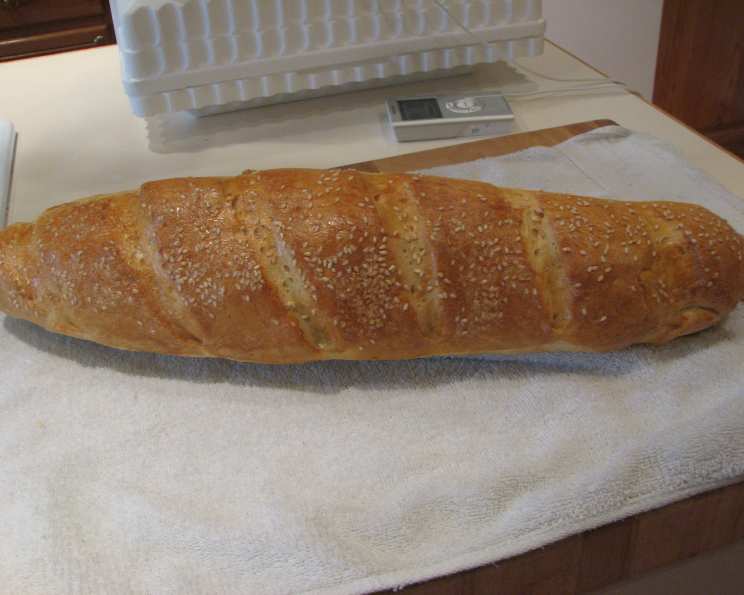
Franskbrød: A Taste of Danish Comfort
The aroma alone is enough to transport me back to my grandmother’s kitchen in Copenhagen. I can almost see her now, flour dusting her apron as she pulls a golden-brown loaf from the oven. The crust, perfectly crisp and begging to be broken, gives way to a soft, slightly sweet interior, the air filled with the comforting scent of warm bread and home. Franskbrød, or Danish-French bread, was a staple, enjoyed with simple butter and cheese, or alongside a hearty stew. It’s a taste of pure Hygge.
Recipe Overview
- Prep Time: 2 hours
- Cook Time: 40 minutes
- Total Time: 3 hours 40 minutes
- Servings: 16 slices
- Yield: 2 loaves
- Dietary Type: Vegetarian
Ingredients
- 7 – 7 ½ cups unbleached flour
- 2 packages active dry yeast (or 4 ½ teaspoons)
- 1 tablespoon sugar
- 1 tablespoon salt
- 1 tablespoon shortening
- Yellow cornmeal (for dusting)
- 1 egg white
- 2 tablespoons poppy seeds (optional)
- 2 ½ cups water
Equipment Needed
- Large mixer bowl
- Electric mixer
- Greased bowl
- Floured surface
- Baking sheet
- Pastry brush
- Sharp knife or lame
Instructions
- In a large mixer bowl, combine 3 cups of the unbleached flour and the active dry yeast.
- In a separate saucepan or microwave-safe bowl, heat 2 ½ cups of water, sugar, salt, and shortening until just warm (115-120 degrees F). Ensure the shortening melts completely while stirring constantly. This temperature is crucial for activating the yeast without killing it.
- Add the warm liquid mixture to the dry ingredients in the mixer bowl.
- Using an electric mixer with the dough hook attachment, beat at low speed for ½ minute, scraping down the sides of the bowl to ensure even mixing.
- Increase the mixer speed to high and beat for 3 minutes. This step develops the gluten structure, which gives the bread its characteristic chewiness.
- By hand, stir in enough of the remaining unbleached flour to form a soft dough. You may not need to use all of the remaining flour; add it gradually until the dough comes together.
- Turn the dough out onto a lightly floured surface and knead for 10 to 12 minutes, until it becomes smooth and elastic. This is a crucial step for developing the gluten properly. If the dough is too sticky, add a little more flour, but be careful not to add too much, as this can make the bread dry.
- Shape the kneaded dough into a ball.
- Place the dough ball in a greased bowl, turning it once to coat all sides. This prevents the dough from drying out as it rises.
- Cover the bowl with plastic wrap or a clean kitchen towel and let rise in a warm place until doubled in size, about 1 to 1 ½ hours. The rising time will depend on the temperature of your kitchen.
- Once the dough has doubled, gently punch it down to release the air.
- Divide the dough in half.
- Cover the two dough halves and let rest for 10 minutes. This allows the gluten to relax, making the dough easier to roll out.
- On a lightly floured surface, roll each half into a 15 x 12 inch rectangle.
- Roll each rectangle up tightly from the long side, sealing the seam well. This creates the characteristic long, slender shape of Franskbrød.
- Taper the ends of each roll by gently rolling them out.
- Place each loaf diagonally, seam side down, on a greased baking sheet that has been sprinkled with yellow cornmeal. The cornmeal prevents the bread from sticking and adds a subtle, rustic flavor.
- Using a sharp knife or lame, gash the tops of the loaves diagonally every 2 ½ inches, about ⅛ inch deep. These slashes allow the bread to expand properly during baking and create an attractive crust.
- In a small bowl, beat the egg white until just foamy. Add 1 tablespoon of water and mix well.
- Brush the tops and sides of the loaves with the egg white mixture.
- Sprinkle the tops of the loaves with poppy seeds (optional).
- Cover the baking sheets with plastic wrap or a clean kitchen towel and let rise until doubled in size, about 1 hour.
- Preheat your oven to 375 degrees F (190 degrees C).
- Bake the loaves for 20 minutes, then brush them again with the egg white mixture.
- Bake for another 20 minutes, or until the loaves are golden brown and sound hollow when tapped on the bottom.
- Remove the loaves from the baking sheets and let cool completely on a wire rack before slicing and serving.
Expert Tips & Tricks
- For a richer flavor, try using milk instead of water in the dough.
- To achieve a perfectly crisp crust, place a pan of hot water on the bottom rack of the oven during baking. This creates steam, which helps to develop the crust.
- If the bread is browning too quickly, tent it with foil during the last 10-15 minutes of baking.
- The dough can be made ahead of time and refrigerated overnight. Allow it to come to room temperature before shaping and baking.
- For a slightly sweet variation, add an extra tablespoon of sugar to the dough.
Serving & Storage Suggestions
Franskbrød is best served fresh, still slightly warm from the oven. It’s delicious with butter, cheese (especially Danish Havarti), jam, or as an accompaniment to soups and stews. To store, wrap tightly in plastic wrap or a bread bag and keep at room temperature for up to 3 days. For longer storage, freeze the loaf whole or sliced. To reheat, thaw completely and warm in a 350°F (175°C) oven for 5-10 minutes, or toast individual slices.
Nutritional Information
| Nutrient | Amount per Serving | % Daily Value |
|---|---|---|
| Calories | 213 kcal | 11% |
| Total Fat | 1.4g | 2% |
| Saturated Fat | 0.3g | 2% |
| Cholesterol | 0mg | 0% |
| Sodium | 220mg | 9% |
| Total Carbohydrate | 42g | 15% |
| Dietary Fiber | 1.7g | 6% |
| Sugars | 1g | 0% |
| Protein | 5.5g | 11% |
Nutritional information is an estimate and may vary based on specific ingredients and preparation methods.
Variations & Substitutions
- Whole Wheat Franskbrød: Substitute 1-2 cups of the unbleached flour with whole wheat flour for a nuttier flavor and added fiber.
- Herb-Infused Franskbrød: Add 1-2 tablespoons of dried herbs such as rosemary, thyme, or oregano to the dough for a savory twist.
- Seed-Crusted Franskbrød: Instead of poppy seeds, brush the loaves with egg white and sprinkle with a mixture of sesame seeds, sunflower seeds, and flax seeds.
- Vegan Franskbrød: Replace the shortening with vegan butter or oil and omit the egg white wash. Brush with olive oil or plant-based milk before baking instead.
- Gluten-Free Franskbrød: This recipe is not easily adapted for gluten-free baking. A completely different recipe using gluten-free flours and binders would be necessary.
FAQs (Frequently Asked Questions)
Q: Why is the water temperature so important for activating the yeast?
A: Water that is too hot will kill the yeast, while water that is too cold will not activate it properly. The ideal temperature range is between 115-120 degrees F.
Q: How do I know if my dough has risen enough?
A: The dough should have doubled in size and feel light and airy. You can also gently press your finger into the dough; if the indentation remains, it’s ready to bake.
Q: What if my dough is too sticky to knead?
A: Add a little more flour, one tablespoon at a time, until the dough becomes easier to handle. Be careful not to add too much, as this can make the bread dry.
Q: Can I use instant yeast instead of active dry yeast?
A: Yes, you can substitute instant yeast for active dry yeast. You can add instant yeast directly to the dry ingredients without proofing it first. Use the same amount as the active dry yeast.
Q: My bread is browning too quickly. What should I do?
A: Tent the bread with foil during the last 10-15 minutes of baking to prevent it from burning.
Final Thoughts
Franskbrød is more than just bread; it’s a connection to my heritage and a symbol of warmth and comfort. I encourage you to try this recipe and experience the simple joy of baking a delicious loaf of bread from scratch. Don’t be afraid to experiment with different variations and make it your own. Share your creations with friends and family, and let the aroma of freshly baked Franskbrød fill your home with happiness. Velbekomme!