
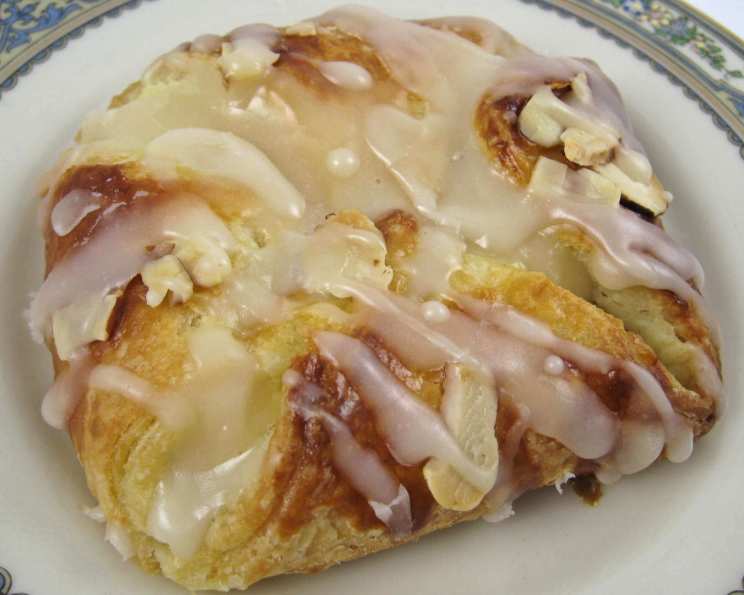
Danish Orange Marmalade Cheese Pockets: A Culinary Adventure
The first time I tasted a truly exceptional Danish pastry, it was on a cobblestone street in Copenhagen. The buttery layers practically melted on my tongue, and the sweet-tart filling was a burst of sunshine against the crisp Scandinavian air. I knew then I had to try making them myself. This recipe, adapted over time from a cookbook and fellow bakers, captures that same magic – even if it takes a bit of effort, the smiles it brings are worth every moment spent in the kitchen. The combination of flaky pastry, creamy cheese filling, and bright marmalade is simply irresistible.
Recipe Overview
- Prep Time: 60 minutes (plus chilling time)
- Cook Time: 15-20 minutes
- Total Time: 4-6 hours
- Servings: 24
- Yield: 24 pastries
- Dietary Type: Not specified, contains dairy, eggs, and gluten.
Ingredients
Quick Danish Pastry Dough
- 3 ½ teaspoons active dry yeast
- ¼ cup warm water
- ¼ cup skim milk, scalded and cooled
- 3 cups unbleached all-purpose flour
- ¼ cup granulated sugar
- ¾ teaspoon salt
- 12 ounces cold unsalted butter
- 2 large eggs, room temperature
Filling
- 16 ounces reduced-fat cream cheese, softened
- 6 tablespoons granulated sugar
- 2 large egg yolks, room temperature
- 1 teaspoon vanilla extract
- 2 teaspoons fresh orange zest
- ½ cup orange marmalade (or other fruit of your choice) or ½ cup chocolate chips (about 10-15 chips per danish)
Egg Wash
- 1 egg
- 1 pinch salt
Topping
- ½ – 1 cup sliced almonds
Icing
- 1 ½ cups powdered sugar (sifted after measuring)
- 2 tablespoons skim milk (I prefer milk because it makes a creamier icing) or 2 tablespoons water (I prefer milk because it makes a creamier icing)
- 1 teaspoon clear vanilla extract
Equipment Needed
- Food processor
- Mixing bowls
- Rubber spatula
- Plastic wrap
- Rolling pin
- Two cookie sheets
- Parchment paper
- Wire rack
- Small saucepan
Instructions
- Make the pastry dough: Whisk the yeast into the warm water. Wait 1-2 minutes, then whisk again. Whisk in the milk.
- Combine the flour, sugar, and salt in a food processor. Pulse to mix.
- Cut 4 tablespoons of the butter into thin slices and add to the processor. Pulse to a fine texture – not too much where it becomes pasty.
- Cut the remaining butter into ½-inch cubes and add to the processor. Pulse twice, 1-2 seconds each time. Remove the dough and place it in a mixing bowl.
- Whisk the eggs into the yeast mixture and add to the dough. Using a rubber spatula, hold the blade horizontally. Press/dig the spatula down into the dough, repeating until the dough comes together, turning the bowl while you work. The dough will be soft and sticky.
- Leave the dough in the bowl, covering the dough surface tightly with plastic wrap. Refrigerate for 1-2 hours.
- Place the chilled dough on a floured surface and sprinkle flour on top. Press the dough into a rectangle (twice as long as it is wide).
- Starting at the narrow edge farthest away from you, firmly press with a rolling pin in short parallel strokes. Seal any sticky areas with a bit of flour, and don’t allow dough pieces to stick to the rolling pin. Repeat, then press once across the width of the dough. You should have a ½-inch thick rectangle.
- Sprinkle flour above and below the dough.
- Rolling Directions: Create a rectangle 18 x 8 inches: Starting on the edge nearest you, roll once away from you in length and once in width. Do NOT roll over the end/edge of the dough.
- Folding Directions: Fold the two narrow ends in toward the middle, leaving a 1-inch gap in the center. Fold the top to bottom to form 4 layers. Turn dough so the folded edge is on the left.
- Repeat rolling and folding directions. Wrap the dough in plastic wrap and refrigerate for at least 2 hours, but no more than 12 hours.
- Filling: Add the filling ingredients (except the marmalade and chocolate chips) to a medium-size bowl. Beat together with a spatula (or use a mixer).
- Place HALF of the chilled dough on a floured surface and sprinkle with flour.
- Using a rolling pin, press the dough in firm, parallel strokes to soften it. Flour the surface and dough again if needed. Roll the dough out into a 12 x 16-inch rectangle.
- Line two cookie sheets with parchment paper. Slide the dough onto the first cookie sheet and refrigerate for 10 minutes (until firm).
- Repeat the above process with the second half of the pastry dough and place it on the second cookie sheet and chill for 10 minutes until firm.
- Remove the dough from the refrigerator, leave the dough in place on the parchment paper. Cut each sheet of dough into twelve 4-inch squares, keeping them in place on the parchment paper.
- Drop a heaping teaspoon of the filling onto the center of each square. Top with a heaping teaspoon of the marmalade or chocolate chips.
- Fold the dough corners into the middle, overlapping the filling by about ¼ inch. Cover and let rise for 20-30 minutes until they begin to puff.
- Preheat the oven to 400°F (200°C).
- Prepare the egg wash by whisking the egg and salt together and brush it onto the top of each pastry. Sprinkle with almonds or additional chocolate chips.
- Bake for 15-20 minutes or until the pastry is golden and the filling is set. Start checking after 10 minutes to prevent overbaking.
- Cool on a wire rack.
- Icing: Combine the icing ingredients in a small saucepan. Cook over very low heat until lukewarm. Drizzle the icing over the slightly cooled pastry and allow it to set.
Expert Tips & Tricks
- Keep the butter cold! This is crucial for creating those flaky layers. If the butter gets too soft at any point, return the dough to the refrigerator to firm up.
- Don’t overwork the dough. Overworking will develop the gluten too much, resulting in a tough pastry.
- Chill, chill, chill! Adequate chilling time is essential for relaxing the gluten and allowing the butter to firm up. This helps prevent the butter from melting during baking, which would result in a greasy pastry.
- Experiment with fillings! While orange marmalade is classic, don’t be afraid to try other jams, preserves, or even Nutella.
- For a richer flavor, use full-fat cream cheese.
- If you’re short on time, consider using store-bought puff pastry, though the results won’t be quite the same as homemade Danish dough.
Serving & Storage Suggestions
Serve these Danish Orange Marmalade Cheese Pockets slightly warm or at room temperature. They are delicious with a cup of coffee or tea.
To store, keep them in an airtight container at room temperature for up to 2 days, or in the refrigerator for up to 4 days. For longer storage, freeze them. To freeze, wrap each pastry individually in plastic wrap and then place them in a freezer-safe bag or container. They can be frozen for up to 2 months. To reheat, thaw in the refrigerator overnight and then warm in a low oven (around 300°F/150°C) for a few minutes.
Nutritional Information
| Nutrient | Amount per Serving | % Daily Value |
|---|---|---|
| Calories | 291.5 kcal | N/A |
| Calories from Fat | 148 g | 51% |
| Total Fat | 16.5 g | 25% |
| Saturated Fat | 9.4 g | 47% |
| Cholesterol | 79.4 mg | 26% |
| Sodium | 186 mg | 7% |
| Total Carbohydrate | 31.6 g | 10% |
| Dietary Fiber | 0.9 g | 3% |
| Sugars | 17.9 g | 71% |
| Protein | 5 g | 10% |
Note: Nutritional information is an estimate and may vary based on specific ingredients and portion sizes.
Variations & Substitutions
- Gluten-Free: Substitute the all-purpose flour with a gluten-free blend, but be aware that the texture may be slightly different. You might need to add a binding agent like xanthan gum.
- Dairy-Free: Use a dairy-free cream cheese alternative and plant-based milk for the dough and icing.
- Lemon-Poppy Seed: Replace the orange zest and marmalade with lemon zest and poppy seeds in the filling.
- Apple Cinnamon: Use apple preserves and sprinkle cinnamon on top.
- Chocolate Hazelnut: Use Nutella as the filling.
- Savory Option: Omit the sugar in the dough and filling, and fill with savory ingredients like spinach and feta cheese.
FAQs (Frequently Asked Questions)
Q: Why is my dough so sticky?
A: The dough is naturally a bit sticky, but if it’s unmanageable, ensure your butter is adequately chilled. You can also add a bit more flour, one tablespoon at a time, until it reaches a workable consistency.
Q: Can I make the dough ahead of time?
A: Yes! In fact, it’s recommended. The dough needs to chill for at least 2 hours, but can be stored in the refrigerator for up to 12 hours.
Q: My pastries aren’t puffing up very much. What did I do wrong?
A: Ensure your yeast is active and that the dough is properly chilled. Avoid overworking the dough, as this can inhibit rising. Allowing the pastries to rise for a longer period (up to 45 minutes) can also help.
Q: Can I use different fillings?
A: Absolutely! Get creative with your favorite jams, preserves, or even savory fillings.
Q: How do I prevent the filling from leaking out during baking?
A: Make sure to seal the corners of the dough well when folding them over the filling. Also, avoid overfilling the pastries.
Final Thoughts
These Danish Orange Marmalade Cheese Pockets are more than just a breakfast treat; they’re a taste of joy, a moment of simple pleasure. Don’t be intimidated by the multiple steps – each one is a small act of love that contributes to the final, unforgettable result. So, gather your ingredients, roll up your sleeves, and embark on this culinary adventure. Share your creations with friends and family, and watch their faces light up with every buttery, marmalade-filled bite. And if you have any adaptations, I’d love to hear about them! Happy baking!