
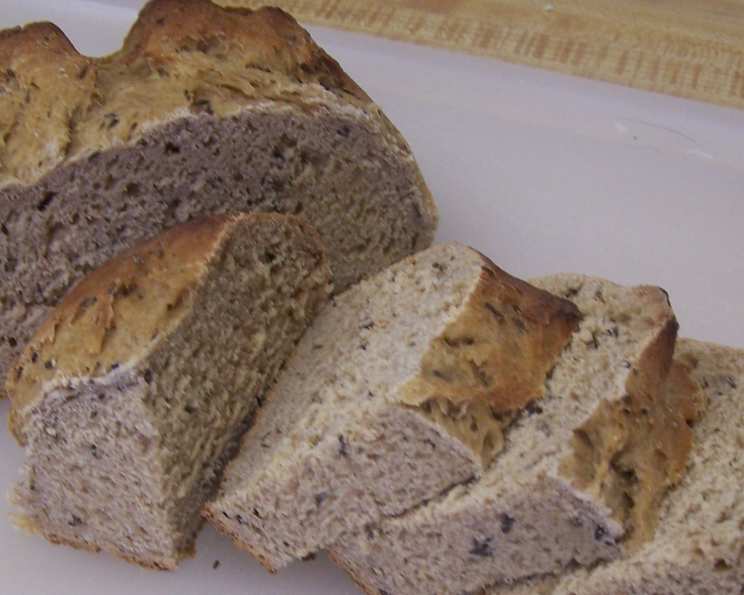
Danish Sourdough Pumpernickel: A Taste of Tradition
The scent of pumpernickel always transports me back to my grandmother’s kitchen. She had a well-worn, cast-iron Dutch oven that she swore was the secret to her perfect loaves. I remember the deep, earthy aroma filling the house as the bread slowly baked, the anticipation building with each passing hour. It was more than just bread; it was a connection to our family’s heritage, a tangible link to generations past. Now, decades later, I still strive to recreate that same magic in my own kitchen, hoping to capture a sliver of that cherished memory with every slice.
Recipe Overview
- Prep Time: 10 hours 30 minutes
- Cook Time: 30 minutes
- Total Time: 11 hours
- Servings: 10
- Yield: 2 loaves
- Dietary Type: Vegetarian
Ingredients
- 1 1/2 cups sourdough starter
- 2 tablespoons caraway seeds, chopped
- 2 cups rye flour, unsifted
- 1/2 cup strong black coffee, boiling
- 1/2 cup molasses
- 1/4 cup evaporated skim milk
- 2 teaspoons salt
- 3 tablespoons shortening, melted
- 1/2 cup whole milk
- 2 3/4 cups unbleached flour
- 1 tablespoon active dry yeast
Equipment Needed
- Large mixing bowl
- Baking sheet
- Floured surface for kneading
Instructions
-
Begin by preparing the caraway seed infusion. Pour the boiling coffee over the chopped caraway seeds. This will release their aromatic oils and impart a richer flavor to the bread. Allow this mixture to cool completely.
-
In a large mixing bowl, combine the cooled coffee-caraway seed mixture with the rye flour and sourdough starter. Mix well until thoroughly combined.
-
Cover the bowl and let it stand in a warm place for 4 to 8 hours, or preferably overnight. This resting period is crucial for the development of the sourdough flavor and the proper hydration of the rye flour. The longer it rests, the more pronounced the flavor will become.
-
After the resting period, add the molasses, evaporated skim milk, salt, melted shortening, whole milk, unbleached flour, and active dry yeast to the bowl.
-
Mix all the ingredients together thoroughly until a cohesive dough forms. The dough will be somewhat sticky, which is characteristic of pumpernickel.
-
Cover the bowl again and let the dough rise in a warm place until it has doubled in size. This may take approximately 1 to 2 hours, depending on the warmth of your environment.
-
Once the dough has doubled, turn it out onto a lightly floured surface. Knead the dough for several minutes to develop its gluten structure and even out its texture.
-
Shape the dough into two round loaves and place them on a prepared baking sheet.
-
Cover the loaves and let them rise again until they have doubled in size. This second rise may take another 1 to 2 hours.
-
Preheat your oven to 350 degrees Fahrenheit (175 degrees Celsius).
-
Bake the loaves for 30 minutes, or until they are golden brown and sound hollow when tapped on the bottom. The internal temperature should reach around 200°F (93°C).
-
Remove the loaves from the oven and let them cool completely on a wire rack before slicing and serving.
Expert Tips & Tricks
- For an even deeper, richer flavor, consider using a dark roast coffee.
- If your kitchen is cold, create a warm environment for proofing by placing the dough in a slightly warmed (but turned-off) oven, or by placing the bowl on top of the refrigerator.
- To prevent the crust from becoming too dark, tent the loaves with foil during the last 10-15 minutes of baking.
- If you prefer a slightly sweeter pumpernickel, you can add an additional tablespoon of molasses.
- For a more rustic look, slash the tops of the loaves with a sharp knife or lame before baking.
Serving & Storage Suggestions
Danish Sourdough Pumpernickel is delicious served warm or at room temperature. It pairs exceptionally well with cheeses, smoked meats, and hearty soups. It can also be toasted and served with butter, jam, or cream cheese.
To store, wrap the cooled loaves tightly in plastic wrap or place them in an airtight container. At room temperature, the bread will stay fresh for 2-3 days. In the refrigerator, it will last for up to a week. For longer storage, you can freeze the loaves for up to 2-3 months. To reheat, thaw completely and then warm in a preheated oven at 350°F (175°C) for 10-15 minutes.
Nutritional Information
| Nutrient | Amount per Serving | % Daily Value |
|---|---|---|
| Calories | 300.6 kcal | N/A |
| Calories from Fat | N/A | 16% |
| Total Fat | 5.2 g | 8% |
| Saturated Fat | 1.3 g | 6% |
| Cholesterol | 1.5 mg | 0% |
| Sodium | 485.9 mg | 20% |
| Total Carbohydrate | 57 g | 19% |
| Dietary Fiber | 4.7 g | 18% |
| Sugars | 11 g | 44% |
| Protein | 7.1 g | 14% |
Variations & Substitutions
- Spelt Pumpernickel: Substitute the unbleached flour with spelt flour for a slightly nutty and lighter flavor.
- Dark Chocolate Pumpernickel: Add 1/4 cup of unsweetened cocoa powder to the dough for a rich, decadent twist. You may need to adjust the liquid accordingly.
- Seed Variations: Experiment with different seeds, such as sunflower seeds, pumpkin seeds, or flax seeds, in addition to or instead of the caraway seeds.
- Spice Variations: A pinch of ground cloves or allspice can add warmth and complexity to the flavor profile.
FAQs (Frequently Asked Questions)
Q: Why is my pumpernickel dough so sticky?
A: Rye flour has a lower gluten content than wheat flour, resulting in a stickier dough. Don’t be tempted to add too much flour, as this will make the bread dry.
Q: Can I use instant yeast instead of active dry yeast?
A: Yes, you can substitute instant yeast. Simply mix it directly into the dry ingredients without proofing it in water first.
Q: How do I know when the bread is done?
A: The bread is done when it is golden brown and sounds hollow when tapped on the bottom. You can also use a thermometer to check the internal temperature, which should be around 200°F (93°C).
Q: Can I bake this recipe in a Dutch oven?
A: Absolutely! Baking in a Dutch oven can create a wonderful crust. Preheat the Dutch oven along with the oven, and then carefully place the shaped dough inside. Reduce the baking time slightly, and remove the lid during the last 15 minutes to allow the crust to brown.
Q: Can I use a different type of milk?
A: Yes, you can substitute any type of milk you prefer, such as almond milk, soy milk, or oat milk. The flavor and texture may vary slightly depending on the type of milk used.
Final Thoughts
This Danish Sourdough Pumpernickel recipe is more than just a set of instructions; it’s an invitation to connect with the past and create a delicious, comforting loaf of bread that you can share with family and friends. Don’t be intimidated by the longer prep time – the rich, complex flavor is well worth the effort. So gather your ingredients, put on some music, and embark on this baking adventure. And be sure to share your creations and feedback – I’d love to hear how it turns out! Perhaps pair this loaf with some creamy mushroom soup or a platter of assorted cheeses for the perfect comforting meal. Happy baking!