
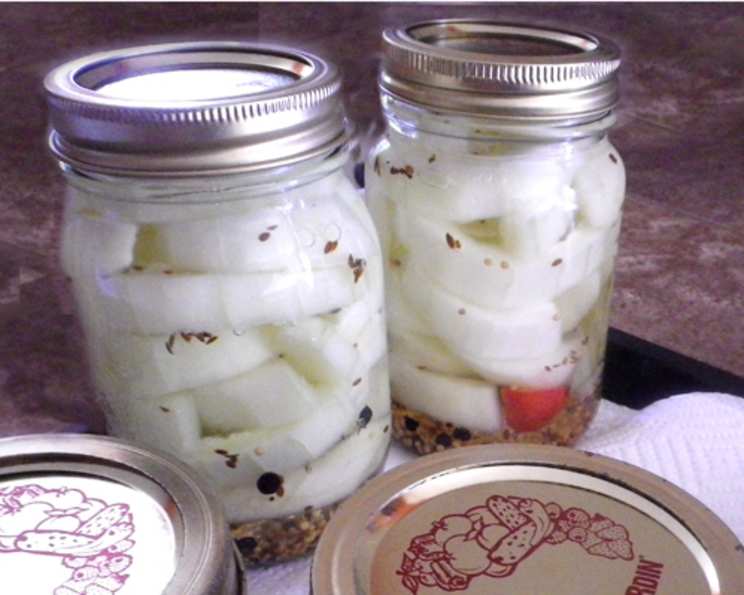
Crisp & Sweet: Mastering Danish White Cucumber Pickles
The memory is as clear as the summer sky over Copenhagen: my grandmother, with her mischievous twinkle and flour-dusted apron, carefully arranging delicate cucumber spears in sterilized jars. The air, thick with the sweet-sour aroma of vinegar and sugar, always signaled the arrival of agurkesalat, those quintessential Danish white cucumber pickles. To me, they were more than just a condiment; they were a taste of home, a symbol of warmth and family gatherings around a table laden with smørrebrød. Now, decades later, I carry on her tradition, adapting her cherished recipe to create pickles that still evoke those treasured childhood moments.
Recipe Overview
- Prep Time: 45 minutes
- Cook Time: 30 minutes
- Total Time: 2 hours 15 minutes (includes sterilizing and cooling)
- Yields: 8 pints
- Dietary Type: Vegetarian, Gluten-Free, Dairy-Free
Ingredients
- 7 large cucumbers (cukes must be very large but not soft or yellow)
- 6 cups sugar
- 6 1/2 cups pickling vinegar
- 3/4 cup water
Per Pint Jar:
- 8 hot pepper, 1 each (optional)
- 8 teaspoons mustard seeds, 1 tsp each
- 8 small bay leaves, 1 each
- 4 teaspoons dill seeds, 1/2 tsp each
- 80 whole white peppercorns, 10 each
Equipment Needed
- 8 pint canning jars with lids and rings
- Large stockpot
- Tongs or jar lifter
- Slotted spoon
- Large bowl
- Measuring cups and spoons
- Sharp knife
- Vegetable peeler
- Small spoon (for deseeding cucumbers)
Instructions
-
Begin by sterilizing your 8 pint jars. This is crucial for safe canning and preventing spoilage. Wash the jars, lids, and rings in hot, soapy water, then rinse thoroughly. Place the jars upside down on a rack in a boiling water bath canner and boil for 10 minutes. Remove the jars carefully with tongs or a jar lifter and set them aside to dry on a clean towel. Alternatively, you can sterilize them in the dishwasher using the sanitize cycle. Place the lids in a saucepan with water and bring to a simmer; keep warm until ready to use.
-
Prepare the syrup. In a large stockpot, combine the sugar, pickling vinegar, and water. Stir constantly over medium heat until the sugar dissolves completely. Bring the mixture to a full rolling boil, ensuring that the sugar is fully incorporated and the mixture is clear. Maintain the boil as you fill the jars.
-
Prepare the cucumbers. Wash the cucumbers thoroughly. Peel them completely to achieve the characteristic white color of these pickles. Cut each cucumber in half lengthwise. Use a small spoon to scoop out the seeds from the center of each half, creating a clean cavity.
-
Cut the cucumbers into spears. Cut the peeled and deseeded cucumber halves into 1/2 inch thick spears. The spears should be about 3/4 inch shorter than the height of your pint jars. This “headroom” is essential for proper sealing during the canning process.
-
As you cut the cucumbers, place the prepared spears in a large bowl filled with ice water. This helps to maintain their crispness and prevent them from becoming soft or translucent. Keep the cucumbers submerged in the ice water until you are ready to pack them into the jars.
-
Prepare the jars with spices. Evenly divide the hot pepper, mustard seeds, bay leaves, dill seeds, and white peppercorns among the 8 sterilized pint jars. Place the spices at the bottom of each jar, ensuring an even distribution of flavor.
-
Pack the cucumber spears tightly into the jars. Remove the cucumber spears from the ice water and drain them well. Pack the jars tightly with the spears standing upright, ensuring they are submerged below the jar’s shoulder, resting on top of the spices. Try to fit as many spears as possible into each jar without crushing them.
-
Fill the jars with the boiling vinegar syrup. Carefully pour the boiling vinegar/syrup mixture into each jar, leaving 1/2 inch of headspace at the top. Make sure the jar rims are clean and free from any syrup or cucumber debris. Wipe the rims with a clean, damp cloth to ensure a good seal.
-
Seal the jars. Place a sterilized lid on each jar, and then screw on the ring until it is fingertip tight. Avoid overtightening, as this can prevent the jar from sealing properly.
-
Process the jars in a boiling water bath. Using a jar lifter, carefully lower the filled jars into a boiling water bath canner. Ensure that the jars are completely submerged in water by at least 1 inch. Bring the water to a rolling boil and process the jars for 10 minutes.
-
Cool and check the seals. After processing, turn off the heat and carefully remove the jars from the canner using a jar lifter. Place the jars on a towel-lined surface, allowing them to cool completely, undisturbed, for 12-24 hours. As the jars cool, you should hear a popping sound as the lids seal.
-
After the cooling period, check the seals by pressing down on the center of each lid. If the lid flexes or pops back up, the jar is not properly sealed and should be refrigerated and used within a few weeks. Jars with properly sealed lids can be stored in a cool, dark place for up to one year.
-
Wait before enjoying. For the best flavor, allow the pickles to sit for at least two weeks before opening and enjoying. This allows the flavors to meld and develop fully.
Expert Tips & Tricks
- Cucumber Crispness: The ice water bath is key to maintaining the crispness of the cucumbers. Don’t skip this step!
- Vinegar Choice: Using pickling vinegar with 5% acidity is crucial for safe canning. Do not substitute with other types of vinegar without adjusting the recipe and processing time.
- Spice Customization: Feel free to adjust the amount of spices to your liking. For a spicier pickle, add more hot peppers or use a spicier variety.
- Jar Sterilization: Properly sterilizing jars is non-negotiable for safe canning. This eliminates bacteria that can cause spoilage.
- Headspace: Leaving the correct amount of headspace (1/2 inch) is crucial for creating a proper vacuum seal.
- Troubleshooting Sealing: If a jar doesn’t seal properly, you can reprocess it with a new lid within 24 hours. Alternatively, store it in the refrigerator and use it within a few weeks.
Serving & Storage Suggestions
Danish white cucumber pickles are incredibly versatile. They are traditionally served with open-faced sandwiches, especially liver pate smørrebrød. Their sweet and tangy flavor also complements grilled meats, salads, and cheese boards.
Once opened, store the pickles in the refrigerator. They will typically last for several weeks, although their crispness may diminish over time. Unopened jars can be stored in a cool, dark pantry for up to a year. While freezing is not recommended, due to the change in texture of the cucumbers, properly canned jars will last beautifully on the shelf.
Nutritional Information
Here’s an estimate of the nutritional information per serving (approx. 1/8 of the recipe), though it can vary depending on the exact size of the cucumbers and specific measurements:
| Nutrient | Amount per Serving | % Daily Value |
|---|---|---|
| Calories | 633.6 kcal | N/A |
| Calories from Fat | 10 g | 2% |
| Total Fat | 1.2 g | 1% |
| Saturated Fat | 0.1 g | 0% |
| Cholesterol | 0 mg | 0% |
| Sodium | 7.9 mg | 0% |
| Total Carbohydrate | 160.7 g | 53% |
| Dietary Fiber | 1.8 g | 7% |
| Sugars | 154.2 g | 616% |
| Protein | 2.4 g | 4% |
Note: These values are estimates and can vary.
Variations & Substitutions
- Spicy Pickles: Add more hot peppers, or use jalapeños or serranos for extra heat.
- Sweet Pickles: Reduce the amount of vinegar slightly and increase the sugar for a sweeter pickle.
- Herb Variations: Experiment with different herbs, such as tarragon or thyme, in addition to or instead of dill.
- Cucumber Variety: While traditionally made with large cucumbers, you can use smaller pickling cucumbers if desired. Just adjust the spear size accordingly.
- No Hot Peppers: Simply omit the hot peppers for a milder flavor.
FAQs (Frequently Asked Questions)
Q: Why do I need to peel the cucumbers?
A: Peeling the cucumbers is traditional for this recipe and results in the characteristic “white” appearance. The peel can also sometimes contribute to a slightly bitter flavor.
Q: Can I use regular vinegar instead of pickling vinegar?
A: No, it is not recommended. Pickling vinegar has a higher acidity level (5%) that is essential for safe canning and preventing spoilage.
Q: How long do the pickles need to sit before I can eat them?
A: For the best flavor, allow the pickles to sit for at least two weeks before opening. This allows the flavors to meld and develop fully.
Q: My pickles are soft. What did I do wrong?
A: Soft pickles can be caused by several factors, including using cucumbers that are not fresh, not using ice water, or not packing the jars tightly enough.
Q: Can I reuse the canning lids?
A: No, it’s not recommended to reuse canning lids. They are designed for single use and may not create a proper seal on a second use. However, the rings can be reused as long as they are in good condition.
Final Thoughts
These Danish white cucumber pickles are more than just a recipe; they are a journey back to simpler times, a connection to family traditions, and a celebration of fresh, flavorful ingredients. I encourage you to try your hand at making these pickles and experience the joy of preserving summer’s bounty. Share your creations with friends and family, and let the sweet and tangy flavor transport you to the heart of Denmark. I’d love to hear about your experience, so please feel free to share your feedback and variations! Perhaps pair them with a classic Danish frikadeller (meatballs) for the full experience.