
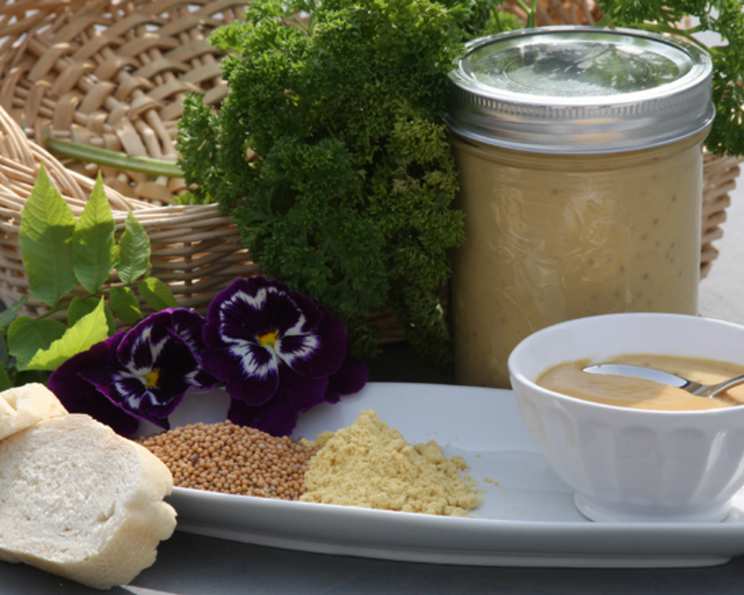
Delicious Homemade Dijon Mustard
The first time I truly understood the power of a well-made mustard was during a backpacking trip through France. Tucked away in a tiny village bistro, I ordered a simple croque monsieur. The ham and cheese were undeniably good, but it was the pungent, complex Dijon slathered on the bread that elevated the entire experience. It wasn’t just a condiment; it was an integral part of the dish, a flavor bomb that made me realize the magic hidden in this humble yellow spread. From that moment on, I was determined to learn how to create that magic myself.
Recipe Overview
- Prep Time: 16 minutes
- Cook Time: 5 minutes
- Total Time: 21 minutes (plus 2-8 weeks of aging)
- Yields: 2 cups
- Dietary Type: Vegan, Gluten-Free
Ingredients
- 2 cups dry white wine
- 1 large onion, chopped
- 3 garlic cloves, minced
- 1 cup mustard powder (4 oz)
- 3 tablespoons honey
- 1 tablespoon vegetable oil or canola oil
- 2 teaspoons salt
Equipment Needed
- Non-stick saucepan
- Whisk
- Glass jar (for storage)
Instructions
- In a non-stick saucepan, combine the white wine, chopped onion, and minced garlic.
- Heat the mixture to boiling, then reduce the heat and simmer for 5 minutes. This step infuses the wine with aromatic flavors that will later permeate the mustard.
- Remove the saucepan from the heat and allow the mixture to cool completely. Once cooled, discard the solids (onion and garlic). You can use a fine-mesh sieve to ensure a clean liquid.
- In the same saucepan (now cleaned), add the mustard powder to the cooked liquid. Stir constantly with a whisk until the mixture is smooth and free of lumps. This is crucial for achieving a creamy, even texture.
- Blend in the honey, oil, and salt. The honey adds a touch of sweetness that balances the mustard’s sharpness, while the oil contributes to its smoothness.
- Heat the mixture slowly over low heat until it thickens, stirring constantly. Be cautious during this step; the fumes from the mustard can be quite strong! Keep your face away from the saucepan to avoid irritation. The mustard is ready when it coats the back of a spoon.
- Pour the hot mustard into a clean glass jar.
- Allow the mustard to cool completely at room temperature. Then, cover the jar and let it sit on the counter at room temperature overnight. This allows the flavors to further meld and mature.
- Refrigerate the mustard for a minimum of 2 weeks, and ideally for 2-8 weeks, to allow the flavors to fully develop and mellow. The longer it sits in the refrigerator, the better the flavor will become. Patience is key!
Expert Tips & Tricks
- Mustard Powder Quality: The quality of your mustard powder significantly impacts the final flavor. Opt for a high-quality brand for the best results.
- Wine Selection: A crisp, dry white wine like Sauvignon Blanc or Pinot Grigio works best. Avoid sweet or overly oaky wines.
- Heat Control: Low and slow is the key to thickening the mustard. Avoid high heat, which can cause the mustard to scorch or develop a bitter taste.
- Flavor Enhancement: For a spicier mustard, add a pinch of cayenne pepper or a dash of hot sauce to the mixture before heating.
- Sweetness Adjustment: Adjust the amount of honey to your liking. If you prefer a less sweet mustard, reduce the honey to 2 tablespoons.
- Don’t Skip the Aging: The aging process is crucial. The raw, pungent flavors of the freshly made mustard will mellow and deepen over time.
- Dealing with Lumps: If you encounter lumps when mixing the mustard powder with the liquid, use an immersion blender to smooth out the mixture before heating.
Serving & Storage Suggestions
Serve your homemade Dijon mustard with grilled meats, sandwiches, vinaigrettes, or as a condiment for charcuterie boards. It’s also excellent as a base for sauces and marinades.
Store the mustard in a tightly sealed glass jar in the refrigerator. It will keep for several months, and the flavor will continue to improve over time. Avoid leaving the mustard at room temperature for extended periods, as this can affect its quality and shelf life. Because of its high acidity and salt content, it is unlikely to spoil quickly, but refrigeration helps to maintain optimal flavor and texture.
Nutritional Information
| Nutrient | Amount per Serving | % Daily Value |
|---|---|---|
| Calories | 641.5 kcal | – |
| Calories from Fat | 226g | 35% |
| Total Fat | 25.2 g | 38% |
| Saturated Fat | 1.9 g | 9% |
| Cholesterol | 0 mg | 0% |
| Sodium | 2348.8 mg | 97% |
| Total Carbohydrate | 54.7 g | 18% |
| Dietary Fiber | 7.6 g | 30% |
| Sugars | 34.8 g | – |
| Protein | 14.5 g | 29% |
Note: Nutritional information is an estimate and may vary based on specific ingredients and preparation methods.
Variations & Substitutions
- Spicy Dijon: Add a pinch of cayenne pepper or a few drops of your favorite hot sauce to the mixture before heating.
- Herb-Infused Dijon: Add fresh herbs like thyme, rosemary, or tarragon to the mixture while it’s cooling. Remove the herbs before storing the mustard.
- Honey-Garlic Dijon: Increase the amount of honey and add a clove or two of minced roasted garlic for a sweeter, more aromatic mustard.
- Wine Substitute: If you prefer not to use wine, you can substitute it with apple cider vinegar or white grape juice. The flavor will be slightly different, but still delicious.
- Dijon with Brown Mustard Seeds: For a rustic texture, add a tablespoon or two of lightly crushed brown mustard seeds to the mustard while it is cooling.
FAQs (Frequently Asked Questions)
Q: How long does homemade Dijon mustard last?
A: When stored properly in the refrigerator, homemade Dijon mustard can last for several months, even up to a year. The flavor may change slightly over time, becoming milder.
Q: Can I use yellow mustard powder instead of Dijon mustard powder?
A: While you can, it’s not recommended. Dijon mustard powder has a distinct flavor profile. Yellow mustard powder will result in a milder, less complex mustard.
Q: Why does my homemade mustard taste bitter?
A: Bitterness can result from overheating the mustard during the thickening process. Use low heat and stir constantly to prevent scorching. Also, the mustard flavor mellows during the aging process, so be patient!
Q: Do I have to use honey? Can I use another sweetener?
A: Honey adds a specific flavor and texture, but you can substitute it with maple syrup, agave nectar, or even granulated sugar. The flavor profile will be slightly different.
Q: My mustard is too thick/thin. How do I fix it?
A: If it’s too thick, whisk in a teaspoon of water or wine at a time until you reach the desired consistency. If it’s too thin, gently heat it on low, stirring constantly, until it thickens slightly.
Final Thoughts
Making your own Dijon mustard is a surprisingly simple and rewarding culinary experience. The depth of flavor you can achieve far surpasses anything you’ll find on the grocery store shelves. Don’t be intimidated by the aging process – think of it as a flavor investment. So, gather your ingredients, embrace the process, and prepare to be amazed by the incredible homemade Dijon mustard you’ll create. It’s a condiment that will elevate your meals and impress your friends and family. Experiment with different variations, share your creations, and most importantly, enjoy!